Discover the story of embroidery like never before with the Royal School of Needlework’s brand-new History of Embroidery course.
Introducing the RSN History of Embroidery Course
BRAND NEW COURSE — Discover the story of embroidery like never before with the Royal School of Needlework’s brand-new History of Embroidery course.
Embroidery has a long and illustrious history, reflecting the cultural, social, and technological developments of the times in which it was create. From its beginnings in religious institutions to flourishing in the royal courts and eventually becoming a domestic craft, embroidery has encompassed a wide range of techniques and styles.
Written by leading experts, this digital programme takes you on a captivating journey through Britain’s embroidery heritage—from the early Medieval period right up to today’s most exciting contemporary work.
Across twelve richly illustrated modules, you’ll explore iconic pieces, groundbreaking techniques, influential makers, and the social and cultural forces that shaped embroidery through the centuries. Each module is paired with a specially selected online talk to deepen your learning.
Designed for the interested learner, the course is easy to follow, fully online, and includes, if you wish, an optional short assessment* at the end of each module.
Created by Leading Specialists
Our contributors include renowned curators, academics, writers and practitioners such as Mary Schoeser, June Hill, Dr Lynn Hulse, Heather Toomer, and university experts from Durham, York, Texas, and Belfast.
We are also proud to feature voices from the contemporary embroidery world, including Kate Nolan, Michael Brennand-Wood, and Mr X Stitch (Jamie Chalmers) and RSN contextual studies tutor Amy Hare and Dr Isabella Rosner, our Curator of Textiles. RSN content is authored by Dr Susan Kay-Williams, former RSN Chief Executive.
Course Modules
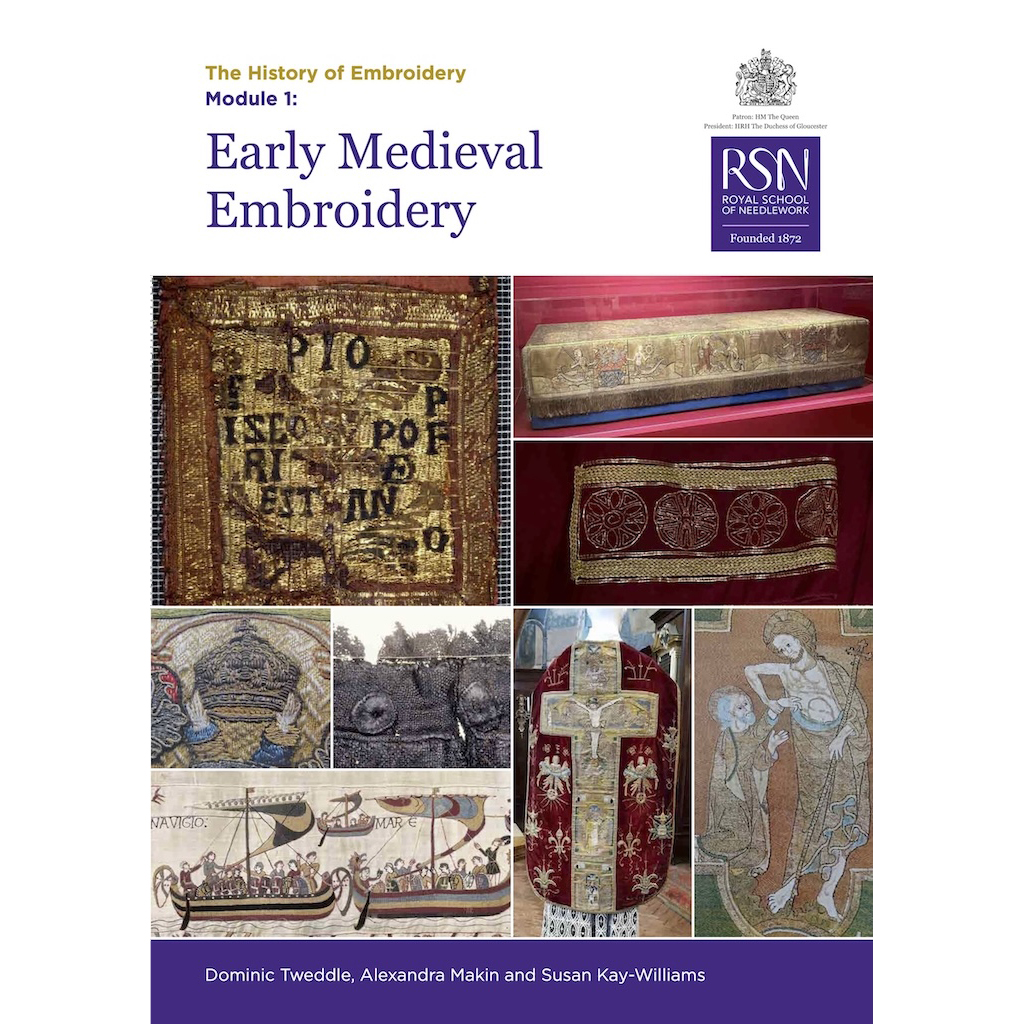
| 1. Early Medieval Embroidery | 7. Late Twentieth and Twenty-first Century Embroidery |
| 2. Tudor Embroidery | 8. Church embroidery |
| 3. Seventeenth Century Embroidery | 9. Military and Royal Embroidery |
| 4. Eighteenth Century Embroidery | 10. Samplers |
| 5. Nineteenth Century Embroidery | 11. Whitework |
| 6. Early Twentieth Century Embroidery | 12. Fashion Embroidery |
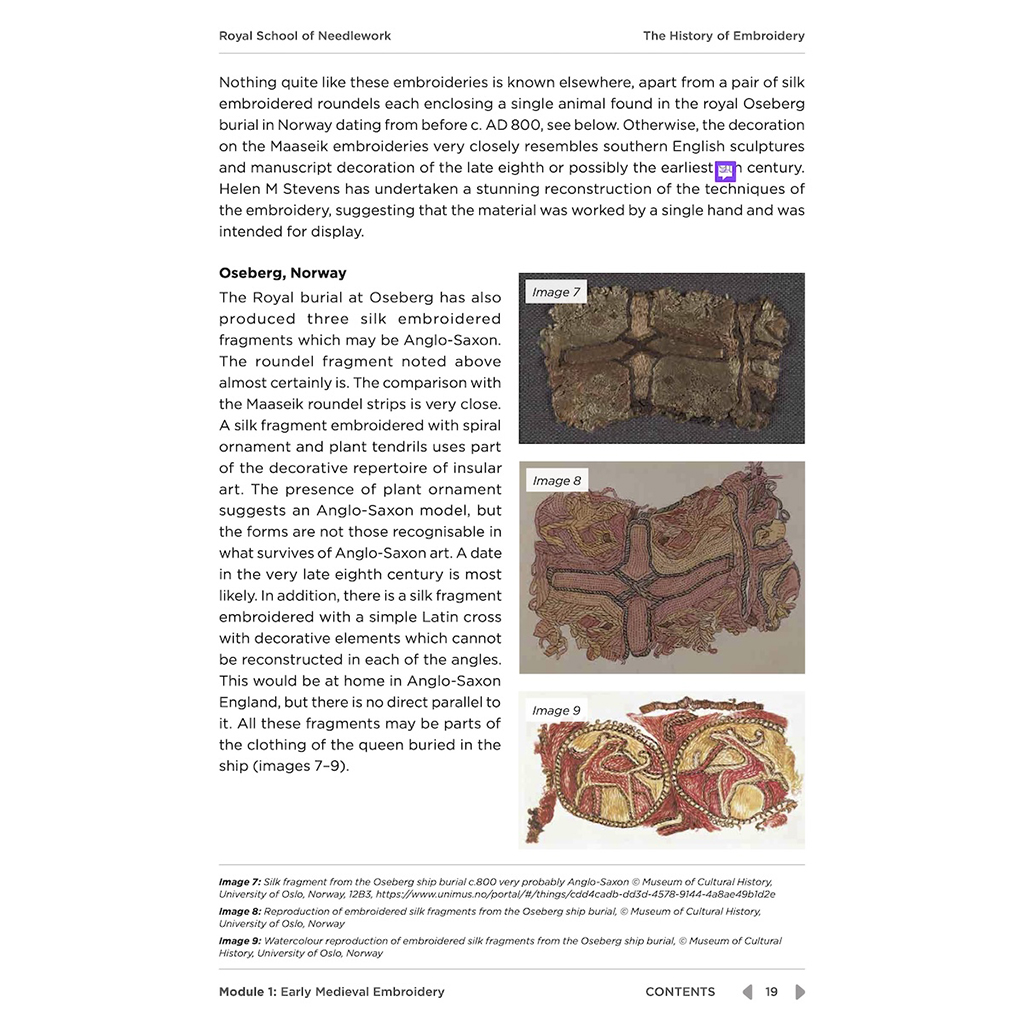
What You’ll Discover
The course brings embroidery to life through:
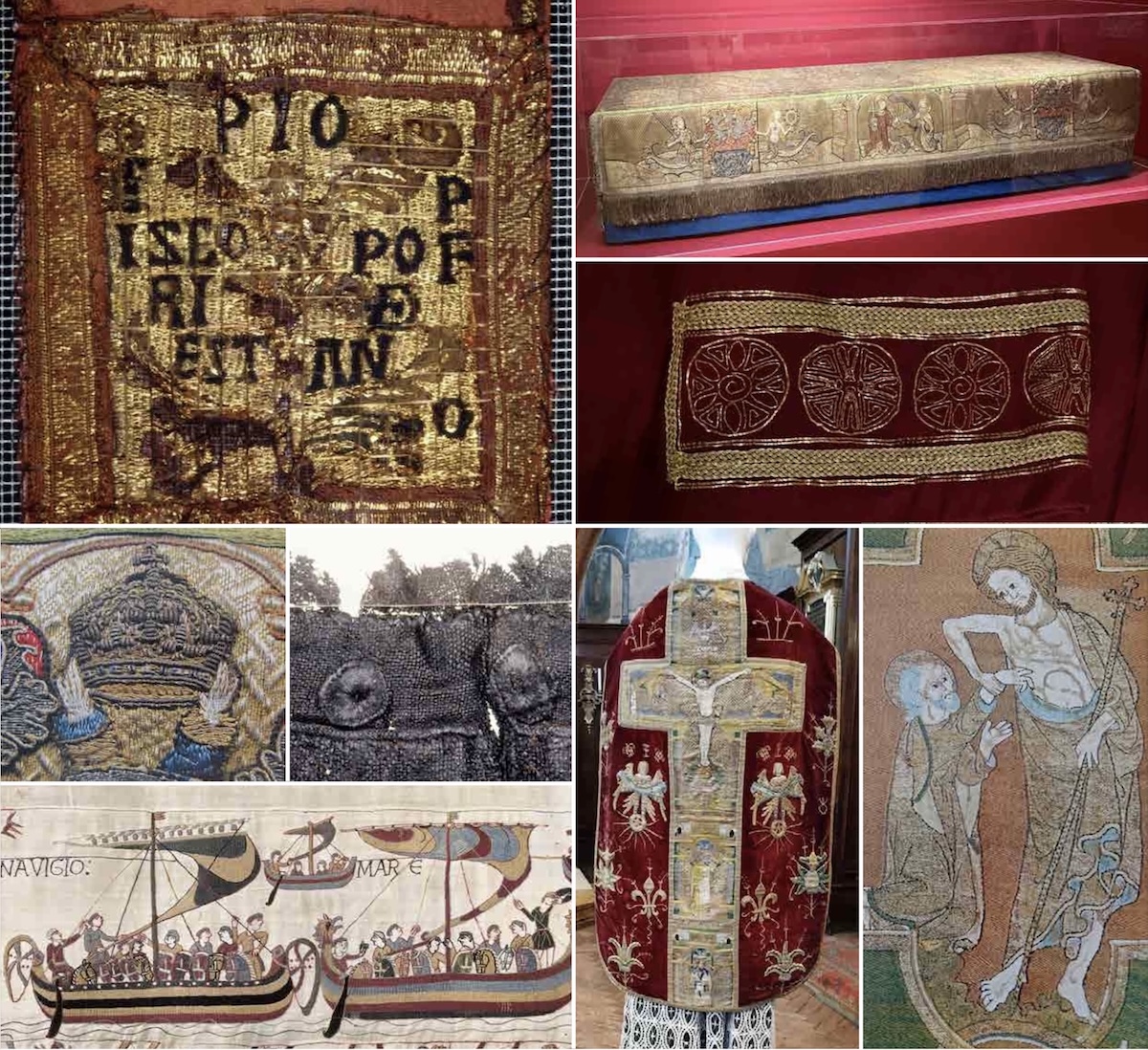
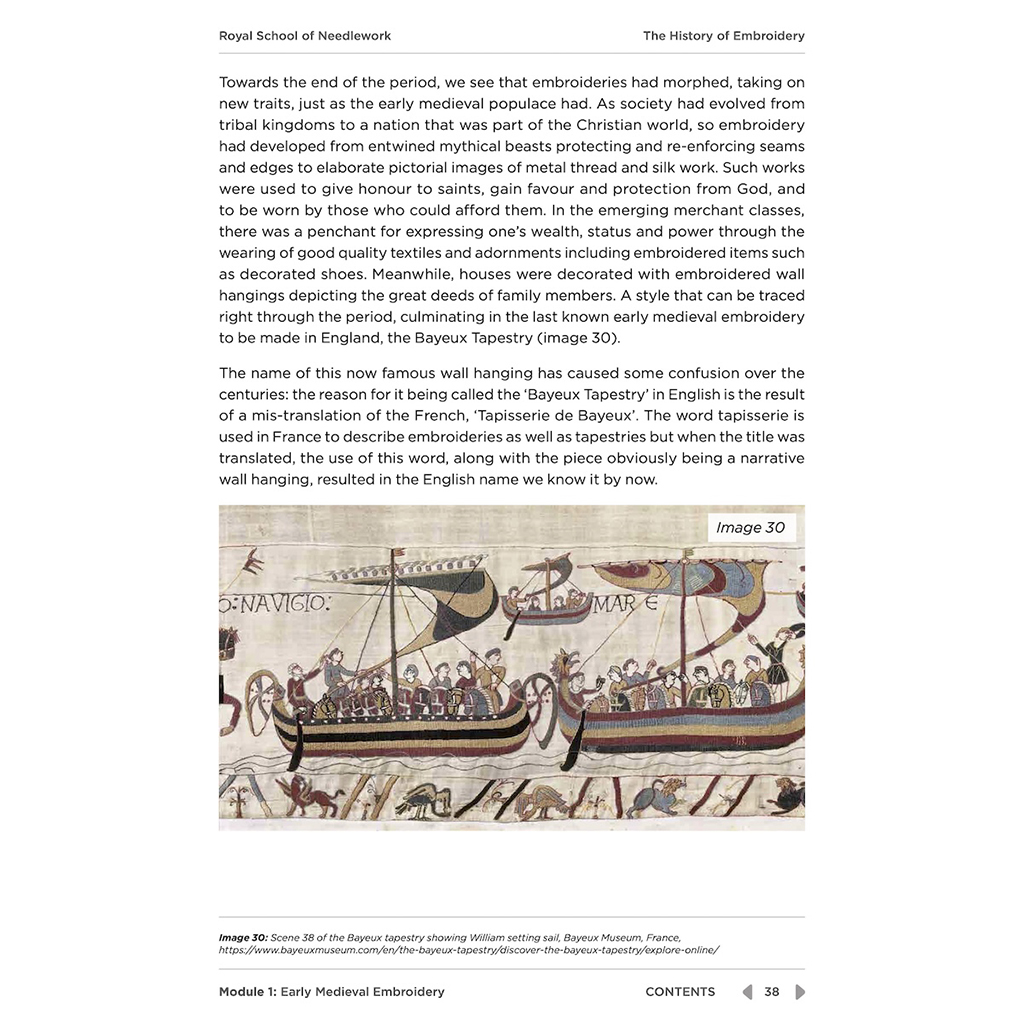
- Famous masterpieces like the Bayeux Tapestry and the Litany of Loreto.
- Iconic techniques such as blackwork, silk shading, and goldwork.
- The Tudor Queens.
- The roles of the Church, military and royalty in shaping embroidery traditions.
- The work of young stitchers through samplers
- Significant stitchers and innovators of the 20th century from Ernest Thesiger to Constance Howard and Alice Kettle.
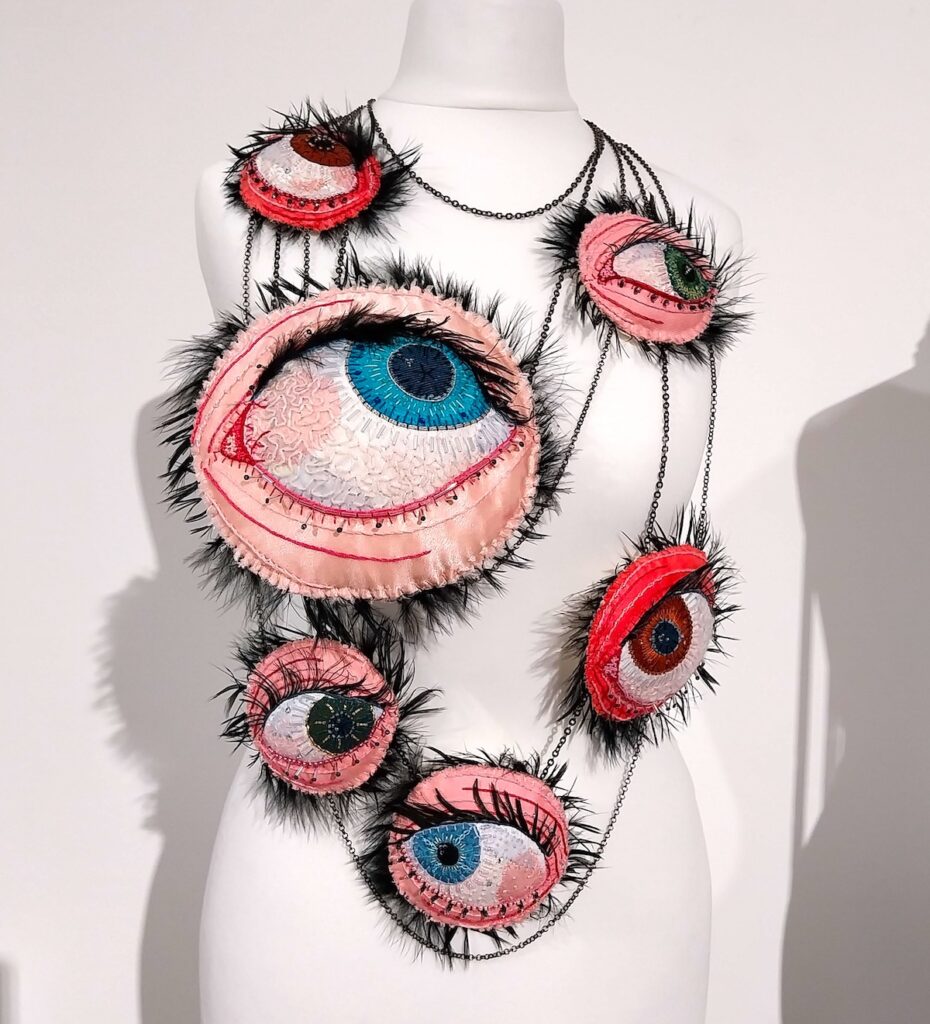
- Also featuring today’s bold voices in craftivism, feminist, queer stitching and political point making.
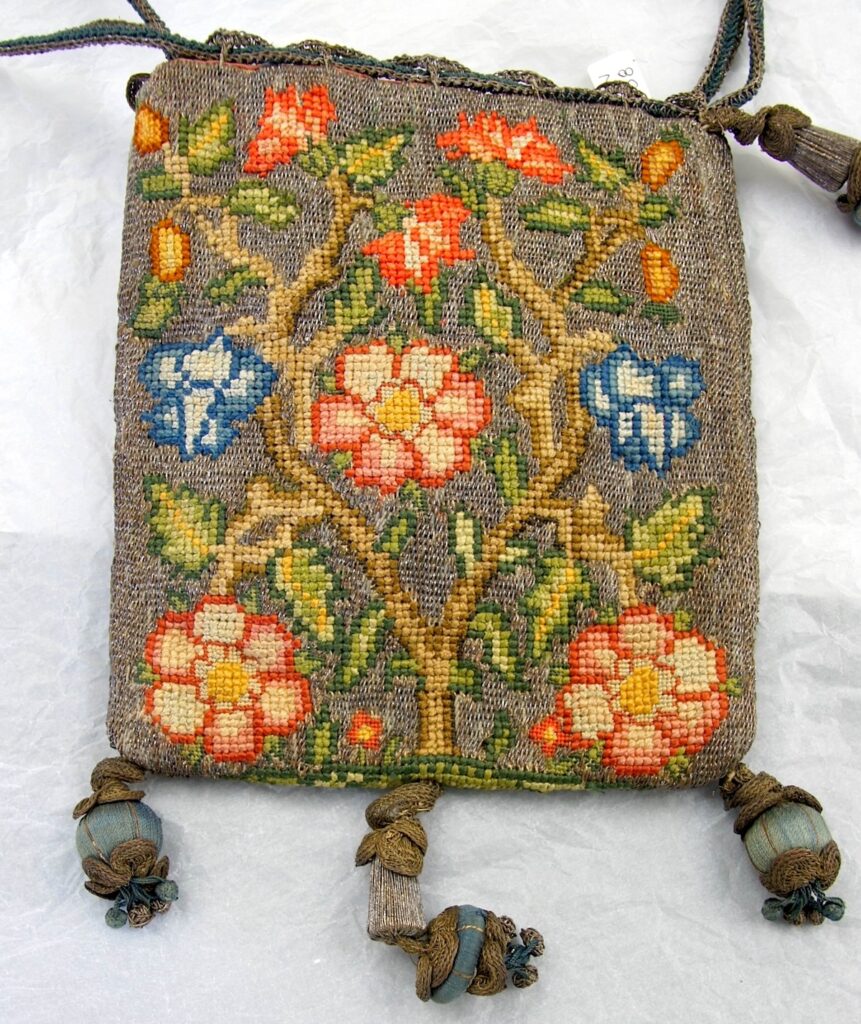
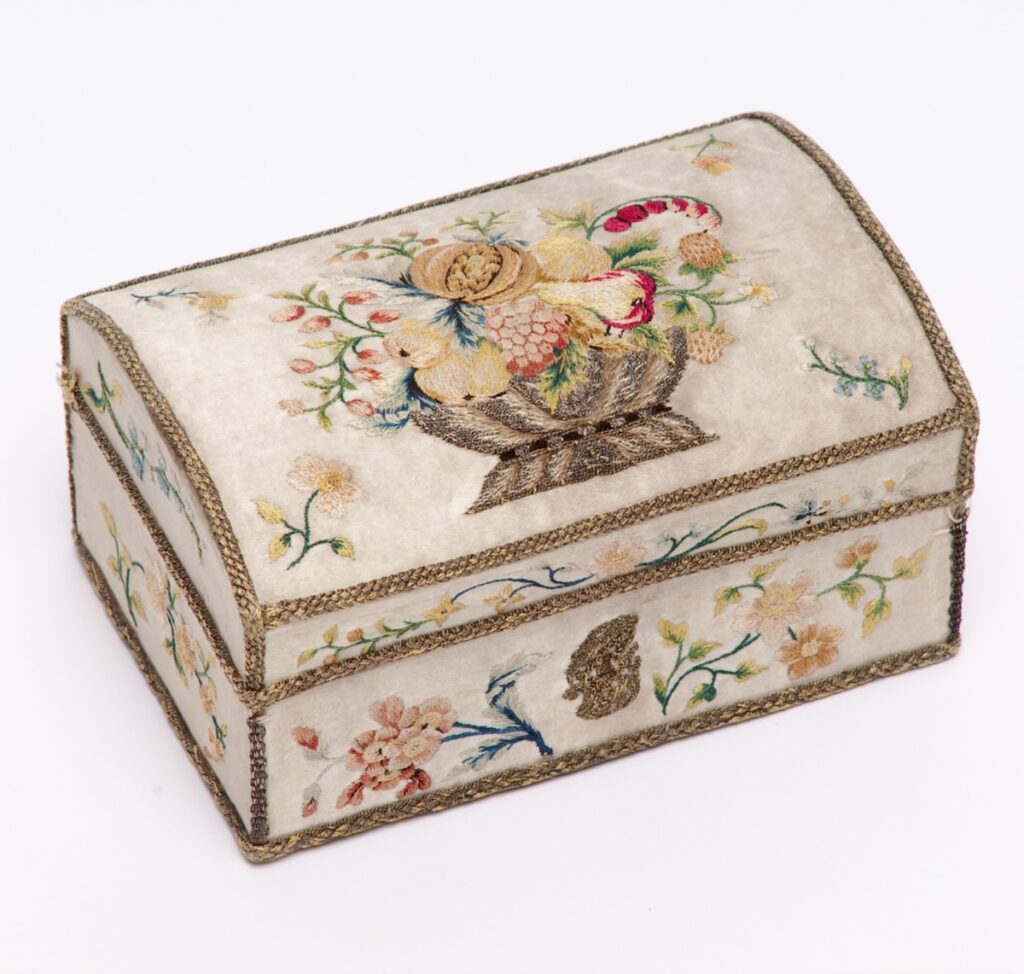
Each module includes beautiful imagery, including rare and lesser-known works, with links for deeper exploration.
We are very grateful to those who have allowed us special access to their images so that we can share them with you as part of this course.
FAQs
Who is this course for?
This is a leisure course aimed at anyone who has an interest in the history of embroidery. It is not an academic course, no particular level of prior knowledge is required.
Some of the modules will look at pieces in detail, some give more of an overview of the period and the embroidery of that era.
Why has the RSN created this course?
Unlike the history of art, there is very little on the history of embroidery and what exists tends to explore higher-end works.
This course comes right up to the present day and shows the variety of people who are and have been involved in stitching throughout the centuries, from Queens to country girls.
As the go-to place for the art of hand embroidery the RSN thought it was the right thing to do to create and offer this course. It is only available in English at this time but is open to anyone with online access.
Do I have to have any prior knowledge?
If you have some knowledge of embroidery and embroidery stitches then it will enhance your learning but you do not have to have any prior knowledge of the history of embroidery.
Many terms are explained and to find out more about individual stitches you can refer, free of charge, to the RSN Stitch Bank the online resource containing over 500 stitches.
How long does the course take?
This is a course you can start at any time and take at your own pace. It is suggested that you study one unit a month.
There is quite a lot of information so enjoy reading it. It is more a marathon (at your own pace) than a sprint, especially with the added-on talks to revisit. Taking one module a month you would finish the course in one year.
How many hours does each module take and the entire programme cover?
The RSN History of Embroidery course is designed to be a twelve-month course with one module per month for you to complete at your leisure. Length of module varies.
How long is each module? Are they released each month or do you have access to all of them at once?
The first three modules will be available simultaneously in February 2026. The next three will be released in April and the following six modules will follow during 2026 and early 2027.
How long will we have access to the History of Embroidery course when enrolled?
Three years from the point of registration. For those pre-ordering the course, it will be three years from the publication of the first modules.
Do the individual modules build on each other? Does the online course have to be completed step by step from module to module, or can modules be skipped and completed later?
There is an order, but each module is self contained. You can do the modules in any order that you choose.
Is there a more detailed structure or agenda for the individual modules?
This will be issued in the New Year.
How is the content delivered, as text to read, with videos or with other learning media?
Text with lots of imagery, licensed from collections around the world, plus some videos.
Is the material available for download?
You can download the written PDF material so that it can be read on any device. However the video material cannot be downloaded and must be watched online.
Do I get a certificate at the end?
This is a leisure course, not a certified course so there is no formal certificate but by the end you will know a lot more about the fascinating history of embroidery which you may be able to use in many different ways.
If no academic certificate will be issued, is it possible to obtain a certificate of attendance?
Yes.
What technical equipment do I need?
This is a digital course so you need a laptop, tablet or desktop computer for easy access. We do not recommend a smartphone simply because the screen is so small, though technically it is possible to read it on a smartphone.
I have not done assessments for years. What do I have to do?
The assessment is not a ‘big ask’ and is not compulsory, so do not be daunted by it. There are three questions at the end of each module and we are looking for just around 300 words to answer each question. The aim is to help you reflect on what you have learned. They are not there to ‘catch you out’ but rather to help you to recognise what you have learned and how to express it. Only you and the assessor will see the mark. There is no mark that you have to achieve to move on. As we say above, this is a leisure course, not an academic one. At the end, doing the assessments will help to give you a sense of achievement.
When do you plan to publish the announced modules on world embroidery, including the Far East, Indian subcontinent, Middle East and the Americas?
We hope that in the future the RSN will commission modules on world embroidery including the Far East, Indian sub-continent, the Middle East and the Americas. Issue of these modules is unlikely to be before 2027.
How much does the course cost?
The course costs £1,000 (including UK VAT). Pricing is in UK £.
Please note that RSN Friends and other membership discounts are not valid for this course.
Can I pay in instalments?
Unfortunately, payment in instalments is not possible at this time.
Can I register at any time before the early-bird discount ends? Is there a maximum number of places available?
Yes you can — there is no maximum number of places.
Will the online course have to be booked again, or will there be additions to the current version?
If you have purchased all twelve modules in advance, you will not need to re-book. If any new modules, beyond the first twelve, are created at a later date, then there would be an additional charge for this.