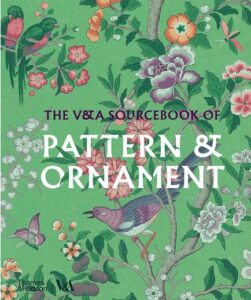
Our selection of beautiful books not only offer the best of Embroidery, but also books that are guaranteed to inspire. Our range has books on subjects as diverse as textiles and fashion, design and the decorative art of pattern, craft and fine art and history.

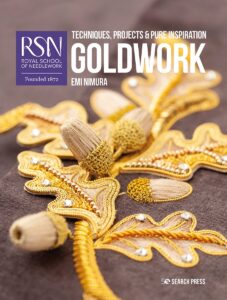
The RSN Essential Stitch Guides are a rich source of embroidery techniques, stitches and projects, covering all the key subjects in detail, Crewelwork, Bead Embroidery, Stumpwork, Canvaswork, Goldwork, Whitework, Blackwork and Silk Shading.

Each book written by RSN tutors, feature practical, instructional guides that offer a complete grounding in the techniques you need, including comprehensive stitch guides that lead the reader through each technique using clear step by step photography and easy to follow expert guidance. Many of the books contain stunning projects that put these techniques into practice and showcase additional advanced techniques.

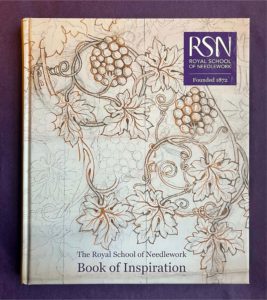
For pure creative inspiration, The Royal School of Needlework Book of Inspiration features many unseen images from the RSN Archive Collection, with a page on each double-page spread for your own ideas, sketches and thoughts. The images have been selected by Author, Curator and CE of the RSN Dr Susan Kay-Williams and date from the early 17th Century to the present day.

Shop our full range of Embroidery books here

RSN Stitch Bank will be growing even more this June in the number of stitches featured on the site. On the 21 June, we will be adding another 25 stitches to the RSN Stitch Bank, which will bring the total up to 325 stitches!

These new stitches include Diamond Tile, Floral Lace, Gold Twist Application, Grecian Curls and many more.

RSN Stitch Bank is an incredible resource, featuring videos, written instructions, illustrations and photographs for each stitch. It also includes history of its use and images of the stitch on items from the RSN Textile Collection.

RSN Stitch Bank is available online via the website rsnstitchbank.org and is a unique resource for all stitchers, teachers, curators, historians, researchers and students. Stitchers are able to find a new stitch to use in a project and learn how to work it. Researchers, curators, historians and students can use the site to learn about the use, structure and history of each stitch, in a range of embroidery techniques, and to identify individual stitches on a textile.

RSN Stitch Bank has been made possible thanks to a number of charitable trusts and many individual donors who have ‘Adopted a Stitch’ for themselves, for a friend or for a parent or grandparent who first taught them to stitch. If you would like to support the project and ‘Adopt a Stitch’, visit royal-needlework.org.uk for more information.

Visit rsnstitchbank.org to see the full RSN Stitch Bank.

With the International Summer School fast approaching, we are focusing on all of the wonderful classes that will be taking place onsite at Hampton Court Palace throughout July and August.

Throughout August as part of our International Summer School, we invite you to join us for one of the inspiring classes on offer. Whether you want to improve your drawing and design skills, stitch a Stunning Goldwork letter of your choice, explore Blackwork and Whitework, create your own piece of Victorian Patchwork or stitch a Coronation inspired Crown pincushion, there really is something for everyone.

In addition, as part of your time with us you will be treated to a visit behind the RSN Embroidery Studio door where you will learn about the Studio and see work-in-progress with Head of Studio, Anne Butcher, and Studio Manager, Gemma Murray. You will also have access to a series of specially curated Online Talks both live and on Demand. The final ‘treat’ will be a visit to Buckingham Palace to view pieces from the recent Coronation of HM King Charles III. We have been eagerly awaiting confirmation from Buckingham Palace and are delighted that we can now share this news with you!

All in all, the International Summer School at Hampton Court Palace really is the only place to be in August and we hope that you can join us to celebrate stitch!

International Summer School Classes


Introducing Coast x Royal School of Needlework, a very special collaboration celebrating the art of embroidery. Taking inspiration from our unique Collection, Coast has created a 18-piece, limited-edition bridal collection to make that special day even more memorable.

The RSN Collection and Archive has more than 4000 embroidered objects and many thousands of designs, capturing the passion for embroidery throughout history.

Coast’s exclusive 2023 bridalwear takes inspiration from three different artworks from our Collection – the Lily Altar Frontal, Wildflower Design and Kyoto Panel. Chosen for their different family of flowers, each piece helped to define the stories that make up each capsule of aspirational bridalwear.

Paying homage to the modern bride, the Lily capsule has been inspired by the Lily Altar Frontal; a heavily embroidered textile featuring a variety of lilies that represent humility and purity and often used within wedding bouquets. Drawing from this design, the bridalwear pieces are adorned with delicate blooms, mesmerising beading and elegant silhouettes, plus sweeping veils and trains with pretty needlework to capture the essence of a contemporary bride.

Inspired by Dutch flower paintings, the Wildflower design consists of carnations, irises and parrot tulips. Taking this floral theme, Coast’s capsule caters to a more traditional, countryside mood, featuring quintessentially feminine shapes in flowing fabrics with gorgeous decoration work and floral motifs.

Emma Doggart, Director of Strategy and External Relations at RSN comments:

“Although the traditional skills of hand embroidery have not changed, the RSN’s Collection & Archive shows how embroidery has evolved through the years and it is fantastic to see how history can influence today’s fashion. We are delighted with the way the team at Coast has interpreted the designs from our Collection, bringing them back to life to be worn for such a special and joyous occasion of a wedding.”

Finally, the Kyoto collection represents a more unique take on bridalwear. Influenced by the stunning Kyoto Panel that features the Japanese flower of winter, the chrysanthemum, in its various forms and extraordinary embroidery of silk and gold threads. Detailing on the bridalwear is heavily embellished with beading and needlework representing the charm of the classic Japanese flowers. Silhouettes take on a different approach with relaxed fits, tiered elements, and batwing sleeves.

Lovingly crafted with the upmost detail, the Coast x Royal School of Needlework is a limited-edition collection to suit an array of bridal tastes with a beautiful heritage and story behind each piece. Something old and something new combine for a beautiful collection of opulent and ornate bridal pieces to cherish forever.

Available to purchase online at coastfashion.com

Images of Coast’s new Bridal Collection and two of the inspiration designs from the RSN’s Collection – The Kyoto Panel and Lily Altar Frontal


We are delighted to announce that the magnificent Coronation Outfits of Their Majesties King Charles III and Queen Camilla will be on display at Buckingham Palace this summer, from 14 July – 24 September 2023.

The display will include The Stole Royal worn by His Majesty and The Robe of Estate worn by Her Majesty, both of which were newly created for the service and hand embroidered by our expert Embroidery Studio team.

And there is more good news – If you are booked on our International Summer School at Hampton Court Place on a course of two days or more, you will be able to attend the exhibition at Buckingham Palace as part of your course.

View Hampton Court Palace Courses for International Summer School

For more information on the Summer Opening at Buckingham Palace visit their website rct.uk

Image of Buckingham Palace courtesy of Royal Collection Trust / © His Majesty King Charles III 2023

Image of work in progress of Her Majesty The Queen’s Robe of Estate © Royal School of Needlework

Image of Stole Royal courtesy of Prudence Cuming Fine Art Photography and The Girdlers’ Company

The Royal School of Needlework’s Embroidery Studio conserved the Robe of State of The King, which was be worn by His Majesty on arrival at Westminster Abbey.

The King’s Robe of State is made of crimson velvet and was originally worn by King George VI at the Coronation in 1937. In preparation for the Coronation Service, the velvet has been conserved by the Royal School of Needlework, with the lining and gold lace conserved by Ede and Ravenscroft.

We are honoured to have designed and hand embroidered the Robe of Estate for Queen Camilla, worn on departure from Westminster Abbey. The embroidered design of the train draws on the themes of nature and the environment, featuring the national emblems of the United Kingdom, as well as paying tribute to His Majesty The King.

The Robe uses a rich purple velvet, chosen to match His Majesty’s Robe of Estate, and has been embroidered by the Royal School of Needlework using the Goldwork technique, with the design also incorporating Her Majesty’s cypher.

Featured on the robe is Scabiosa, known as pincushion flowers, which is a reference to the Royal School of Needlework’s connection with Her Majesty, and her dedicated support when she became Patron in 2017 as The Duchess of Cornwall.

For the first time, insects including bees, butterflies, a beetle and caterpillar feature on the Coronation Robe, drawing on the themes of nature and the environment and reflecting Their Majesties’ affection for the natural world.

In addition, there are a total of 24 plants featured on the robe, all chosen for their personal associations. These include Lily of the Valley, which featured in Her Majesty’s wedding bouquet and was a favourite flower of Queen Elizabeth II; Myrtle, which represents hope; and Delphinium, one of The King’s favourite flowers and the birth flower of July, the birth month of The Queen. And The Hawthorn also represents the month of May when the Coronation takes place and Oak leaves symbolise strength and longevity.

Also featured is the ‘Alchemilla Mollis’, known as Lady’s Mantle, which symbolises love and comfort, Maidenhair Fern, which symbolises purity, and cornflowers, which represent love and tenderness. The Cornflower also helps to attract and encourage wildlife such as bees and butterflies. The wild flowers are at the bottom of the robe, leading to the four emblematic flowers of England, Ireland, Scotland and Wales at the top.

The Robe itself has been made by Ede and Ravenscroft.

The Royal School of Needlework also worked on the Robes of Estate for the Consort of King George VI, Queen Elizabeth (later known as the Queen Mother) in 1937 and Queen Elizabeth II in 1953.


The Stole Royal for the Coronation of His Majesty The King has been newly created and embroidered by the Royal School of Needlework, from a design created by Timothy Noad, Herald Painter at the College of Arms, overseen by Garter King of Arms.

Inspired by the Stole worn by Queen Elizabeth II in 1953, the design features a series of roundels set in a gold chain framework and applied to cloth of gold. Each roundel features an embroidered image which has been created using the silk shading technique, also known as ‘painting with a needle’.

Designs in the roundels include the four emblems of the United Kingdom – Rose, Thistle, Leek, and Shamrock; a Dove of peace (representing the Holy Spirit); a Tudor Crown; the Crossed Keys of St Peter; the four Apostles and a pattern inspired by the Cosmati Pavement in Westminster Abbey, upon which the Anointing of His Majesty takes place.

At the nape of the neck is an icon representing St Lawrence, the Patron saint of the Girdlers’ Livery Company, who have gifted the Stole Royal for the occasion. The Girdlers have presented Monarchs with new Stole Royals for the past four Coronations.

The embroidered illustrations have been worked in different colours, using fine twisted silk threads, and the framework has been edged with Gold Grecian and Pearl Purl. The Stole has a gold coloured lining and a gold twisted fringe.

The Royal School of Needlework also conserved and renovated the Coronation Sword Belt, known as The Girdle.  The Girdle was first worn by George VI at his coronation in 1937. The belt is made in Cloth of Gold and embroidered in gold thread.

The Stole Royal and Girdle are presented during the Anointing, when the monarch is invested with the coronation robes and other symbols of royalty. The Stole is placed over the Supertunica and the Girdle is fastened at the monarch’s waist.

The Worshipful Company of Girdlers also provided the Stole Royal and Girdle for the coronations of Elizabeth II, George VI and George V.

Image credit: Prudence Cuming Fine Art Photography courtesy of The Girdlers’ Company

The Royal School of Needlework has had the honour of working on the Chairs of Estate and Throne Chairs (Chairs of State) that will be used by The King and The Queen Consort at different points during the Coronation Service on 6 May.

In the interests of sustainability, Their Majesties have chosen to use Chairs of Estate and Throne Chairs from the Royal Collection made for previous Coronations.

The Chairs of Estate will be used during the early parts of Their Majesties’ Coronation, with The Queen Consort to be crowned in Her Majesty’s Chair of Estate. For the final part of the Coronation Service, The King and The Queen Consort will be seated in Throne Chairs once crowned.

Chairs of Estate

The Chairs of Estate, which will be used for the Coronation, were made in 1953 by the London firm White, Allom and Company for the Coronation of Queen Elizabeth II.

In preparation for the Coronation, Gilding and Furniture Conservators from the Royal Collection Trust have cleaned, restored and consolidated the giltwood frames. New silk damask was woven by the Humphries Weaving Company, Suffolk to the same pattern with which they were originally upholstered. This was to allow for the cyphers of The King and The Queen Consort to replace those of Queen Elizabeth II and Prince Philip, which were removed and will be kept in the Royal Collection.

The Royal School of Needlework has hand embroidered new cyphers for the Chairs of Estate. They have been created with cloth of gold, woven with a metal thread. The cloth of gold was then embellished with gold metallic threads, such as Pearl Purl, Gimp and Check. Upon completion, the RSN applied the cyphers onto the silk damask using the Appliqué technique.

The upholstery was completed by the Royal Household’s Upholsterers, including the re-use of the original braid and trimmings.

Throne Chairs

The Throne Chairs were made for the Coronation of King George VI and Queen Elizabeth The Queen Mother in 1937 by White Allom and Company, replicating seventeenth century style which in turn was based on X-framed Tudor stools. The Chairs were upholstered in crimson velvet and applied with the Royal Arms of King George VI and Queen Elizabeth.

In preparation for the Coronation, the Chairs have been conserved by the Royal Collection Trust’s Furniture Conservators. The crimson silk velvet with which the chairs were originally upholstered has been replaced with the velvet and trimmings by the firm of AT Cronin Workshop Ltd.

The Royal School of Needlework has conserved the original embroidered Coat of Arms on His Majesty’s chair and lightly cleaned it before transferring it onto new velvet.

In addition, the Royal School of Needlework has hand embroidered a new Coat of Arms of The Queen Consort for Her Majesty’s Throne Chair using the Silk Shading technique, which has been applied to the new velvet.

New silk braid and trellis fringe, replicating the original trimmings of the Throne Chairs has been woven by Heritage Trimmings Ltd of Derby. The silk was produced by The Humphries Weaving Company, Suffolk, and the silk for the fringe has been specially dyed by Gainsborough Silks, Suffolk.

By tradition, ceremonial chairs and thrones are used for the different stages of the Coronation Service. These are in addition to the St Edward’s Chair (Coronation Chair), which is used for the moment of crowning.

Images show: work in progress of The Queen Consort’s Coat of Arms at the RSN’s Embroidery Studio copyright RSN; and work in progress of re-upholstery of chairs copyright PA News
 

The Royal School of Needlework is proud to announce that it has been working on the Anointing Screen which has been designed and produced for use during the Coronation Service on 6 May at Westminster Abbey.

The Anointing Screen will be used at the most sacred moment of the Coronation, the Anointing of His Majesty The King. The screen combines traditional and contemporary sustainable embroidery practices to produce a design which speaks to His Majesty The King’s deep affection for the Commonwealth.

The Anointing Screen was designed by iconographer Aidan Hart and has been brought to life through embroidery, managed by the Royal School of Needlework. The design has been selected personally by The King and is inspired by the stained-glass Sanctuary Window in the Chapel Royal at St James’s Palace.

The central design takes the form of a tree with 56 leaves, representing the 56 member countries of the Commonwealth.  The leaves have been embroidered by staff and students from the Royal School of Needlework, as well as members of different Livery Companies – The Worshipful Company of Broderers, Drapers and Weavers.

Also forming part of the Commonwealth tree are The King’s Cypher, decorative roses, angels and a scroll.  At the top of the screen is the sun, representing God, and birds including the dove of peace, which have all been hand embroidered by our expert Embroidery Studio.

The screen is three-sided. The two sides of the screen feature a simpler design with maroon fabric and a gold, blue and red cross, inspired by the colours and patterning of the Cosmati Pavement at Westminster Abbey where the Anointing will take place. The crosses were also embroidered by our Embroidery Studio.

The Anointing Screen is supported by a wooden pole framework, designed and created by Nick Gutfreund of the Worshipful Company of Carpenters. The oak wooden poles are made from a windblown tree from the Windsor Estate, which was originally planted by The Duke of Northumberland in 1765.

As well as heritage craft, contemporary skills and techniques have formed part of this unique collaboration. The outline design of the tree has been created using digital machine embroidery by Pete Tarrant from Digitek Embroidery.

The Anointing screen has been gifted for the Coronation by the City of London Corporation and participating Livery Companies, the City’s ancient and modern trade guilds.

Images show:

  • Work in progress on the Commonwealth Tree
  • Work in progress on the Sun
  • The Anointing Screen in Chapel Royal at St James’s Palace with the window that inspired the design behind (copyright: PA News)

With just over a week to go until the Coronation of His Majesty King Charles III and The Queen Consort Camilla, excitement is growing both in the UK and internationally to celebrate the big day and be a part of this very special and historic event.

Upcoming events during the Coronation Weekend


Saturday 6 May

The official Coronation ceremony will take place on Saturday 6 May at Westminster Abbey, London.

Celebrations will be held up and down the country whilst the Royal Procession will take place, starting at Buckingham Palace, with His Majesty and The Queen Consort travelling down The Mall, and returning to Buckingham Palace after the ceremony where they will be joined by other members of the Royal Family.

Hundreds of thousands of members of the public are expected to line the parade route for their chance to see The King and Queen Consort in the Diamond Jubilee Estate Coach.

Sunday 7 May

A Coronation Concert will be held at Windsor Castle, with an evening of music from global icons and contemporary musicians to celebrate together. A world-class orchestra will also play interpretations of musical favourites, with staging and effects taking place on the East Lawn of the castle.

Monday 8 May

The Big Help Out will be organised by The Together Coalition along with The Scouts, the Royal Voluntary Service and faith groups from across the United Kingdom. This event is set to highlight the importance of volunteering and will encourage people across the nation to get involved and help organisations in their local community.

The RSN and Past Coronations

The RSN has a long and rich history working on Coronations for the British Royal family and has been creating pieces for the ceremonies going back to 1902. From State Coronation robes to Altar dorsals and exhibitions, we are extremely proud of the involvement we have had in past Coronations.

We had the privilege of working on the Robe of Estate for Queen Elizabeth II in 1953, designed and embroidered by the Royal School of Needlework. Eighteen varieties of gold thread were used in the Goldwork embroidery, taking a total of 3,500 hours from February to April 1953 with 12 embroiderers working in shifts, seven days a week.

Read more of the RSN’s full history with past Coronations of the British Royal Family. Or better still, book a place on the talk being given by our Chief Executive and author of An Unbroken Thread on the 150 year history of the RSN on Wednesday 10 May 


The Royal School of Needlework would like to wish His Majesty King Charles III and Queen Camilla the best of luck for Saturday and wish them a happy and peaceful reign.

Inspired by The RSN’s involvement with Coronation robes dating all the way back to 1902, we are celebrating with four of our RSN trained Tutors/Embroiderers embroidery kits, available in our Coronation inspired shop.


Coronation Thistle Kit

This beautiful kit has been designed by RSN Tutor Anita Harrison and was inspired by the thistles in the Commonwealth floral emblem worked in gold threads on the Queen Mother’s coronation dress.  She wore the dress to the Coronation of her husband King George VI in May 1937.  The leaf was inspired by the leaves in the Peace and Plenty Emblem on the Coronation Robe worn by Queen Elizabeth II in 1953.


Coronation Gold: ‘Peace & Plenty’


Coronation Gold: Peace and Plenty Goldwork Kit

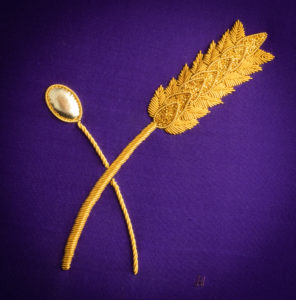
The design for this exclusive RSN kit was inspired by Queen Elizabeth II’s Coronation Robe, stitched by the RSN Embroidery Studio in 1953 with the theme of Peace and Plenty. This was symbolised by olives and wheat and was very appropriate for a post-war period still under food rationing.


Union Jack Kit

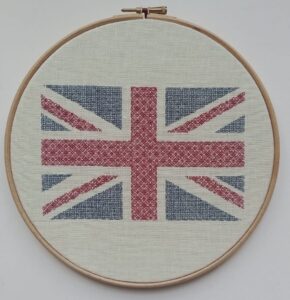
The iconic image of the Union Jack has been reworked by RSN Embroider Masako Newton, to create a beautiful coloured Blackwork kit. A blend of old and new, the faded subtle colours to Masako’s design gives the Union Jack a vintage feel and the design a modern edge.


The Majesty Of Stitch Kit

The prancing lion and unicorn are synonymous with majesty and royalty.  They have appeared on the royal seal for many years which the RSN gained in 1875 in recognition of the exquisite craftsmanship of its embroiderers. This design by RSN Tutor Helen Richman, celebrates the close ties between embroidery and royalty and the huge part that needlework has had to play in creating items of splendour and the tools used to achieve it.