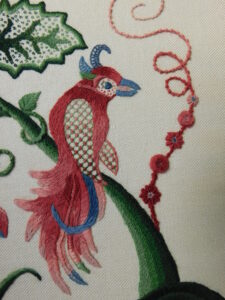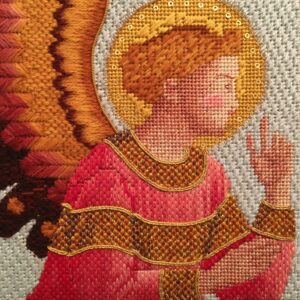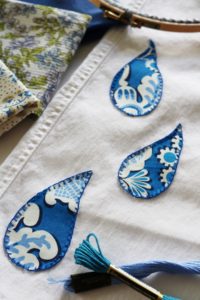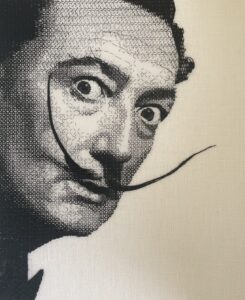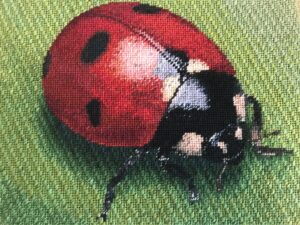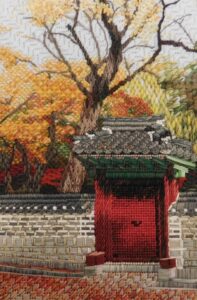
Student, Sue Kim originally from Seoul, South Korea, is currently in her second year on the Future Tutor Programme and shares her journey from being an RSN Certificate Student to learning to become an RSN Tutor.

“After graduating with my BA in metal craft and textile in Seoul, South Korea, I moved to London in 2001 to further study footwear design at the London College of Fashion (LCF). After my LCF studies, I set up a handmade jewellery brand, but paused it for maternity leave. I started sewing as a hobby during my maternity leave, and ended up falling in love with stitching.

After running an embroidery class for many years, I realised that I needed to improve the depth of my embroidery knowledge. I then found the Royal School of Needlework and took the Certificate course first, before joining the Future Tutors Programme. I have been living in Surrey since 2009 and luckily, it takes only 30 minutes to drive from my home to RSN.

I am over halfway through the three year course, and so far it has been an amazing experience. I have learnt so many new techniques under the talented RSN Tutors, and have enjoyed learning with my lovely classmates.

What’s extra special about the FTP course for me is not only learning new techniques, but also gaining hands-on teaching experience. Recently, I ran ? was this really one three-day class or three one day classes? a 3 day long class at the Knitting and Stitching show on behalf of RSN, and felt much more confident in teaching by interacting with real people from outside the classroom.

Among the many techniques I have learnt so far, I particularly love Whitework and Coronation Gold techniques because I can create my own design instead of simply reproducing an existing one. My future goal is to combine traditional embroidery techniques with my own contemporary design.

I hope my contemporary embroidery design will appeal to more people in this lovely craft and broaden stitching audiences. I believe that stitching makes our life richer and brings people together under this amazing craft, especially in today’s busy modern lifestyle. My future goal is to be a Tutor at the RSN and teach embroidery classes. That would be my dream come true.”

Follow Sue’s journey to becoming an RSN Tutor on her Instagram

To celebrate the work that the RSN Embroidery Studio carried out for the Coronation of His Majesty King Charles III, RSN Tutor, Sarah de Rousset-Hall will be teaching this Introduction to Coronation Gold class at The D-Day Story Portsmouth on Saturday 15 July. This class is part of the long-standing partnership between The D-Day Story and the RSN who stitched the Overlord Embroidery from 1968 to 1974.

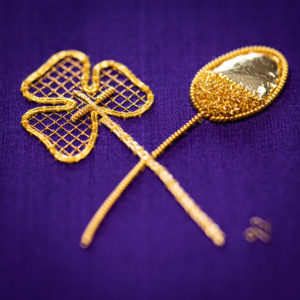
The stunning Shamrock & Acorn design for this class is inspired by the embroidery on the 1937 Coronation Robe of Estate worn by Queen Elizabeth, The Queen Mother, consort of King George VI and stitched by the RSN.

Your design will be worked on purple silk dupion using gilt and metallic threads, echoing the RSN’s embroidery on both her coronation dress and robe.

This unique class covers many of the embroidery techniques used on these garments including Trellis, Chipping, Couching and Appliqué. You will also add felt padding to the acorn to give it extra dimension and sparkle. The finished design measures approximately 5cm by 5cm and is photographed here in a 4” hoop.

The RSN’s link to Coronation Robes goes back to the 1902 Coronation of King Edward VII and Queen Alexandra, after which the School has been commissioned to work on all Coronations.

All the stitches covered in this class and more can be found on the RSN Stitch Bank.

Sign up here to book your place here

Our Third Year Degree Students will be showcasing their exciting Final Major Projects in an exhibition at Hampton Court Palace.

The exhibition will run on 8, 9, 13, 14 and 16 June, with visiting times at 11am and 2pm. The Graduates will be on hand to discuss their projects and to inspire the next generation of hand embroiderers.

To celebrate all they have achieved, read on to meet some of the 2023 Graduates behind the beautiful work, and the inspiration and story behind their final Major Projects.


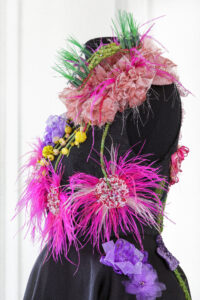
Chloe Angrave, ‘Oceanic Decay’

RSN Degree Graduate 2023, Chloe Angrave is a textile embroiderer.

Chloe’s Final Major Project entitled ‘Oceanic Decay’ examines her fascination with sea life. She believes it is important that the fashion industry becomes more sustainable.  

“This piece aims to bring awareness to global warming in a sustainable, nuanced way by using new and old materials to create a luxurious bespoke garment.”

Follow Chloe on Instagram


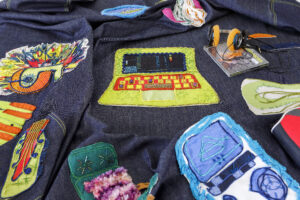
Chloe Rogers, ‘Purifying Graffiti’

Chloe’s Final Major Project, titled ‘Purifying Graffiti’, explores her personal relationship with her urban life origins blended with a societal connection with an overarching environmental issue to create an artistic intervention.

“My collection displays graphic embroidered text including referencing the European Green Capital, an award that Bristol, my place of inspiration and innovation, gained recognition for in 2015 in celebration of its ambitious sustainable action.”

Follow Chloe on Instagram


Emily Barnett, ‘The Chawton House Project’

Emily’s work explores her connection with Chawton House. She became an assistant in the tearoom at the age of eighteen and spent her tea breaks exploring and photographing the extensive grounds.

“In this piece, the central panel celebrates The Rose Garden, combining the ‘Pride and Prejudice’ roses from the Rose Walk, details from the ornate garden gates and text from the title page of Elizabeth Blackwell’s ‘A Curious Herbal’ (1735)”.

Follow Emily on Instagram


Jenna Riddell, ‘Waste to Art’

Hand embroiderer Jenna Riddell’s purpose is to create conversation about climate change and consumerism through embroidered protest placards.

“The context for my work is a fine art textile collection that consists of multiple embroidered placards using waste as my only material. My work is to be seen in exhibition spaces and galleries but primarily in urban protest settings.”

Follow Jenna on Instagram


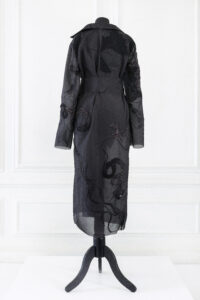
Kirsty Farrar, ‘A Lost Expression’ 

‘A Lost Expression’ – explores the idea of articulating personal mental health through a process which was not previously consciously linked.

“Within my work, I have examined my own emotions and thoughts constructed from my mental health. Mental health is an underlying subject within ‘a lost expression’ and was chosen due to a want and a need to create a body of work which was highly personal.”

Follow Kirsty on Instagram


Lizzie Gray, ‘Inside and Out’

‘Inside and Out’ is a series of five embroidered neck pieces exploring the human body. These pieces focus on selected anatomical imagery; the hands, heart, eyes, veins, and teeth which Lizzie has chosen for their diversity in colour and texture.

“I want to celebrate the beauty of anatomy, while reimagining various elements using embroidery.”

Follow Lizzie on Instagram


Tomas Asmelash, ‘Snowdrops’

Tomas’ most recent piece has been inspired from his faith and culture. He uses traditional hand embroidery techniques, learnt during his time studying at the RSN.

“My aim is to introduce my own religion, culture, and homeland of Eritrea to the viewer by bringing the aesthetic and traditions of the church and the wedding ceremony into my work.”

Follow Tomas on Instagram


The exhibition will run on 8,9,13, 14 and 16 June, with visiting times at 11am and 2pm.

The exhibition is free of charge to visit, but you must pre-book your place.

Click here to register


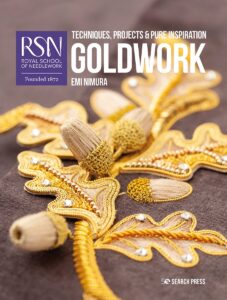
Our selection of beautiful books not only offer the best of Embroidery, but also books that are guaranteed to inspire. Our range has books on subjects as diverse as textiles and fashion, design and the decorative art of pattern, craft and fine art and history.

The RSN Essential Stitch Guides are a rich source of embroidery techniques, stitches and projects, covering all the key subjects in detail, Crewelwork, Bead Embroidery, Stumpwork, Canvaswork, Goldwork, Whitework, Blackwork and Silk Shading.

Each book written by RSN tutors, feature practical, instructional guides that offer a complete grounding in the techniques you need, including comprehensive stitch guides that lead the reader through each technique using clear step by step photography and easy to follow expert guidance. Many of the books contain stunning projects that put these techniques into practice and showcase additional advanced techniques.

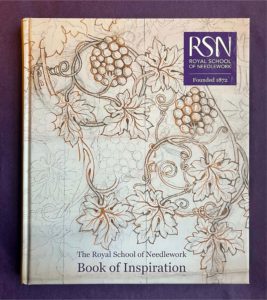
For pure creative inspiration, The Royal School of Needlework Book of Inspiration features many unseen images from the RSN Archive Collection, with a page on each double-page spread for your own ideas, sketches and thoughts. The images have been selected by Author, Curator and CE of the RSN Dr Susan Kay-Williams and date from the early 17th Century to the present day.

Shop our full range of Embroidery books here

RSN Stitch Bank will be growing even more this June in the number of stitches featured on the site. On the 21 June, we will be adding another 25 stitches to the RSN Stitch Bank, which will bring the total up to 325 stitches!

These new stitches include Diamond Tile, Floral Lace, Gold Twist Application, Grecian Curls and many more.

RSN Stitch Bank is an incredible resource, featuring videos, written instructions, illustrations and photographs for each stitch. It also includes history of its use and images of the stitch on items from the RSN Textile Collection.

RSN Stitch Bank is available online via the website rsnstitchbank.org and is a unique resource for all stitchers, teachers, curators, historians, researchers and students. Stitchers are able to find a new stitch to use in a project and learn how to work it. Researchers, curators, historians and students can use the site to learn about the use, structure and history of each stitch, in a range of embroidery techniques, and to identify individual stitches on a textile.

RSN Stitch Bank has been made possible thanks to a number of charitable trusts and many individual donors who have ‘Adopted a Stitch’ for themselves, for a friend or for a parent or grandparent who first taught them to stitch. If you would like to support the project and ‘Adopt a Stitch’, visit royal-needlework.org.uk for more information.

Visit rsnstitchbank.org to see the full RSN Stitch Bank.

With the International Summer School fast approaching, we are focusing on all of the wonderful classes that will be taking place onsite at Hampton Court Palace throughout July and August.

Throughout August as part of our International Summer School, we invite you to join us for one of the inspiring classes on offer. Whether you want to improve your drawing and design skills, stitch a Stunning Goldwork letter of your choice, explore Blackwork and Whitework, create your own piece of Victorian Patchwork or stitch a Coronation inspired Crown pincushion, there really is something for everyone.

In addition, as part of your time with us you will be treated to a visit behind the RSN Embroidery Studio door where you will learn about the Studio and see work-in-progress with Head of Studio, Anne Butcher, and Studio Manager, Gemma Murray. You will also have access to a series of specially curated Online Talks both live and on Demand. The final ‘treat’ will be a visit to Buckingham Palace to view pieces from the recent Coronation of HM King Charles III. We have been eagerly awaiting confirmation from Buckingham Palace and are delighted that we can now share this news with you!

All in all, the International Summer School at Hampton Court Palace really is the only place to be in August and we hope that you can join us to celebrate stitch!

International Summer School Classes


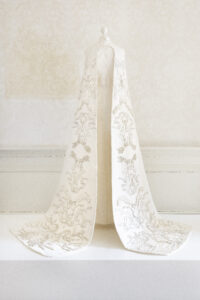
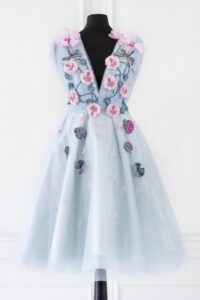
Introducing Coast x Royal School of Needlework, a very special collaboration celebrating the art of embroidery. Taking inspiration from our unique Collection, Coast has created a 18-piece, limited-edition bridal collection to make that special day even more memorable.

The RSN Collection and Archive has more than 4000 embroidered objects and many thousands of designs, capturing the passion for embroidery throughout history.

Coast’s exclusive 2023 bridalwear takes inspiration from three different artworks from our Collection – the Lily Altar Frontal, Wildflower Design and Kyoto Panel. Chosen for their different family of flowers, each piece helped to define the stories that make up each capsule of aspirational bridalwear.

Paying homage to the modern bride, the Lily capsule has been inspired by the Lily Altar Frontal; a heavily embroidered textile featuring a variety of lilies that represent humility and purity and often used within wedding bouquets. Drawing from this design, the bridalwear pieces are adorned with delicate blooms, mesmerising beading and elegant silhouettes, plus sweeping veils and trains with pretty needlework to capture the essence of a contemporary bride.

Inspired by Dutch flower paintings, the Wildflower design consists of carnations, irises and parrot tulips. Taking this floral theme, Coast’s capsule caters to a more traditional, countryside mood, featuring quintessentially feminine shapes in flowing fabrics with gorgeous decoration work and floral motifs.

Emma Doggart, Director of Strategy and External Relations at RSN comments:

“Although the traditional skills of hand embroidery have not changed, the RSN’s Collection & Archive shows how embroidery has evolved through the years and it is fantastic to see how history can influence today’s fashion. We are delighted with the way the team at Coast has interpreted the designs from our Collection, bringing them back to life to be worn for such a special and joyous occasion of a wedding.”

Finally, the Kyoto collection represents a more unique take on bridalwear. Influenced by the stunning Kyoto Panel that features the Japanese flower of winter, the chrysanthemum, in its various forms and extraordinary embroidery of silk and gold threads. Detailing on the bridalwear is heavily embellished with beading and needlework representing the charm of the classic Japanese flowers. Silhouettes take on a different approach with relaxed fits, tiered elements, and batwing sleeves.

Lovingly crafted with the upmost detail, the Coast x Royal School of Needlework is a limited-edition collection to suit an array of bridal tastes with a beautiful heritage and story behind each piece. Something old and something new combine for a beautiful collection of opulent and ornate bridal pieces to cherish forever.

Available to purchase online at coastfashion.com

Images of Coast’s new Bridal Collection and two of the inspiration designs from the RSN’s Collection – The Kyoto Panel and Lily Altar Frontal


We are delighted to announce that the magnificent Coronation Outfits of Their Majesties King Charles III and Queen Camilla will be on display at Buckingham Palace this summer, from 14 July – 24 September 2023.

The display will include The Stole Royal worn by His Majesty and The Robe of Estate worn by Her Majesty, both of which were newly created for the service and hand embroidered by our expert Embroidery Studio team.

And there is more good news – If you are booked on our International Summer School at Hampton Court Place on a course of two days or more, you will be able to attend the exhibition at Buckingham Palace as part of your course.

View Hampton Court Palace Courses for International Summer School

For more information on the Summer Opening at Buckingham Palace visit their website rct.uk

Image of Buckingham Palace courtesy of Royal Collection Trust / © His Majesty King Charles III 2023

Image of work in progress of Her Majesty The Queen’s Robe of Estate © Royal School of Needlework

Image of Stole Royal courtesy of Prudence Cuming Fine Art Photography and The Girdlers’ Company

The Royal School of Needlework’s Embroidery Studio conserved the Robe of State of The King, which was be worn by His Majesty on arrival at Westminster Abbey.

The King’s Robe of State is made of crimson velvet and was originally worn by King George VI at the Coronation in 1937. In preparation for the Coronation Service, the velvet has been conserved by the Royal School of Needlework, with the lining and gold lace conserved by Ede and Ravenscroft.

We are honoured to have designed and hand embroidered the Robe of Estate for Queen Camilla, worn on departure from Westminster Abbey. The embroidered design of the train draws on the themes of nature and the environment, featuring the national emblems of the United Kingdom, as well as paying tribute to His Majesty The King.

The Robe uses a rich purple velvet, chosen to match His Majesty’s Robe of Estate, and has been embroidered by the Royal School of Needlework using the Goldwork technique, with the design also incorporating Her Majesty’s cypher.

Featured on the robe is Scabiosa, known as pincushion flowers, which is a reference to the Royal School of Needlework’s connection with Her Majesty, and her dedicated support when she became Patron in 2017 as The Duchess of Cornwall.

For the first time, insects including bees, butterflies, a beetle and caterpillar feature on the Coronation Robe, drawing on the themes of nature and the environment and reflecting Their Majesties’ affection for the natural world.

In addition, there are a total of 24 plants featured on the robe, all chosen for their personal associations. These include Lily of the Valley, which featured in Her Majesty’s wedding bouquet and was a favourite flower of Queen Elizabeth II; Myrtle, which represents hope; and Delphinium, one of The King’s favourite flowers and the birth flower of July, the birth month of The Queen. And The Hawthorn also represents the month of May when the Coronation takes place and Oak leaves symbolise strength and longevity.

Also featured is the ‘Alchemilla Mollis’, known as Lady’s Mantle, which symbolises love and comfort, Maidenhair Fern, which symbolises purity, and cornflowers, which represent love and tenderness. The Cornflower also helps to attract and encourage wildlife such as bees and butterflies. The wild flowers are at the bottom of the robe, leading to the four emblematic flowers of England, Ireland, Scotland and Wales at the top.

The Robe itself has been made by Ede and Ravenscroft.

The Royal School of Needlework also worked on the Robes of Estate for the Consort of King George VI, Queen Elizabeth (later known as the Queen Mother) in 1937 and Queen Elizabeth II in 1953.


The Stole Royal for the Coronation of His Majesty The King has been newly created and embroidered by the Royal School of Needlework, from a design created by Timothy Noad, Herald Painter at the College of Arms, overseen by Garter King of Arms.

Inspired by the Stole worn by Queen Elizabeth II in 1953, the design features a series of roundels set in a gold chain framework and applied to cloth of gold. Each roundel features an embroidered image which has been created using the silk shading technique, also known as ‘painting with a needle’.

Designs in the roundels include the four emblems of the United Kingdom – Rose, Thistle, Leek, and Shamrock; a Dove of peace (representing the Holy Spirit); a Tudor Crown; the Crossed Keys of St Peter; the four Apostles and a pattern inspired by the Cosmati Pavement in Westminster Abbey, upon which the Anointing of His Majesty takes place.

At the nape of the neck is an icon representing St Lawrence, the Patron saint of the Girdlers’ Livery Company, who have gifted the Stole Royal for the occasion. The Girdlers have presented Monarchs with new Stole Royals for the past four Coronations.

The embroidered illustrations have been worked in different colours, using fine twisted silk threads, and the framework has been edged with Gold Grecian and Pearl Purl. The Stole has a gold coloured lining and a gold twisted fringe.

The Royal School of Needlework also conserved and renovated the Coronation Sword Belt, known as The Girdle.  The Girdle was first worn by George VI at his coronation in 1937. The belt is made in Cloth of Gold and embroidered in gold thread.

The Stole Royal and Girdle are presented during the Anointing, when the monarch is invested with the coronation robes and other symbols of royalty. The Stole is placed over the Supertunica and the Girdle is fastened at the monarch’s waist.

The Worshipful Company of Girdlers also provided the Stole Royal and Girdle for the coronations of Elizabeth II, George VI and George V.

Image credit: Prudence Cuming Fine Art Photography courtesy of The Girdlers’ Company

The Royal School of Needlework has had the honour of working on the Chairs of Estate and Throne Chairs (Chairs of State) that will be used by The King and The Queen Consort at different points during the Coronation Service on 6 May.

In the interests of sustainability, Their Majesties have chosen to use Chairs of Estate and Throne Chairs from the Royal Collection made for previous Coronations.

The Chairs of Estate will be used during the early parts of Their Majesties’ Coronation, with The Queen Consort to be crowned in Her Majesty’s Chair of Estate. For the final part of the Coronation Service, The King and The Queen Consort will be seated in Throne Chairs once crowned.

Chairs of Estate

The Chairs of Estate, which will be used for the Coronation, were made in 1953 by the London firm White, Allom and Company for the Coronation of Queen Elizabeth II.

In preparation for the Coronation, Gilding and Furniture Conservators from the Royal Collection Trust have cleaned, restored and consolidated the giltwood frames. New silk damask was woven by the Humphries Weaving Company, Suffolk to the same pattern with which they were originally upholstered. This was to allow for the cyphers of The King and The Queen Consort to replace those of Queen Elizabeth II and Prince Philip, which were removed and will be kept in the Royal Collection.

The Royal School of Needlework has hand embroidered new cyphers for the Chairs of Estate. They have been created with cloth of gold, woven with a metal thread. The cloth of gold was then embellished with gold metallic threads, such as Pearl Purl, Gimp and Check. Upon completion, the RSN applied the cyphers onto the silk damask using the Appliqué technique.

The upholstery was completed by the Royal Household’s Upholsterers, including the re-use of the original braid and trimmings.

Throne Chairs

The Throne Chairs were made for the Coronation of King George VI and Queen Elizabeth The Queen Mother in 1937 by White Allom and Company, replicating seventeenth century style which in turn was based on X-framed Tudor stools. The Chairs were upholstered in crimson velvet and applied with the Royal Arms of King George VI and Queen Elizabeth.

In preparation for the Coronation, the Chairs have been conserved by the Royal Collection Trust’s Furniture Conservators. The crimson silk velvet with which the chairs were originally upholstered has been replaced with the velvet and trimmings by the firm of AT Cronin Workshop Ltd.

The Royal School of Needlework has conserved the original embroidered Coat of Arms on His Majesty’s chair and lightly cleaned it before transferring it onto new velvet.

In addition, the Royal School of Needlework has hand embroidered a new Coat of Arms of The Queen Consort for Her Majesty’s Throne Chair using the Silk Shading technique, which has been applied to the new velvet.

New silk braid and trellis fringe, replicating the original trimmings of the Throne Chairs has been woven by Heritage Trimmings Ltd of Derby. The silk was produced by The Humphries Weaving Company, Suffolk, and the silk for the fringe has been specially dyed by Gainsborough Silks, Suffolk.

By tradition, ceremonial chairs and thrones are used for the different stages of the Coronation Service. These are in addition to the St Edward’s Chair (Coronation Chair), which is used for the moment of crowning.

Images show: work in progress of The Queen Consort’s Coat of Arms at the RSN’s Embroidery Studio copyright RSN; and work in progress of re-upholstery of chairs copyright PA News