The Royal School of Needlework’s Embroidery Studio conserved the Robe of State of The King, which was be worn by His Majesty on arrival at Westminster Abbey.

The King’s Robe of State is made of crimson velvet and was originally worn by King George VI at the Coronation in 1937. In preparation for the Coronation Service, the velvet has been conserved by the Royal School of Needlework, with the lining and gold lace conserved by Ede and Ravenscroft.

We are honoured to have designed and hand embroidered the Robe of Estate for Queen Camilla, worn on departure from Westminster Abbey. The embroidered design of the train draws on the themes of nature and the environment, featuring the national emblems of the United Kingdom, as well as paying tribute to His Majesty The King.

The Robe uses a rich purple velvet, chosen to match His Majesty’s Robe of Estate, and has been embroidered by the Royal School of Needlework using the Goldwork technique, with the design also incorporating Her Majesty’s cypher.

Featured on the robe is Scabiosa, known as pincushion flowers, which is a reference to the Royal School of Needlework’s connection with Her Majesty, and her dedicated support when she became Patron in 2017 as The Duchess of Cornwall.

For the first time, insects including bees, butterflies, a beetle and caterpillar feature on the Coronation Robe, drawing on the themes of nature and the environment and reflecting Their Majesties’ affection for the natural world.

In addition, there are a total of 24 plants featured on the robe, all chosen for their personal associations. These include Lily of the Valley, which featured in Her Majesty’s wedding bouquet and was a favourite flower of Queen Elizabeth II; Myrtle, which represents hope; and Delphinium, one of The King’s favourite flowers and the birth flower of July, the birth month of The Queen. And The Hawthorn also represents the month of May when the Coronation takes place and Oak leaves symbolise strength and longevity.

Also featured is the ‘Alchemilla Mollis’, known as Lady’s Mantle, which symbolises love and comfort, Maidenhair Fern, which symbolises purity, and cornflowers, which represent love and tenderness. The Cornflower also helps to attract and encourage wildlife such as bees and butterflies. The wild flowers are at the bottom of the robe, leading to the four emblematic flowers of England, Ireland, Scotland and Wales at the top.

The Robe itself has been made by Ede and Ravenscroft.

The Royal School of Needlework also worked on the Robes of Estate for the Consort of King George VI, Queen Elizabeth (later known as the Queen Mother) in 1937 and Queen Elizabeth II in 1953.


The Stole Royal for the Coronation of His Majesty The King has been newly created and embroidered by the Royal School of Needlework, from a design created by Timothy Noad, Herald Painter at the College of Arms, overseen by Garter King of Arms.

Inspired by the Stole worn by Queen Elizabeth II in 1953, the design features a series of roundels set in a gold chain framework and applied to cloth of gold. Each roundel features an embroidered image which has been created using the silk shading technique, also known as ‘painting with a needle’.

Designs in the roundels include the four emblems of the United Kingdom – Rose, Thistle, Leek, and Shamrock; a Dove of peace (representing the Holy Spirit); a Tudor Crown; the Crossed Keys of St Peter; the four Apostles and a pattern inspired by the Cosmati Pavement in Westminster Abbey, upon which the Anointing of His Majesty takes place.

At the nape of the neck is an icon representing St Lawrence, the Patron saint of the Girdlers’ Livery Company, who have gifted the Stole Royal for the occasion. The Girdlers have presented Monarchs with new Stole Royals for the past four Coronations.

The embroidered illustrations have been worked in different colours, using fine twisted silk threads, and the framework has been edged with Gold Grecian and Pearl Purl. The Stole has a gold coloured lining and a gold twisted fringe.

The Royal School of Needlework also conserved and renovated the Coronation Sword Belt, known as The Girdle.  The Girdle was first worn by George VI at his coronation in 1937. The belt is made in Cloth of Gold and embroidered in gold thread.

The Stole Royal and Girdle are presented during the Anointing, when the monarch is invested with the coronation robes and other symbols of royalty. The Stole is placed over the Supertunica and the Girdle is fastened at the monarch’s waist.

The Worshipful Company of Girdlers also provided the Stole Royal and Girdle for the coronations of Elizabeth II, George VI and George V.

Image credit: Prudence Cuming Fine Art Photography courtesy of The Girdlers’ Company

The Royal School of Needlework has had the honour of working on the Chairs of Estate and Throne Chairs (Chairs of State) that will be used by The King and The Queen Consort at different points during the Coronation Service on 6 May.

In the interests of sustainability, Their Majesties have chosen to use Chairs of Estate and Throne Chairs from the Royal Collection made for previous Coronations.

The Chairs of Estate will be used during the early parts of Their Majesties’ Coronation, with The Queen Consort to be crowned in Her Majesty’s Chair of Estate. For the final part of the Coronation Service, The King and The Queen Consort will be seated in Throne Chairs once crowned.

Chairs of Estate

The Chairs of Estate, which will be used for the Coronation, were made in 1953 by the London firm White, Allom and Company for the Coronation of Queen Elizabeth II.

In preparation for the Coronation, Gilding and Furniture Conservators from the Royal Collection Trust have cleaned, restored and consolidated the giltwood frames. New silk damask was woven by the Humphries Weaving Company, Suffolk to the same pattern with which they were originally upholstered. This was to allow for the cyphers of The King and The Queen Consort to replace those of Queen Elizabeth II and Prince Philip, which were removed and will be kept in the Royal Collection.

The Royal School of Needlework has hand embroidered new cyphers for the Chairs of Estate. They have been created with cloth of gold, woven with a metal thread. The cloth of gold was then embellished with gold metallic threads, such as Pearl Purl, Gimp and Check. Upon completion, the RSN applied the cyphers onto the silk damask using the Appliqué technique.

The upholstery was completed by the Royal Household’s Upholsterers, including the re-use of the original braid and trimmings.

Throne Chairs

The Throne Chairs were made for the Coronation of King George VI and Queen Elizabeth The Queen Mother in 1937 by White Allom and Company, replicating seventeenth century style which in turn was based on X-framed Tudor stools. The Chairs were upholstered in crimson velvet and applied with the Royal Arms of King George VI and Queen Elizabeth.

In preparation for the Coronation, the Chairs have been conserved by the Royal Collection Trust’s Furniture Conservators. The crimson silk velvet with which the chairs were originally upholstered has been replaced with the velvet and trimmings by the firm of AT Cronin Workshop Ltd.

The Royal School of Needlework has conserved the original embroidered Coat of Arms on His Majesty’s chair and lightly cleaned it before transferring it onto new velvet.

In addition, the Royal School of Needlework has hand embroidered a new Coat of Arms of The Queen Consort for Her Majesty’s Throne Chair using the Silk Shading technique, which has been applied to the new velvet.

New silk braid and trellis fringe, replicating the original trimmings of the Throne Chairs has been woven by Heritage Trimmings Ltd of Derby. The silk was produced by The Humphries Weaving Company, Suffolk, and the silk for the fringe has been specially dyed by Gainsborough Silks, Suffolk.

By tradition, ceremonial chairs and thrones are used for the different stages of the Coronation Service. These are in addition to the St Edward’s Chair (Coronation Chair), which is used for the moment of crowning.

Images show: work in progress of The Queen Consort’s Coat of Arms at the RSN’s Embroidery Studio copyright RSN; and work in progress of re-upholstery of chairs copyright PA News
 

The Royal School of Needlework is proud to announce that it has been working on the Anointing Screen which has been designed and produced for use during the Coronation Service on 6 May at Westminster Abbey.

The Anointing Screen will be used at the most sacred moment of the Coronation, the Anointing of His Majesty The King. The screen combines traditional and contemporary sustainable embroidery practices to produce a design which speaks to His Majesty The King’s deep affection for the Commonwealth.

The Anointing Screen was designed by iconographer Aidan Hart and has been brought to life through embroidery, managed by the Royal School of Needlework. The design has been selected personally by The King and is inspired by the stained-glass Sanctuary Window in the Chapel Royal at St James’s Palace.

The central design takes the form of a tree with 56 leaves, representing the 56 member countries of the Commonwealth.  The leaves have been embroidered by staff and students from the Royal School of Needlework, as well as members of different Livery Companies – The Worshipful Company of Broderers, Drapers and Weavers.

Also forming part of the Commonwealth tree are The King’s Cypher, decorative roses, angels and a scroll.  At the top of the screen is the sun, representing God, and birds including the dove of peace, which have all been hand embroidered by our expert Embroidery Studio.

The screen is three-sided. The two sides of the screen feature a simpler design with maroon fabric and a gold, blue and red cross, inspired by the colours and patterning of the Cosmati Pavement at Westminster Abbey where the Anointing will take place. The crosses were also embroidered by our Embroidery Studio.

The Anointing Screen is supported by a wooden pole framework, designed and created by Nick Gutfreund of the Worshipful Company of Carpenters. The oak wooden poles are made from a windblown tree from the Windsor Estate, which was originally planted by The Duke of Northumberland in 1765.

As well as heritage craft, contemporary skills and techniques have formed part of this unique collaboration. The outline design of the tree has been created using digital machine embroidery by Pete Tarrant from Digitek Embroidery.

The Anointing screen has been gifted for the Coronation by the City of London Corporation and participating Livery Companies, the City’s ancient and modern trade guilds.

Images show:

  • Work in progress on the Commonwealth Tree
  • Work in progress on the Sun
  • The Anointing Screen in Chapel Royal at St James’s Palace with the window that inspired the design behind (copyright: PA News)

With just over a week to go until the Coronation of His Majesty King Charles III and The Queen Consort Camilla, excitement is growing both in the UK and internationally to celebrate the big day and be a part of this very special and historic event.

Upcoming events during the Coronation Weekend


Saturday 6 May

The official Coronation ceremony will take place on Saturday 6 May at Westminster Abbey, London.

Celebrations will be held up and down the country whilst the Royal Procession will take place, starting at Buckingham Palace, with His Majesty and The Queen Consort travelling down The Mall, and returning to Buckingham Palace after the ceremony where they will be joined by other members of the Royal Family.

Hundreds of thousands of members of the public are expected to line the parade route for their chance to see The King and Queen Consort in the Diamond Jubilee Estate Coach.

Sunday 7 May

A Coronation Concert will be held at Windsor Castle, with an evening of music from global icons and contemporary musicians to celebrate together. A world-class orchestra will also play interpretations of musical favourites, with staging and effects taking place on the East Lawn of the castle.

Monday 8 May

The Big Help Out will be organised by The Together Coalition along with The Scouts, the Royal Voluntary Service and faith groups from across the United Kingdom. This event is set to highlight the importance of volunteering and will encourage people across the nation to get involved and help organisations in their local community.

The RSN and Past Coronations

The RSN has a long and rich history working on Coronations for the British Royal family and has been creating pieces for the ceremonies going back to 1902. From State Coronation robes to Altar dorsals and exhibitions, we are extremely proud of the involvement we have had in past Coronations.

We had the privilege of working on the Robe of Estate for Queen Elizabeth II in 1953, designed and embroidered by the Royal School of Needlework. Eighteen varieties of gold thread were used in the Goldwork embroidery, taking a total of 3,500 hours from February to April 1953 with 12 embroiderers working in shifts, seven days a week.

Read more of the RSN’s full history with past Coronations of the British Royal Family. Or better still, book a place on the talk being given by our Chief Executive and author of An Unbroken Thread on the 150 year history of the RSN on Wednesday 10 May 


The Royal School of Needlework would like to wish His Majesty King Charles III and Queen Camilla the best of luck for Saturday and wish them a happy and peaceful reign.

Inspired by The RSN’s involvement with Coronation robes dating all the way back to 1902, we are celebrating with four of our RSN trained Tutors/Embroiderers embroidery kits, available in our Coronation inspired shop.


Coronation Thistle Kit

This beautiful kit has been designed by RSN Tutor Anita Harrison and was inspired by the thistles in the Commonwealth floral emblem worked in gold threads on the Queen Mother’s coronation dress.  She wore the dress to the Coronation of her husband King George VI in May 1937.  The leaf was inspired by the leaves in the Peace and Plenty Emblem on the Coronation Robe worn by Queen Elizabeth II in 1953.


Coronation Gold: ‘Peace & Plenty’


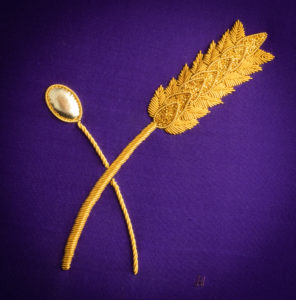
Coronation Gold: Peace and Plenty Goldwork Kit

The design for this exclusive RSN kit was inspired by Queen Elizabeth II’s Coronation Robe, stitched by the RSN Embroidery Studio in 1953 with the theme of Peace and Plenty. This was symbolised by olives and wheat and was very appropriate for a post-war period still under food rationing.


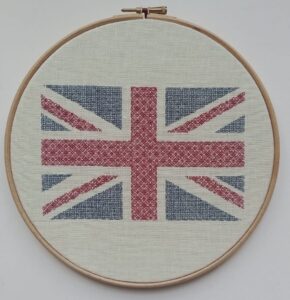
Union Jack Kit

The iconic image of the Union Jack has been reworked by RSN Embroider Masako Newton, to create a beautiful coloured Blackwork kit. A blend of old and new, the faded subtle colours to Masako’s design gives the Union Jack a vintage feel and the design a modern edge.


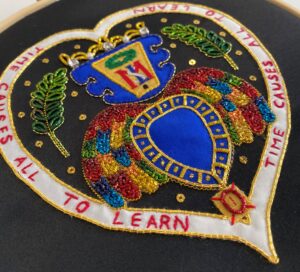
The Majesty Of Stitch Kit

The prancing lion and unicorn are synonymous with majesty and royalty.  They have appeared on the royal seal for many years which the RSN gained in 1875 in recognition of the exquisite craftsmanship of its embroiderers. This design by RSN Tutor Helen Richman, celebrates the close ties between embroidery and royalty and the huge part that needlework has had to play in creating items of splendour and the tools used to achieve it.

The Royal School of Needlework was delighted to welcome The King and The Queen Consort, Patron, on Tuesday 21 March, to view the progress of work we are undertaking for the forthcoming Coronation, meet our specialist Studio Embroiderers and other members of RSN staff.

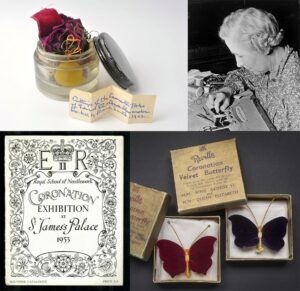
Their Majesties also viewed displays of objects from past Coronations from our unique Archive & Collection.  The Royal School of Needlework has had the honour and privilege to work on regalia for all the coronations since it was founded in 1872.

The Fine Art Textiles Award (FATA) is now open for entries. FATA is an international juried exhibition open to all amateur and practising textile artists. This prestigious award is your chance to win £5,000 and to have your work shortlisted for a touring exhibition shown at The Festival of Quilts and The Knitting & Stitching Shows in London and Harrogate this autumn.

FATA recognises the creative talents of a broad spectrum of high-calibre artists producing gallery-quality fine art and is judged by an esteemed group of artists and industry professionals.

If you have a piece considered as fine art and made within the last two years, make the most of this fantastic opportunity and enter your piece by 22 May 2023.

Submit your entry here

Learn more about the FATA here

We have lots of exciting events coming up this month at the RSN to see in the warmer months. From a brand-new season of Online Talks to plenty of Day Classes, you won’t be short of things to attend!

Day Classes


Designing for Embroidery – Jacobean Crewelwork – Online – 10 May

The Majesty Of Stitch – Online – 12 – 14 May

Silk Shaded Cocktail Glass – Onsite – Hampton Court Palace – 13 May

Developing Silk Shading: Pet Portrait – Online – Weekly, from 13 May

Designing for Embroidery: Blackwork – Online – 17 May

Drawing Day – Drawing Flowers – Online – 17 May

Introduction to Embroidery: Koi Pond – Onsite – Hampton Court Palace – 20 May

Tudor Box – Online – 20 May

Native Wildflower: Arrowhead – Onsite – Hampton Court Palace – 21 May

Experimental Beading – Onsite – Hampton Court Palace – 21 May

Proserpine: Based on a design by Selwyn Image – Online – Weekly, from 22 May

Advanced Monogramming – Online – 24 May

Introduction to Goldwork: Golden Paisley – Onsite – Hampton Court Palace – 27 May


Partnership Classes

16th Century Splendour inspired by The Darnley Jewel in partnership with Royal Collection Trust at the Palace of Holyroodhouse – 13 May


Online Talks

A Mantle, Canopies, Robes and endless Chairs: RSN and Coronations of the 20th Century – 10 May


Future Dates For Your Diary

EXILE: sono oriunda Exhibition – 6 May – 2 July

Degree Students Graduate Show, Hampton Court Palace: 8, 9, 12, 14, 15, 16 June

Graduate Fashion Week, The Truman Brewery: 12-15 June

RSN Scotland Open Day, Glasgow Art Club: 21-28 June

New Designers, Business Design Centre Islington: 28 June – 1 July

Future Tutors and Certificate and Diploma end of year Graduate Show, Hampton Court Palace: 4 – 9 July


The Certificate and Diploma course (C&D) at the RSN offers a unique opportunity to elevate your skill in hand embroidery, both onsite at our various locations, or entirely online. You will learn valuable embroidery techniques, with many of our past students going on to work as designers and embroiderers on private and public commissions.

Here, RSN Diploma student Catherine Thorn shares her experience of learning at RSN Scotland, based in The Glasgow Art Club.

“I first learnt about the RSN when I picked up a leaflet on a visit to Hampton Court Palace. I started the Certificate in Technical Hand Embroidery in 2014 embarrassingly, at RSN Scotland in Glasgow, with Tutor Helen McCook.


I’ve always loved embroidery, despite a long gap when the only sewing I did was mending and attaching name tapes, but I went to some RSN Day Classes, which I really enjoyed, and wanted to take it further.

I loved the Canvaswork best, despite not thinking I would enjoy it. I really enjoyed the freedom of finding different threads for different textures, mixing threads in the needle, and, also, I think I chose the subject well, as it’s a place I love.


I’ve been inspired by Helen who has encouraged me so much – I’m one of these people who never thought I could design my own embroidery because I can’t draw. I’ve also been inspired by the other students and seeing the breath-taking work they produce.

I’ve already started the Diploma and would love to teach embroidery.”

Follow Catherine through her Instagram account here 

Find out more about the Certificate & Diploma Course by attending our next Online Open Day at 1pm on Tuesday 6 June.  Book here.


C&D Summer intensives

The Summer Intensives teach one technique over two weeks and will be taught during July and August at Hampton Court Palace, Durham, and Glasgow.

If you would like to join us for one of our Summer Intensives, we have listed the dates below. If you are new to the Certificate course, start with the Jacobean Crewelwork Summer Intensive, however if you are already studying C&D and would like to do an intensive course for your next module, we also run them in Canvas Stitches/Blackwork; Silk Shading; Goldwork and the Diploma techniques.


RSN Hampton Court Palace

  • Jacobean Crewelwork Summer Intensive: Mon 26 June to Fri 7 July – 5 spaces left 
  • Diploma techniques: Mon 26 June to Fri 7 July – 3 spaces left
  • Canvas Stitches/Blackwork Summer Intensive: Mon 10 July to Fri 21 July – 5 spaces left
  • Silk Shading Summer Intensive: Mon 24 July to Fri 4 August – 4 spaces left
  • Goldwork Summer Intensive: Mon 7 August to Fri 18 August – 3 spaces left

RSN Durham

  • Summer Intensive: Tues 4 to Fri 7 July; Tues 11 to Fri 14 July – 2 spaces left

RSN Scotland

  • Summer Intensive: Mon 19 to Thurs 22 June; Mon 26 to Thurs 29 June – 5 spaces left


If you are interested in a remaining place or would like to put your name on a waiting list please contact: [email protected]  

The RSN’s Future Tutors Programme (FTP) is a three-year, full time course specifically designed for those wanting a career in teaching hand embroidery to the highest technical level, and students are based at Hampton Court Palace.


RSN Future Tutor Student, Kristina Clarke from Leeds in Yorkshire, is currently in her second year and shares her journey from being an RSN Certificate student to learning to become an RSN Tutor.

“I found out about the RSN Future Tutors Programme after embarking on the RSN Certificate course at the RSN Durham satellite studio with the brilliant and inspiring Tracy Franklin and Pippa Foulds. Pippa had recently done the FTP when we first met and so we had talked about it as I was at that time looking for a new direction in my career.


I’d always wanted to do something more creative than being a veterinary nurse, which isn’t that creative. I turn to creative pastimes with the increasing pressures and mental health crisis surrounding my industry so knitting, sewing and embroidery were always my go-to for a mindfulness activity. So many of us live very stressful lives, and I’ve been a trainer and tutor throughout my career so guiding and teaching others in a creative pastime always appealed to me and to help people find that embroidery can help their own mental health too is very much part of my goal.

After a lot of thought, I applied for the course and was accepted, so started a weekly commute to London. I’m lucky because I have family nearby in surrounding counties, but also stay over near Hampton Court Palace some weeks when I need to be close to the school. It’s not been easy, but I’ve created a manageable routine, and I love learning new techniques and creating projects, so the course has allowed me to expand my knowledge and develop my abilities in embroidery to a level I thought not possible before. Something that helps me feel that it’s worth all the effort I put in!


My favourite technique has always been Goldwork, but I also love working with crewelwork wools and surface stitch embroidery. I don’t feel like I have a set style as such, so many of the techniques we learn are on another level that I’ve not explored before. I’m looking forward to time in the future when I can play and experiment with what I’ve learned, we don’t have much time throughout the course as we are learning the technical stitch. It’s a very challenging and time-consuming course so the priority is learning the technical skill first and foremost.

Upon graduation, I hope to develop and grow in confidence as a Tutor initially, and gain confidence and experience in teaching technique. I would love to create my own kits to introduce others to embroidery and show them the benefits of such creative pastimes. Anyone can create a small decorative item, no matter how simple, and to feel pride in what they’ve achieved and the calm that meditative stitching can bring.”

Follow Kristina’s teaching journey through her Instagram account