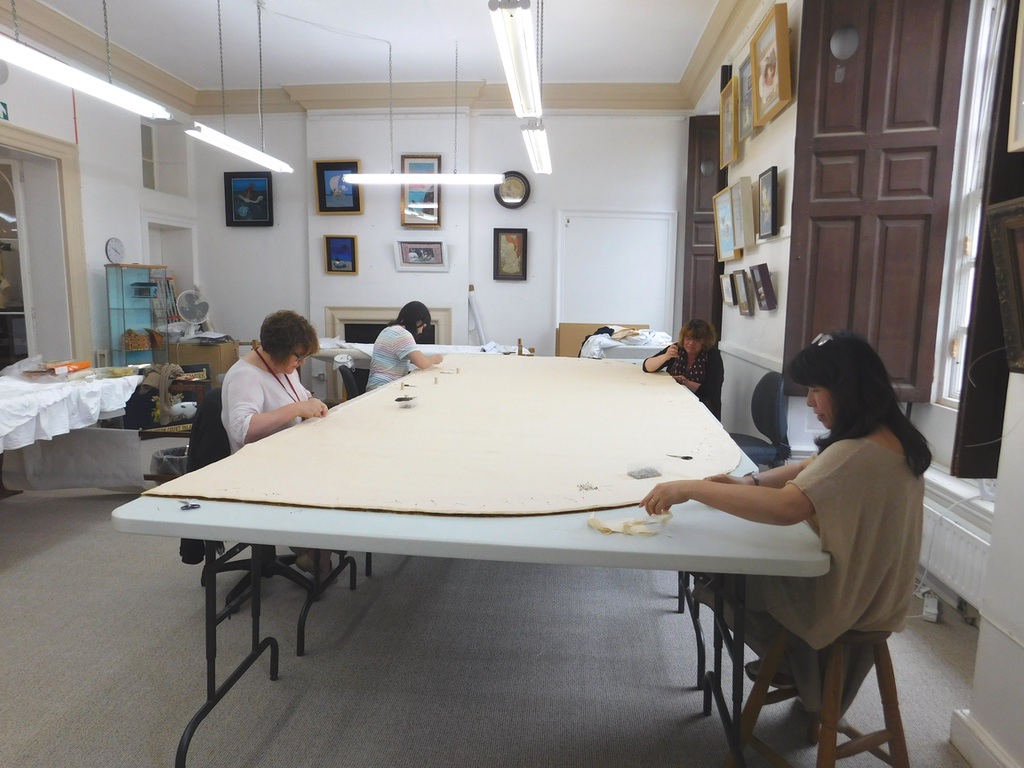
The RSN Studio Embroiderers have been working remotely or furloughed since the third week of March and we are all missing Hampton Court Palace and the wonderful environment it is to work in every day. We consider ourselves very fortunate to have been involved with a selection of projects at the Palace, including working the replica King William III and Queen Mary II Cloth of State on display in the Palace State Rooms, as the original was destroyed by the awful fire in 1986. Last year, we embroidered copies of motifs taken from the Bacton Altar Frontal, displayed in the recent Palace Exhibition, ‘The Lost Dress of Elizabeth I’.

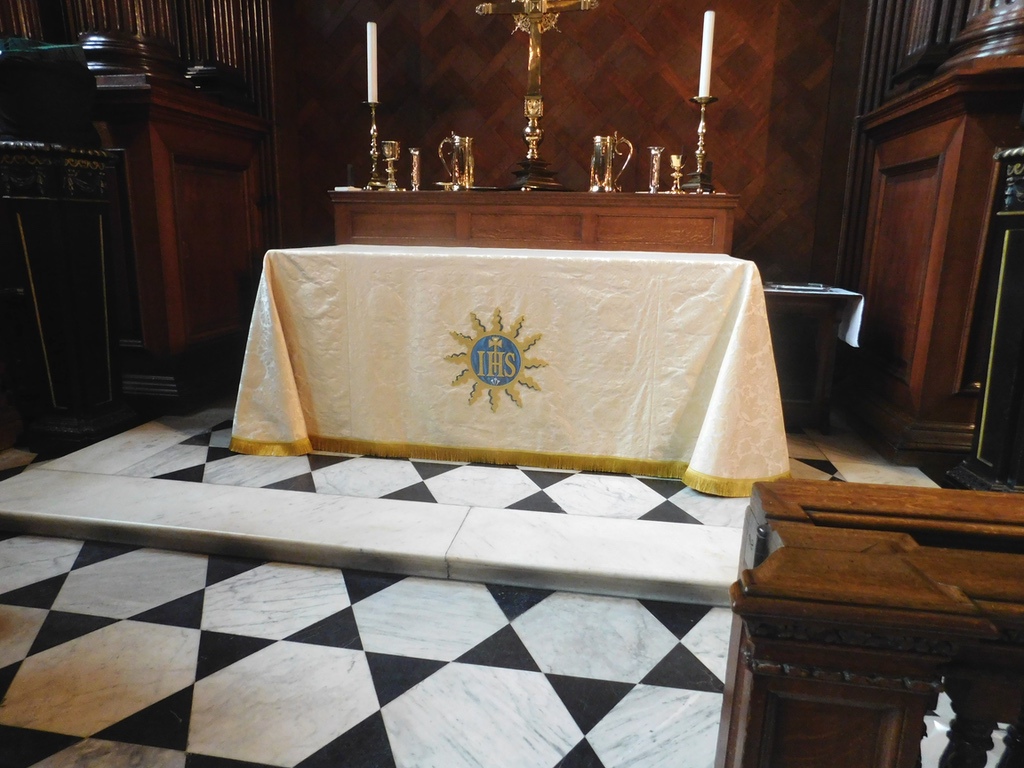
In 2016, we were commissioned to produce a Laudian Fall for the Altar in the Chapel Royal at Hampton Court Palace; this was required for a special service in June 2017. In the same year, the RSN had its own special anniversary, celebrating 30 years at the Palace having moved there in August 1987, a day never to be forgotten! What better way to celebrate an anniversary than to work with the Palace to create a lasting piece of embroidery that can be associated with us and enjoyed by many for centuries to come.

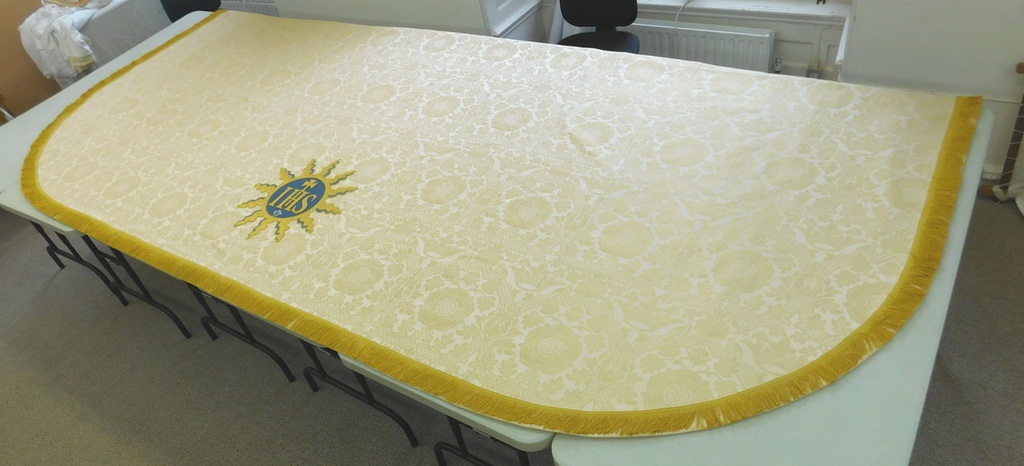
It was to be an all season/festal frontal so the base colour was to be cream and, after spending some time in the Chapel Royal, we felt it was important to bring in some of the blue that is so dominant in the chapel ceiling. The fabric used is the St Margaret’s Brocade, which includes a coronet and a Tudor rose in the figured pattern. The weave is a mix of cream and metallic gold and this subtle combination catches the light when viewed from different angles.

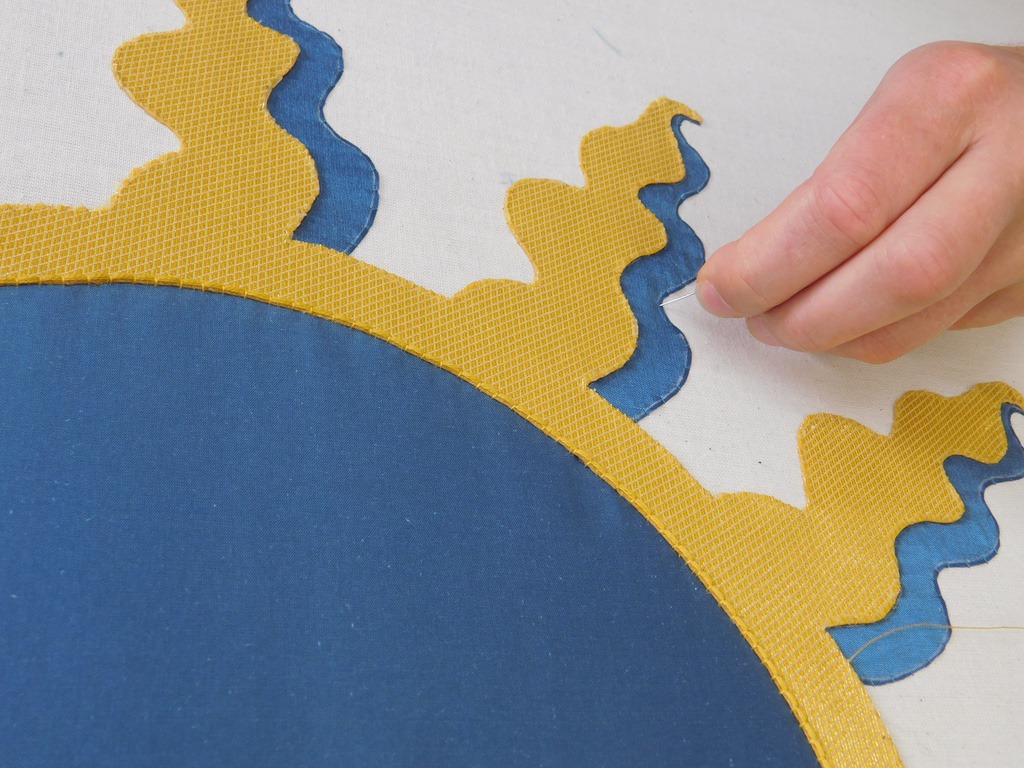
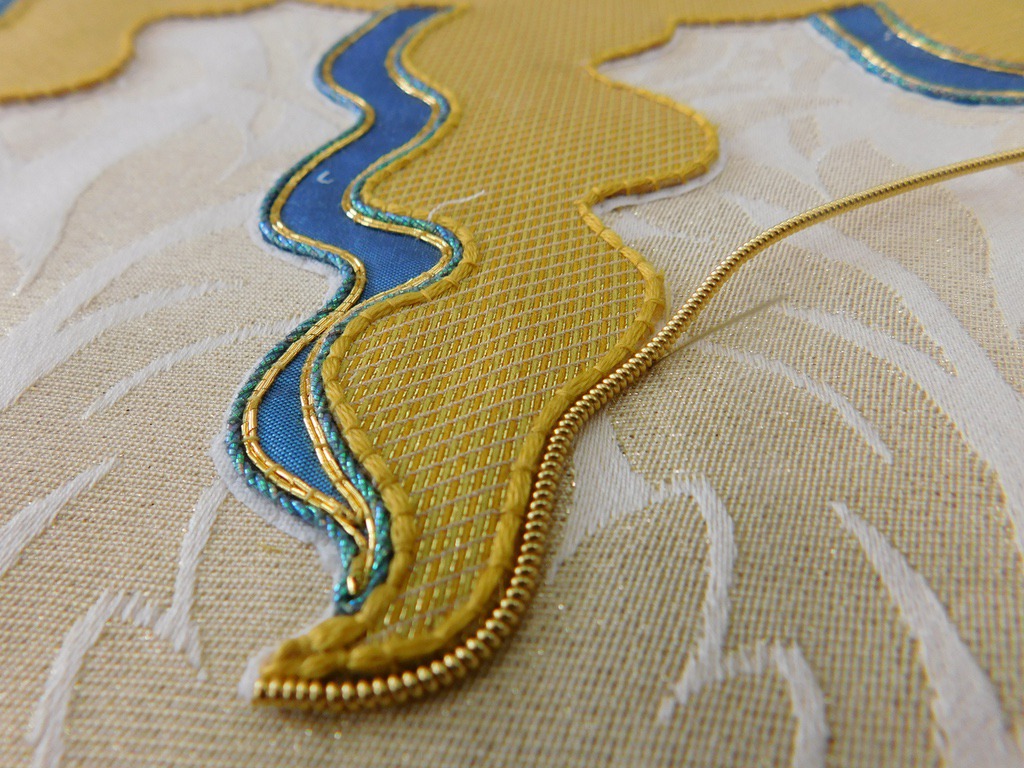
The design includes the Glory, represented by a circle of flames containing the letters IHS, with a cross and three nails. The Glory and lettering was applied Cloth of Gold with blue silk forming the shadow on the rays and the background of the central area. The fabric was edged with a combination of gold Japanese thread and Pearl Purl along with a handmade blue twisted cord to echo the blue silk. The nails were worked in silver kid leather, decorated with silver passing to form the head of the nail. The cross was decorated in scattered silver bright check chips to add a little sparkle and to balance the design by bringing through the silver from the nails.

A Laudian Fall, or altar cloth, takes its name from Archbishop Laud who advocated High Church Principles and especially emphasised liturgical ceremony. A Laudian Fall has rounded corners at the front and the back so is a large semi-circle when laid out flat as it normally covers the frontal, sides and back like a tablecloth. Laudian Falls are often used when an altar is exposed on all four sides. This particular Fall does not go fully down the back of the Altar, but you can see in the photograph that it is still a large piece. It was made up with a firm interlining to ensure the corners form a nice shape and was finished off with a gold coloured fringe and cream linen lining.

We worked closely with Father Antony, Chaplain of HM Chapel Royal Hampton Court Palace and Deputy Priest in Ordinary, along with John Barnes, who was Palace Director of Conservation & Learning at the time (now HRP Chief Executive). Father Antony was very specific on the imagery he wanted for this piece.

The Frontal was designed by Studio Embroiderer Marg Dier however, due to the time constraints, all of the Studio Embroiderers worked on the frontal to ensure completion in time for the special service on 13 June, attended by Her Majesty The Queen and The Duke of Edinburgh. It was the Centenary Celebrations for the Companions of Honour who include Sir David Attenborough, Dame Judi Dench, Dame Maggie Smith, Lord Seb Coe and Sir John Major, and also on the guest list were Dr Susan Kay-Williams, our Chief Executive, and Marg Dier who had designed the Fall.

The completed piece is a perfect example of the RSN Embroidery Studio team working well under pressure, how we all work together to create a beautiful piece without it looking as if multiple hands have worked on it. This is how the RSN has always trained and will continue to train our students and staff for many years to come!

All of the RSN Archive Collection pieces are donated and we are extremely grateful to have received some amazing and beautifully worked pieces over the years. This week we are sharing with you the story behind our Litany of Loreto pieces.

In the 1970s, the Mayfield Convent in Surrey, England, was closing and donated twelve striking pieces which are referred to as the ‘Litany of Loreto’ series, on the understanding that the RSN conserved them and looked after them. They were initially put in safe storage until they were brought out for remounting and reframing in the 1990s, made possible by our RSN Friends, and they then went on display at The Knitting & Stitching Shows – special duvet-like bags were even made to protect them!

Various forms of the Litany of the Virgin Mary have developed over the centuries and in 1587 a version was officially recognised by the Vatican which was then recited at the ‘Basilica della Santa Casa’ (The Sanctuary of the Holy House of Loreto) in Loreto on the east coast of Italy each Saturday. This litany has since been used throughout the Roman Catholic Church. The Basilica has been a major pilgrimage site since the late 13th century when a small cottage, believed to have been lived in by the Blessed Virgin Mary, was said to have appeared nearby having been miraculously transported from Nazareth to Ancona, Italy, and so the Basilica was built to mark the site.


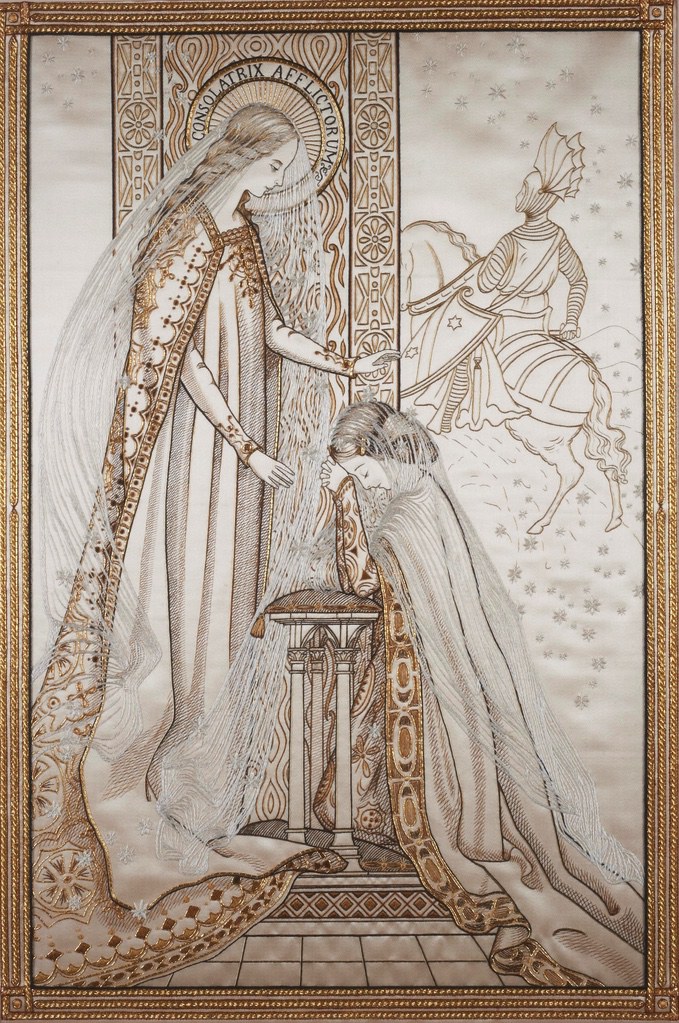
Litany of Loreto – Consolatrix Afflictorum – Comforter of the Afflicted

We knew little about the designer of the pieces up until the end of 2016 when we were contacted by an American Professor Emeritus who identified the designs as by an Italian graphic designer, Ezio Annichini. Annichini trained at the Florence School of Art in 1900. His day job was to create covers for magazines and between 1915-20 he created his sacred series based on the Catholic Litany of Loreto. However, finding this out only led to more questions as we continue to wonder how did these embroideries come to be made from the original designs and, as there were many more drawings, were there any more embroideries and if so where?

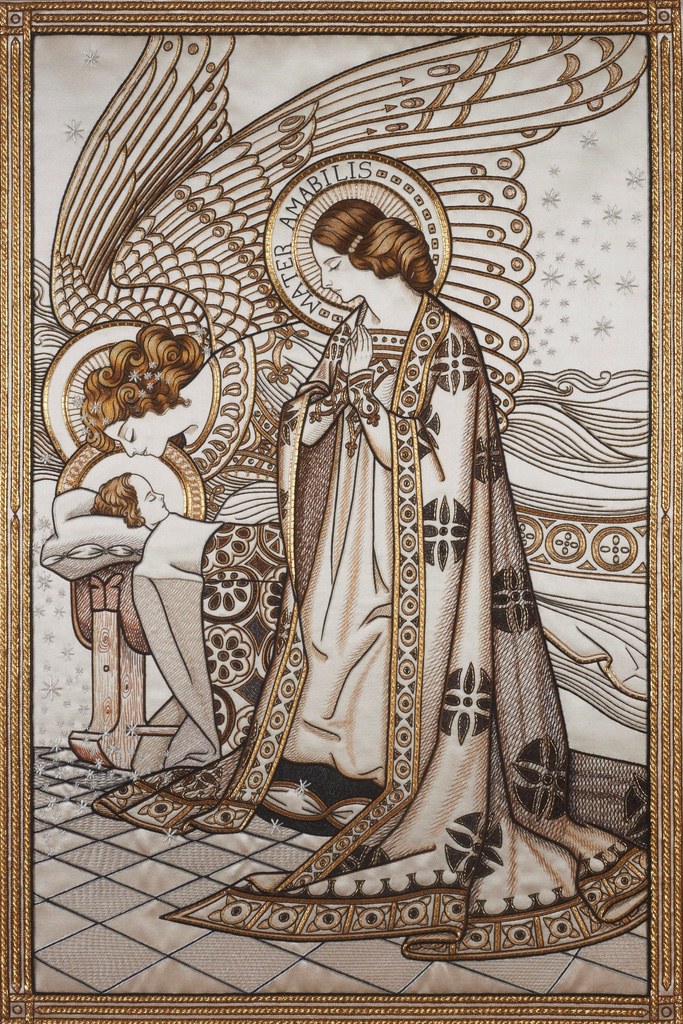
Setting aside these questions, the pieces themselves are stunning for the quality of the embroidery such as the fine use of gold thread, and for the way they have used a limited colour palette. The Goldwork is in different sizes of Japanese thread and in the main embroidery there is a mixture of filoselle and fine floss; where the effect is shiny this indicates floss, where slightly duller, filoselle. The stitches are mostly long and short, outlines are in stem stitch and split stitch, with straight stitches, satin stitch and French knots, occasionally to give a more three–dimensional look.

The Litany of Loreto is a devotion of the Virgin Mary in which Mary is identified by 48 different titles.

The twelve pieces begin with:

  1. Sancta Maria, Ora pro nobis / Holy Mary Pray for Us

And then follow 11 of the 48 titles conferred upon Mary in the Litany:

  1. Sancta Dei Genitrix / Holy Mother of God
  2. Mater Inviolate / Mother Inviolate
  3. Mater Intemerata / Mother Undefiled
  4. Mater Amabilis / Mother most Amiable (pictured below)
  5. Virgo Clemens / Virgin most Merciful
  6. Virgo Fidelis / Virgin most Faithful
  7. Speculum Justitiae / Mirror of Justice
  8. Salus Infirmorum / Helper (Health) of the Sick
  9. Consolatrix Afflictorum / Comforter of the Afflicted (pictured above)
  10. Auxilium Christianorum / Help of Christians
  11. Regina Sanctorum Omnium / Queen of all the Saints


As embroideries these are remarkable pieces and the RSN is honoured to have these 12 special pieces as ‘treasures’ in our Collection, and we are sharing two of them with you this week.

Litany of Loreto – Mater Amabilis – Mother most Amiable


For Worship and Glory Exhibition — Part 2

As we all need something to look forward to, please note in your diary that next year our exhibition ‘For Worship and Glory’ will return to Ely Cathedral…and next time it will be ‘Part 2’, showing unseen donated pieces which we have received in more recent years, alongside some of our classic ecclesiastical collection. The exhibition will be open from 25 February to 25 March 2021 so watch this space for further information!

The RSN’s ‘For Worship and Glory’ catalogue is available from the RSN Online Shop in which you will find pictures of all twelve of our Litany of Loreto pieces as well as pictures and narrative on more than fifty other religious pieces that we have in our Collection.

Claire Fitzgerald says that the RSN is the ‘Gold Standard’ of hand embroidery and has completed the RSN Certificate and Diploma in Technical Hand Embroidery, graduating this summer 2020. Here, Claire explains her pathway to completing the C&D and what the future beholds.


In the summer of 2016 a friend of mine took me to see the Traditional Latin Mass for the first time. This was on a pilgrimage to Walsingham, the Catholic National Shrine & Basilica of Our Lady, in Norfolk, England. Even though I grew up as a Catholic, I didn’t know about the Latin mass or even that there were Catholics all over the country (all over the world in fact) who are dedicated to preserving the traditional mass and liturgy, as was the norm before the 1950s. It was at this time I saw the beautiful vestments; chasubles, stoles, burses, copes etc. with the most exquisite embroidery I had ever seen! It was like I was elevated to heavenly realm filled with angels, the sound of Gregorian chant permeated my ears and I encountered something that was truly sacred and divine. When I returned home I was motivated to learn embroidery so that I could be part of this movement to preserve the traditional vestment and furnishings of the church.

With a bit of research I discovered the RSN and came to realise it was the ‘Gold Standard’ of hand embroidery and so the answer to enrol was simple. I enrolled in the Jacobean Crewelwork module in January 2018 and, to be honest, there was something inside me that thought I wouldn’t be able to do it and I would drop out after 2-3 lessons. However, my Tutors were very supportive and encouraging and I couldn’t have asked for more. They were also incredibly experienced and I knew that I was in safe hands with their guidance. I knew, if I followed their guidance, they would take me where I wanted to be. This is not something that is easy to find these days so I knew I was in a special place and for that I am truly grateful.

Claire Fitzgerald RSN Certificate – Basic Goldwork

Now I have finished the Diploma and looking back on all the modules, I would say that Goldwork and Whitework were my favourite techniques. I love the powerful, jaw-dropping designs you can create with Goldwork and the impact it has on the viewer, my piece is entitled ‘Baroque Flowers’. I was inspired to design this piece based on some Baroque flowers I saw at the Brompton Oratory in London, that were carved into the stonework on the outside of the building. I love the combination of Goldwork on velvet as can often be seen on vestments, liturgical furnishings and processional banners. I also, quite unexpectedly, developed an appreciation for Whitework and Needlelace. Since leaving the RSN, I have pursued this further by taking lessons in bobbin lace. I would eventually like to learn Buckinghamshire and Bedfordshire laces, in order to preserve the traditional craft in Britain.

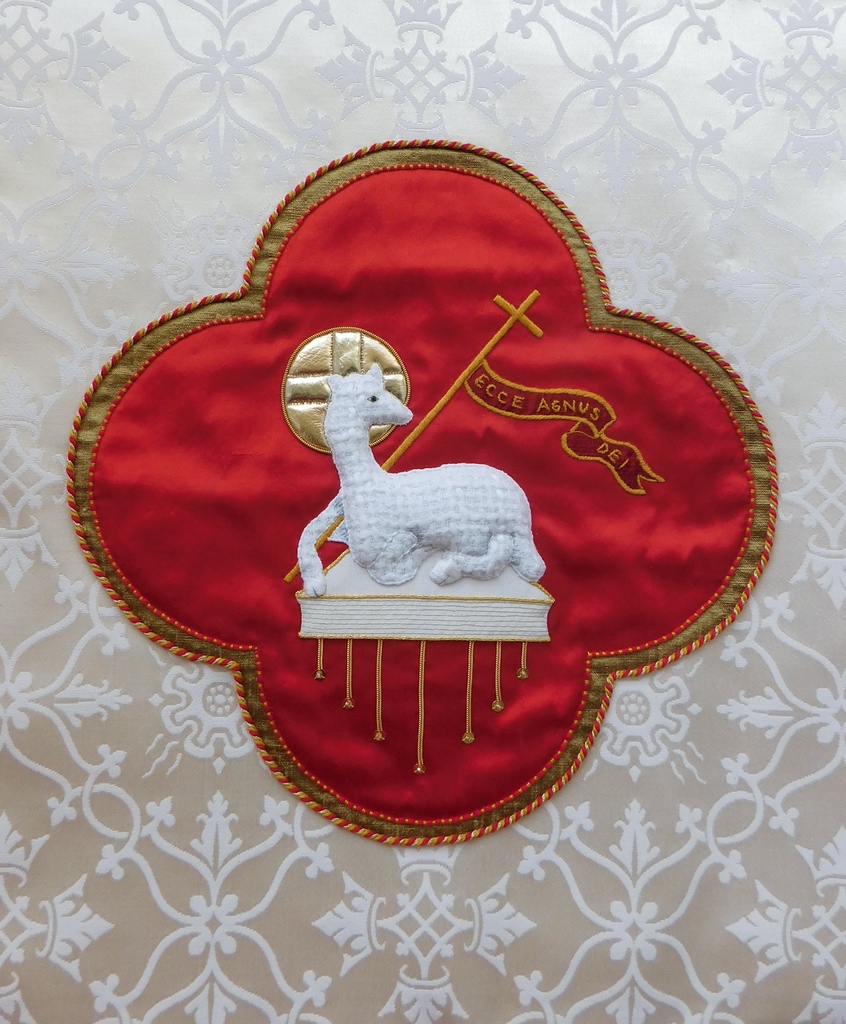
Claire Fitzgerald RSN Diploma Graduate – Appliqué ‘Lamb of God Ecce Agnus Dei’

I now work mending, repairing and creating vestments for churches. I feel the course developed my confidence especially in design work, for example, knowing what shapes work well and how to create a balanced design. I can confidently pick colours based on what is pleasing to the eye and I enjoy selecting appropriate fabrics and textures that emphasise what you are trying to say to the viewer. The RSN mounting technique stood me in good stead for constructing vestments, knowing which stitches to use for structural purposes and those for aesthetic purposes. And I ended up loving the curved needle! It’s now an essential part of my embroidery kit.

My advice to anyone starting is – don’t give up! Start collecting images of work that you like and fabrics that inspire you. And with lots of focus and dedication you will be able to create the designs that you love!

This is the month we had originally planned to launch our new Day Class Programme for 2020/2021 on the RSN website, after months of quiet planning in the background. Tutors submitted their class proposals before Christmas and the department spent time finessing them into an exciting collection of new class kits and a smattering of old favourites. At that point, our biggest concern was Brexit and how it could potentially affect the RSN, but then Covid-19 came upon us which has resulted in a plethora of new challenges.

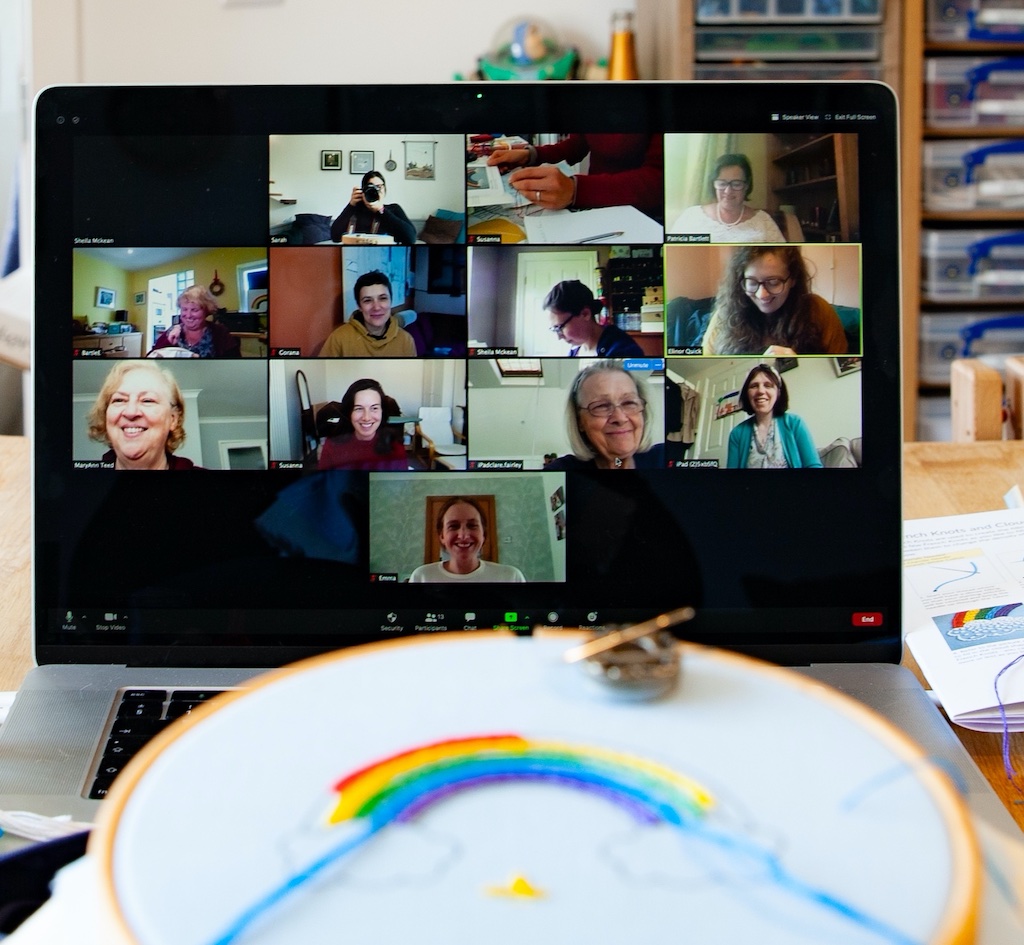
We now find ourselves in the tenth week of working from home, and in the midst of a new way of operating. We have embraced the concept of virtual teaching which has enabled our C&D students to carry on with personal guidance, whilst our Future Tutors have continued learning from home with their Tutors via Zoom. At the end of April we launched our first Online Day Class, teaching to our UK audience and then to North America which sold out so we repeated the class! Only two weeks ago, we launched our first Evening Class which, again, sold out and is being repeated.

Our world has become smaller and we can now teach anywhere in the world! We are all very excited about this breakthrough, which we know will become a bigger part of the RSN offering with a whole world of new opportunities opening up to us and to you. We are learning daily, and a completely new dictionary of terminology has joined forces with other more familiar words and phrases. This virtual journey is one we are all on together; it is an exciting one and, whilst we naturally long to return to the sanctuary and familiarity of the classroom, we know that when we do it will be in a very different way.

We have been planning and measuring for socially distancing in our classrooms so that we can welcome you safely back in the not too distant future. It will be different: there will be fewer students every day; we will ask you to bring your own water and a mug for coffee; although the tearoom will be out of bounds, you will still be able to enjoy a chat and a drink with your fellow students in your classroom. We are looking to put all possible measures in to place to ensure that we are all safe to return.

Online is here to stay so even if you are unable to fly over to the UK we can come to you virtually. Our offering will increase and, up to Christmas, the vast majority of Day Classes will be delivered online with only a small number of classes taking place in the classroom. We can also offer one-to-one Online Lessons to help you start, progress or finish a project. There will be more Evening Classes, as well as longer classes split over a number of weeks to enable you to stitch, draw and upskill to your hearts content. We have already added a second Silk Shaded & Needlewomen Picot Leaf Spray Evening Class to meet demand, a Raised Embroidery Flamingo as well as two Colour Theory classes timed for the UK and North America.

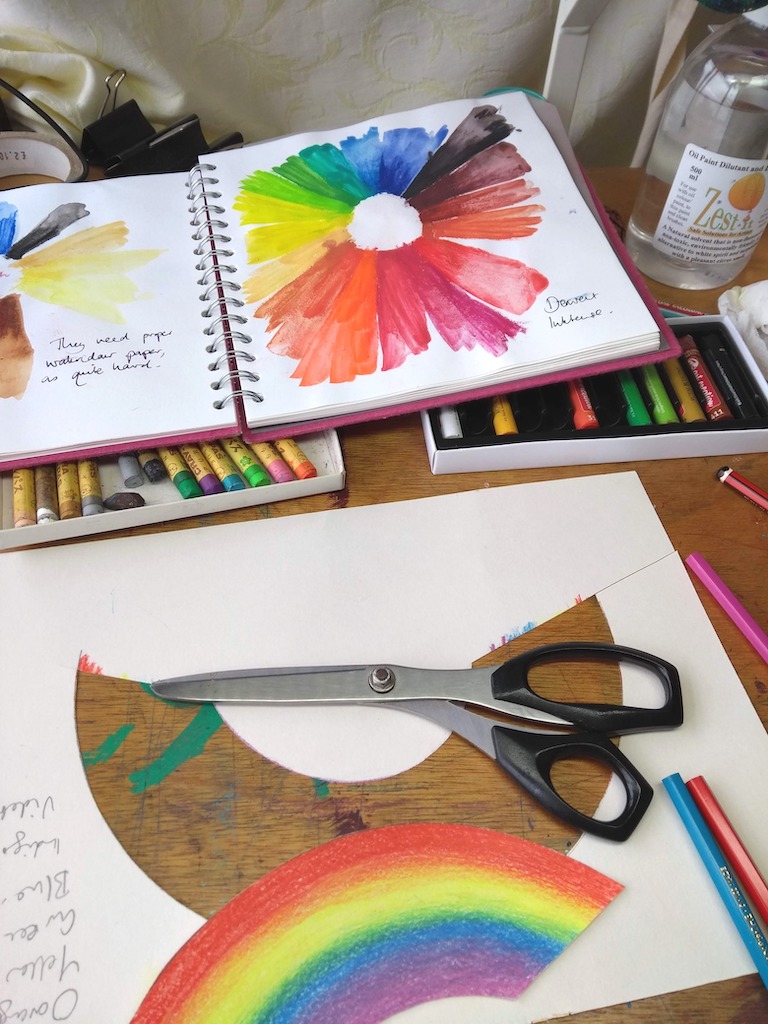
Above: Colour Theory in Practice, with Caroline Homfray — UK and North America

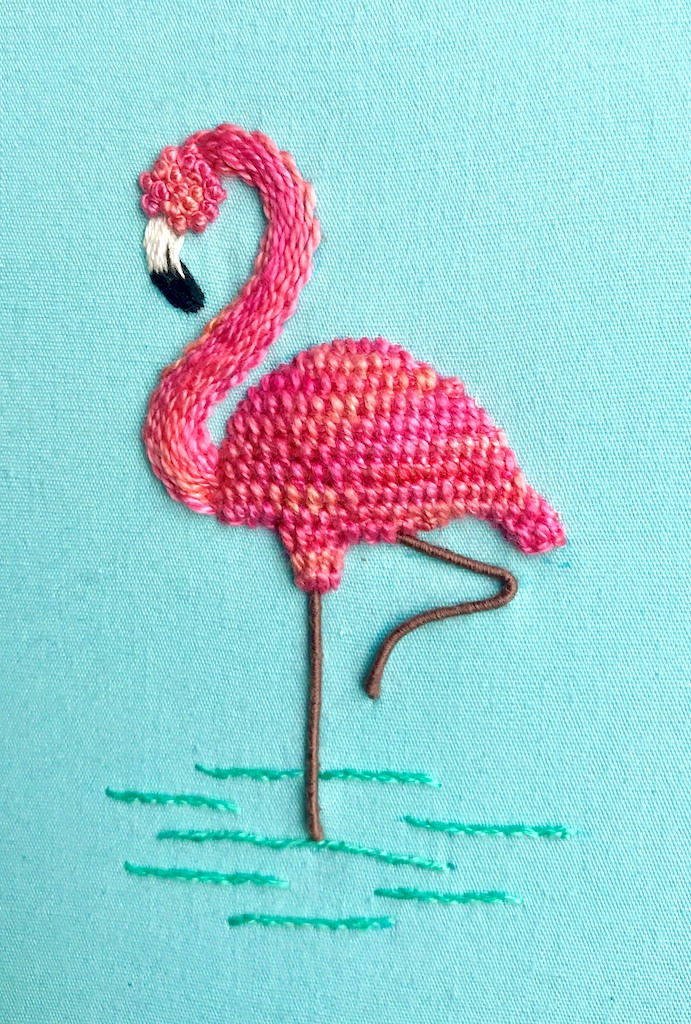
Above: Raised Embroidery Flamingo, with Amy Burt


Above: Silk Shading and Needlewoven Picot Leaf Spray, with Anita Harrison


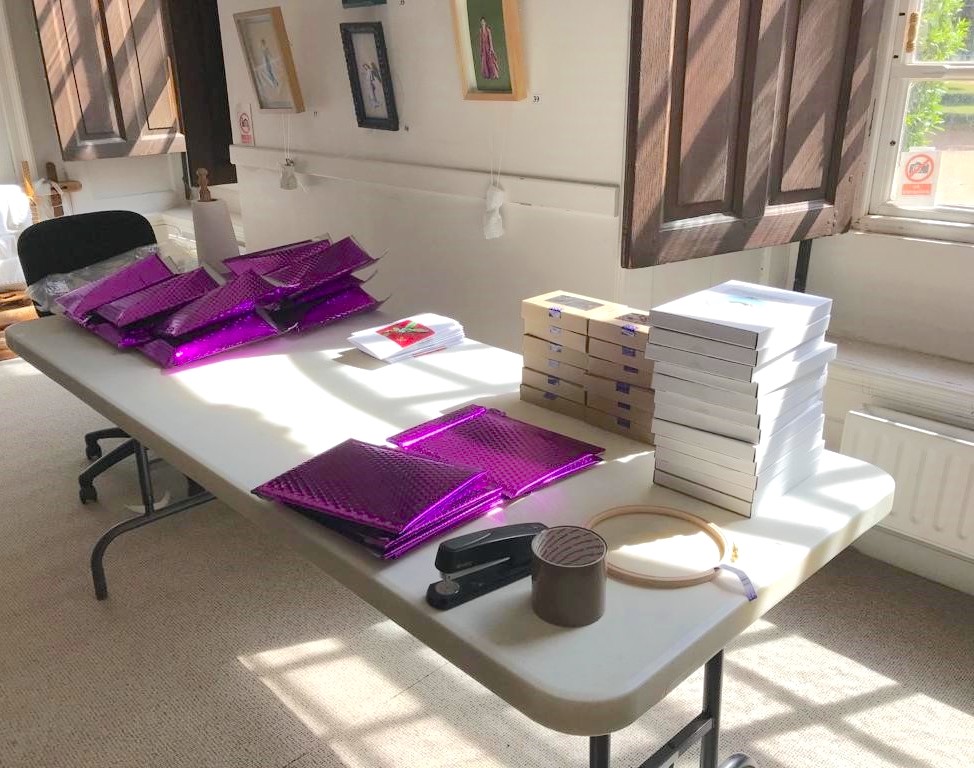
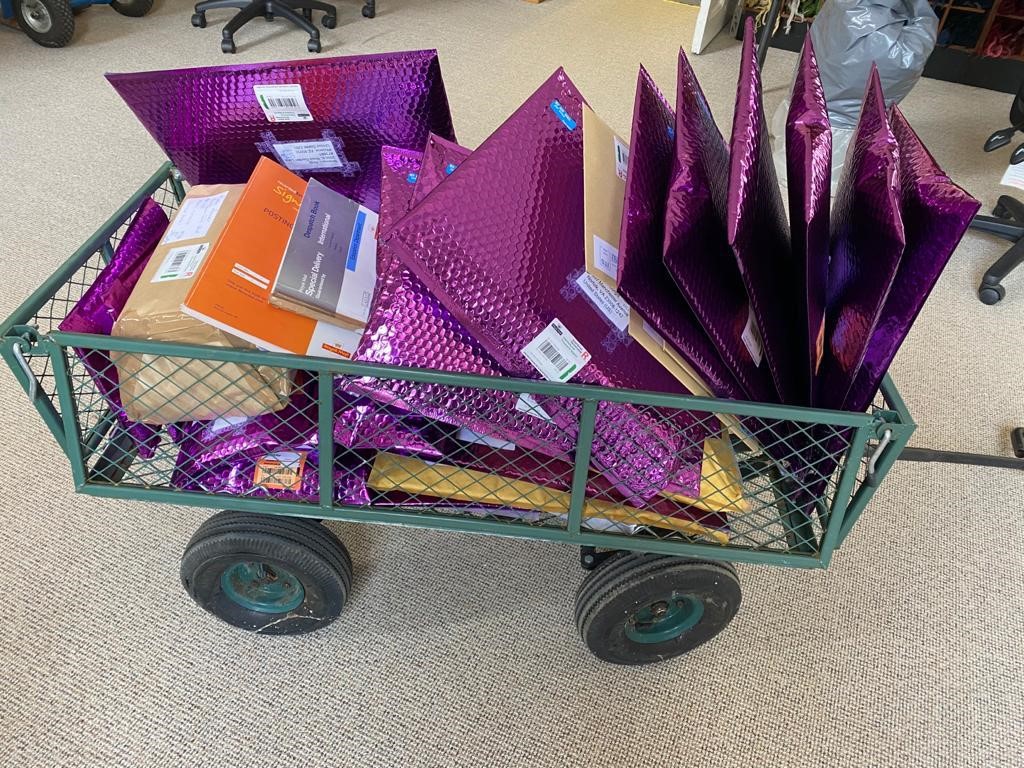
Above: Kits for RSN Online Classes being packed and posted at Hampton Court.


Keep an eye on the RSN website , follow us on Instagram  and Facebook, over the coming weeks as we have more Online Classes waiting in the wings!

Embroidery is good for the body and soul and the Royal School of Needlework remains fully committed to delivering the best opportunities to get involved.


The RSN Degree team received wonderful news this week from The Worshipful Company of Glovers regarding their annual student design glove competition for which our first years submit entries.  The RSN Degree team won the highest accolade, ‘The Silver Salver for the college making the greatest contribution to the competition’, and two Degree students won monetary prizes, Linnea Lyndon and Eliza Gomersall.

This year, The Worshipful Company of Glovers design brief fell in to two categories:

  • ‘Fashion Meets the Future’, challenging students to fast forward to the future, and design a pair of gloves that could be worn in 2220, 200 years from now. These gloves would need to meet the demands of the new life on or off the planet
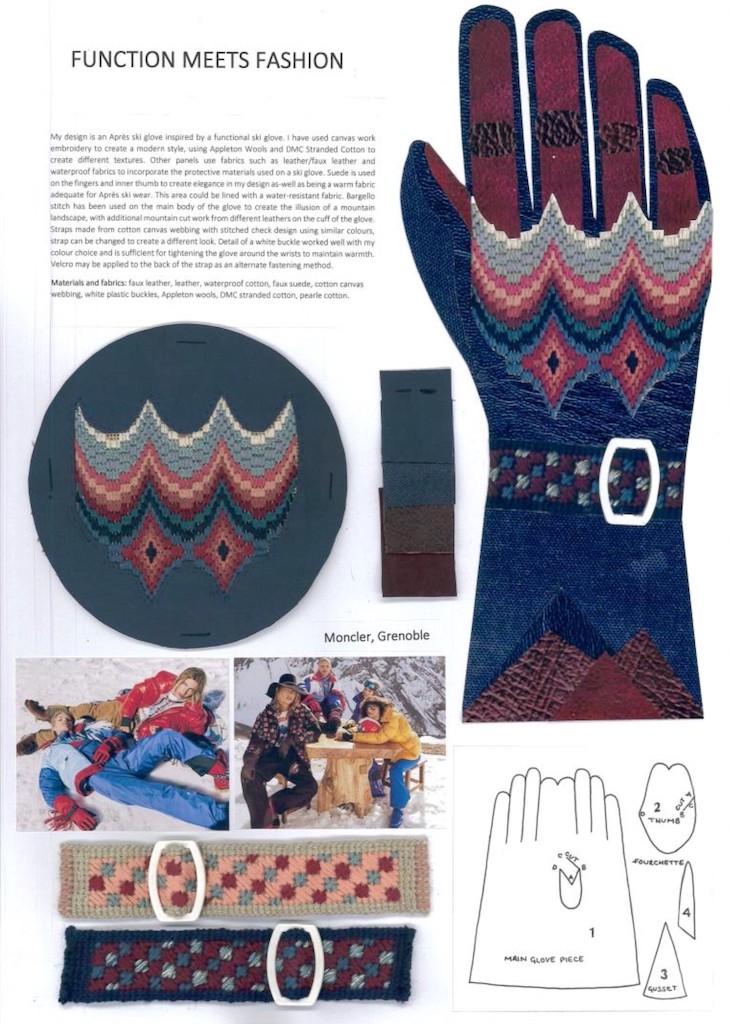
  • ‘Function Meets Fashion’, challenging the students to be inspired by a functional utility glove in order to create a pair of luxury fashion gloves that elevates the original to a desirable on-trend product.


Linnea Lyndon won ‘The Dents Prize for the most commercial, creative and innovative design from all entries received.’

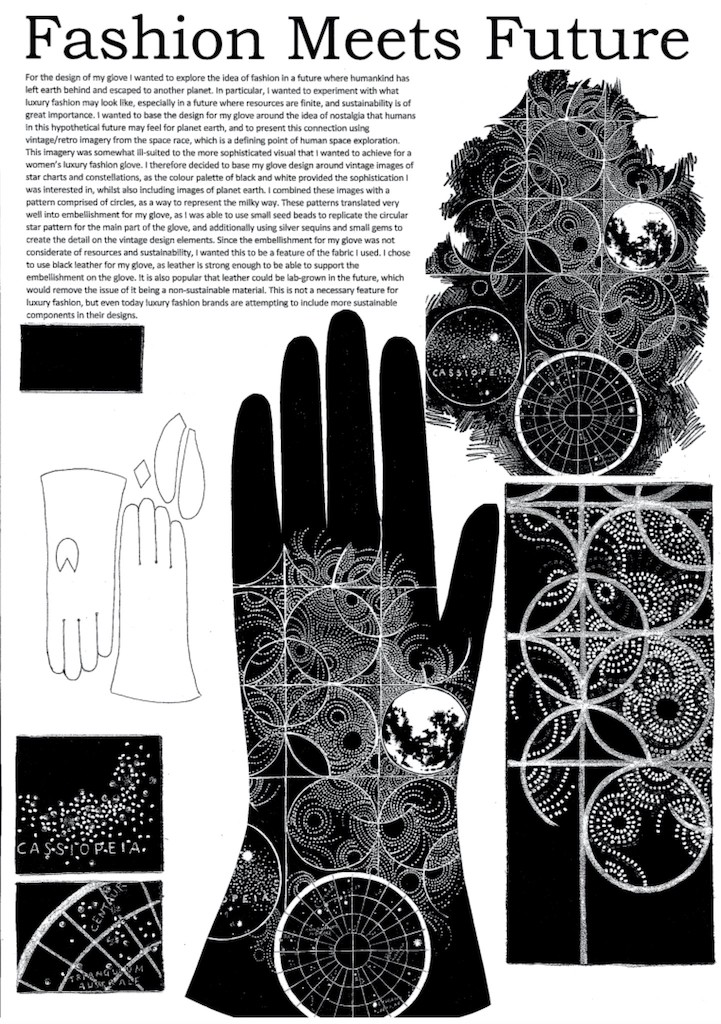
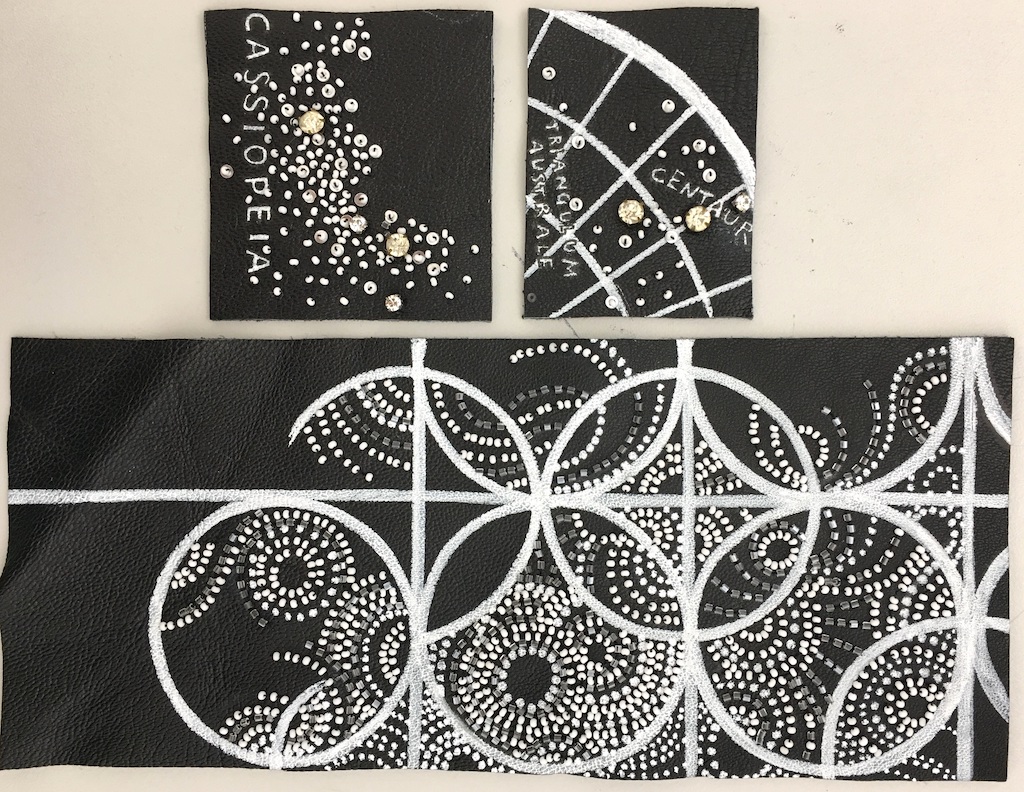
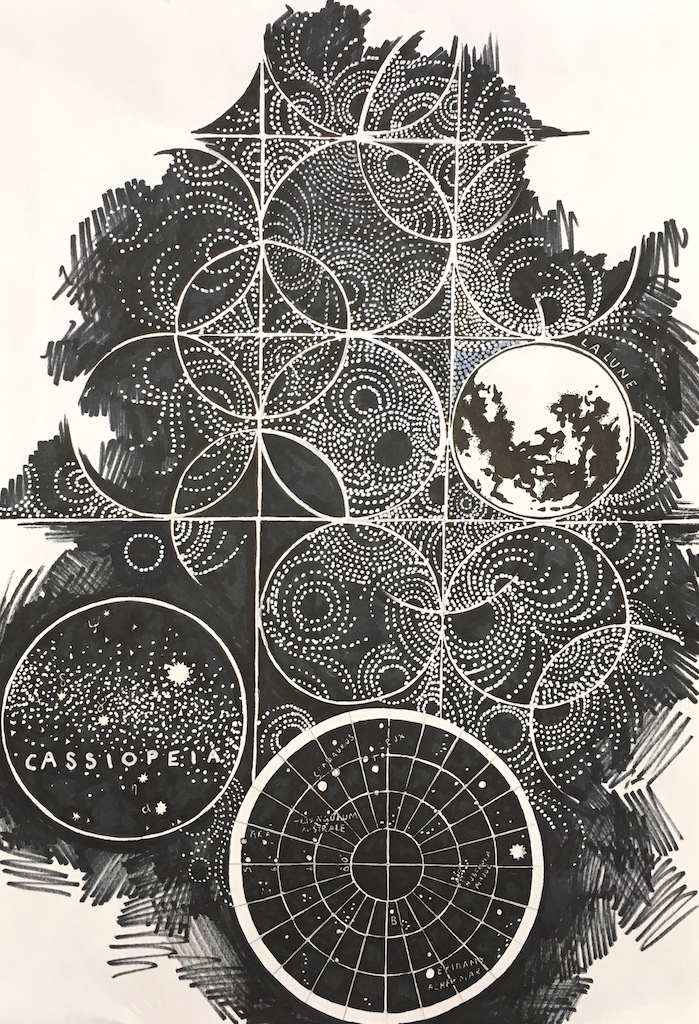
“For the design of my glove I wanted to explore the idea of fashion in a future where humankind has left earth behind and escaped to another planet. In particular, I wanted to experiment with what luxury fashion would look like, especially in a future where resources are finite, and sustainability is of great importance.

I wanted to base the design of my glove around the idea of nostalgia that humans, in this hypothetical future, may have for planet earth, and to present this connection using vintage/retro imagery from the space race, which is a defining point of human space exploration.

This imagery was somewhat ill-suited to the more sophisticated visual that I wanted to achieve for a women’s luxury fashion glove. I therefore decided to base my glove design around vintage images of star charts and constellations, as the colour palette of black and white provided the sophistication I was interested in, whilst also including images of planet earth. I combined these images with a pattern comprised of circles as a way to represent the Milky Way and words such as Cassiopeia, Triangulum Australe and Centaur. These patterns translated very well into embellishment for my glove, as I was able to use small seed beads to replicate the circular star pattern for the main part of the glove, and additionally using small silver sequins and small gems to create the detail on the vintage design elements.

Since the embellishment for my glove was not considerate of resources and sustainability, I wanted this to be a feature of the fabric I used. I chose to use black leather for my glove, as leather is strong enough to support the embellishment on the glove. It is also probable that leather could be lab-grown in the future, which would remove the issue of it being a non-sustainable material. This is not a necessary feature for luxury fashion but, even today, luxury fashion brands are attempting to include more sustainable components in their designs.

Working on this project was such a fun experience and was very different from any design work I had done before. The project really allowed me to be creative with my ideas, and I enjoyed stepping outside of my comfort zone a bit and tackling something new. I am also grateful to my Tutors for their advice throughout the design process. Overall, I am very pleased with my design and so happy that I won The Dents Prize!”

You can follow Linnea on her Instagram page.


Eliza Gomersall was Runner Up for the ‘Function Meets Fashion’ category.

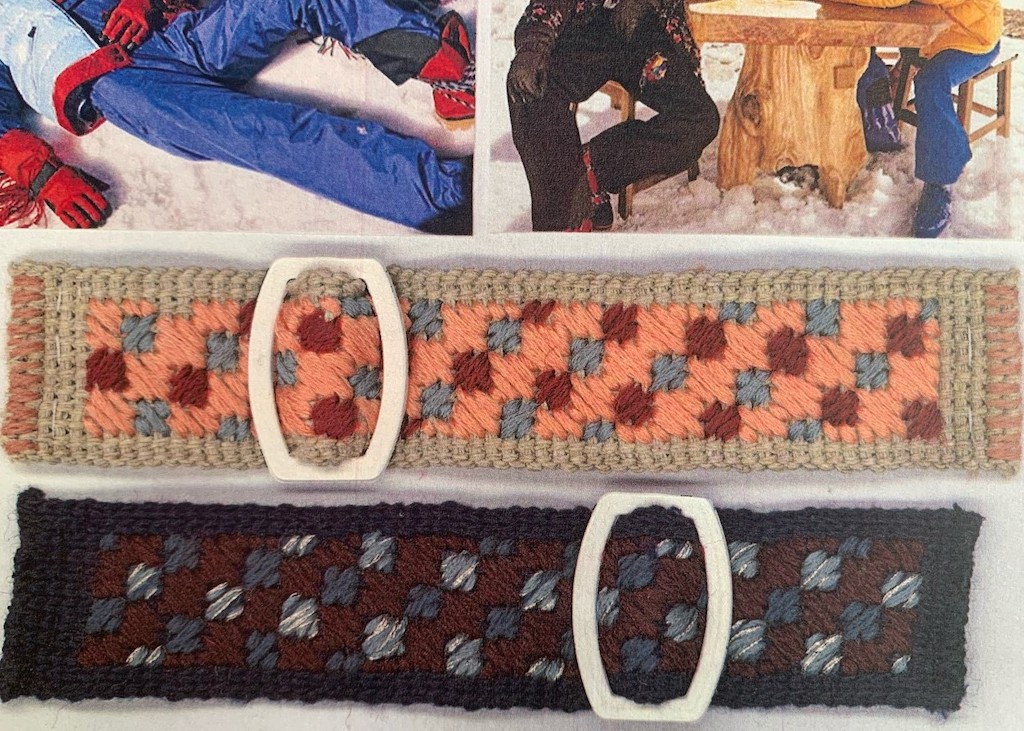
“My glove design responds to the brief ‘Function Meets Fashion’. I have designed an après-ski glove inspired by a functional ski glove, using canvas embroidery to create a unique modern style. Moncler ‘Grenoble’ ski wear collection showcases a variety of après-ski wear with a street wear style and this inspired the concept and design for my glove.

Panels in my glove use fabrics such as leather/ faux leather and waterproof fabrics to incorporate the protective materials used to make a ski glove. Suede is used on the fingers and inner thumb to create elegance in my design as-well as being a warm fabric, adequate for après-ski wear. Bargello stitch has been used on the main body of the glove to create the illusion of a mountain landscape, with additional mountain cutwork from different leathers on the cuff of the glove. The straps are made from cotton canvas webbing stitched with oatmeal pattern using similar colours, the strap can be changed to create a different look. The detail of a white buckle worked well with my colour choice and is sufficient for tightening the glove around the wrists to maintain warmth. Velcro may be added to the back of the strap as an alternative fastening method.

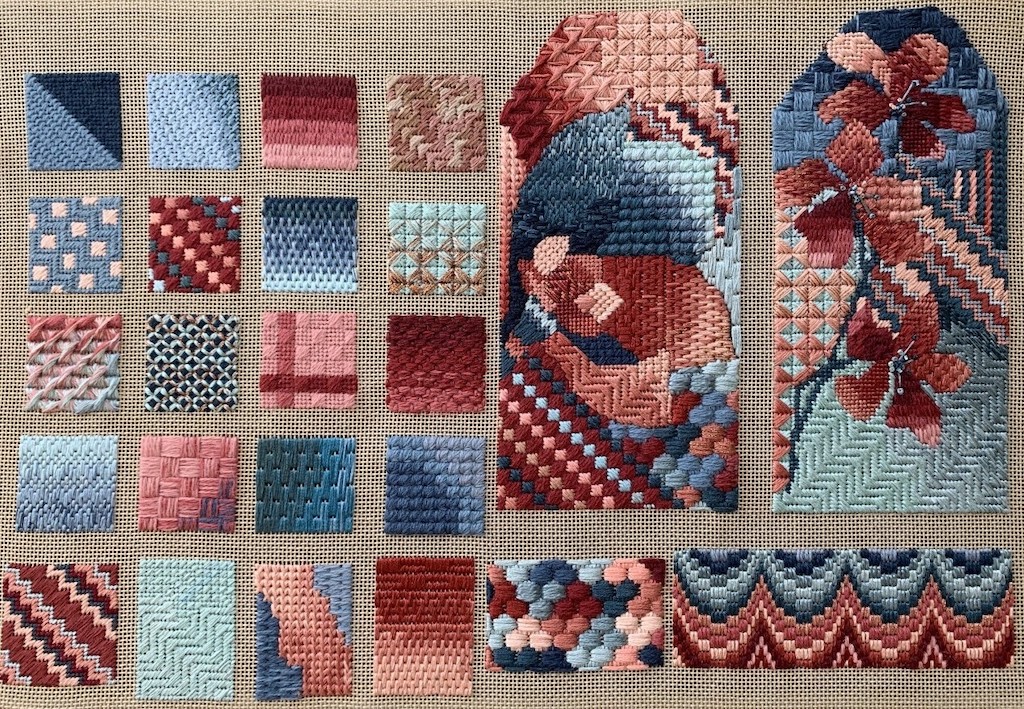
My glove design is suitable and protective for cold weather environments as well as being a luxury, couture fashion item. The initial inspiration for this glove design came from my Canvaswork luggage label frame. I was inspired and led by my bold colour palette and diverse stitch patterns and thought they would complement the sport style of an après-ski glove.

Materials and fabrics used are: faux leather and faux suede, waterproof cotton, cotton canvas webbing, white plastic buckles, Appleton wools, DMC stranded cotton, Pearle cotton.

Being awarded runner up in the ‘Function Meets Fashion’ category is a great achievement, especially in my first year at the Royal School of Needlework. I am hugely grateful for this award and a prize of £250, it has given me a massive boost of confidence. The £250 prize will support my learning and go towards materials for my 2nd year. I want to say a personal congratulations to Linnea for winning The Dents prize and to all BA1 students and the RSN Degree Tutors for their amazing entries that won The Silver Salver!”

You can follow Eliza on her Instagram page.


Congratulations to all concerned and here’s to a wonderful future!


Linnea Lyndon (above);  Eliza Gommersall  (below)


The RSN community continues to embroider at home during the lockdown period and this week we have received the stories behind two RSN Postcards From Home. Please share your story with us, we love to hear from you!


Sheila from Merseyside, UK

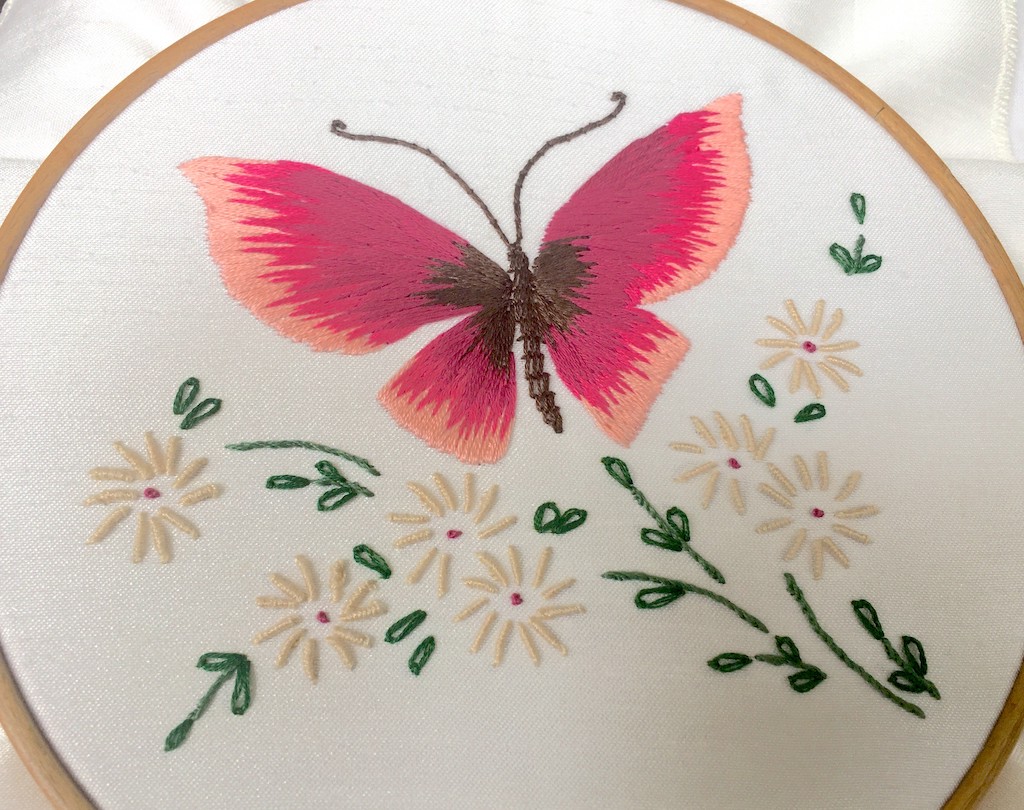
“Growing up, I always watched my Mum sewing and then, when I was old enough, she taught me some basic embroidery skills. Sewing now is a means of relaxation and an ever growing passion. Lockdown has allowed me to slow down and really appreciate what we have around us. Butterflies have always been special to me and, whilst sitting in the garden one day, I observed a butterfly going from flower to flower, reminding me of Mum and the days we have spent sewing together.”


Rosie from Harborne, Birmingham, UK

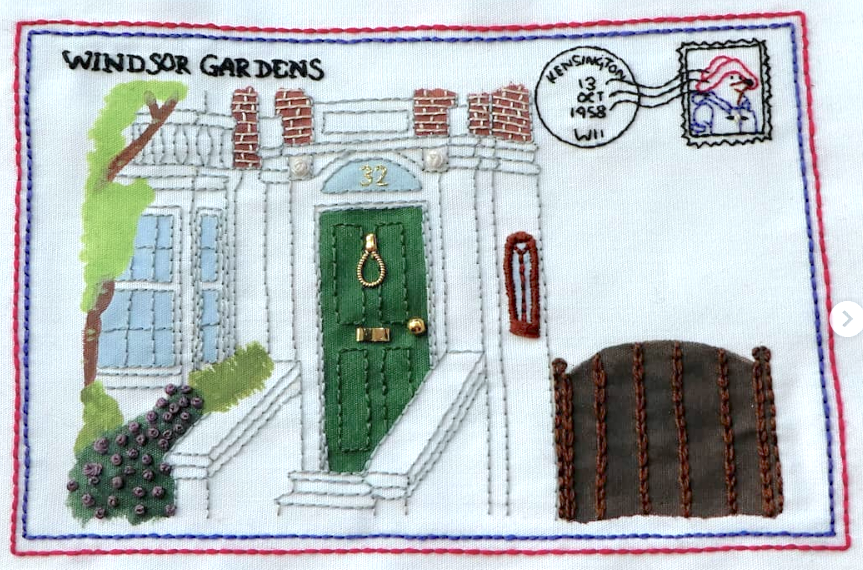
“As a family we love to read. My two young children who are 3 and 1 years old, both really enjoy books and often get lost in a make-believe world based on what we’ve read. Then came lockdown and the loss of our favourite things to do: visits to National Trust places; chatting to our favourite cow and rabbit at the farm; library and book shop trips; and, most importantly, time spent playing with much loved grandparents. When lockdown was announced, I made sure to stock up on a few new books to distract them and to spark their imaginations.

More than anything else, they seem to have enjoyed the Paddington stories. They unlocked a new world of make-believe that has fuelled our play for this lockdown. Even playing with teacups in the garden has been Mrs Brown’s café. The four of us have been every combination of characters; when I go out for the weekly shop I’m usually told that I’m going to Mr Gruber’s or Barkridges, and our house has almost constantly been referred to as ‘number 32 Windsor Gardens’. Our neighbour has even been called Mr Curry!

When I read about the ‘RSN Postcard From Home’, Paddington seemed the most appropriate subject. It was a good way to challenge myself and the first time I’ve ever used paint in embroidery. I wanted to create a picture of Paddington’s house because it has been our make-believe home and thought it would be nice to have the postmark as the date it was first published.

It is really helpful to have a project to work on and some time to focus on something other than children, although much of this was stitched with a little person on my lap. It was stress-relieving and great for my state of mind.

When this strange time is over and we look back, there will be plenty of emotions; anger, frustration, confusion, sadness. But when I look at this little postcard on my son’s bedroom wall I will remember the happy moments: playing games all together, the amazing imagination of my little boy, the laughter, and the explosion of my little girl’s first words. That is priceless!”


Please do share your Postcard story which we would love to share with everyone, and don’t forget to hashtag #RSNPostcardFromHome when you are sharing your images on Instagram!

RSN POSTCARD FROM HOME


During these strange times with the RSN Embroidery Studio currently closed, we have been looking back at pieces we have worked on over the past years. Sustainability is an important consideration in everything we do and when it comes to restoration and conservation, it is all about sustaining textiles for the future whether they are 50 years old or 300 years old!

Indeed, some readers may be interested to read the recent British Fashion Council (BFC) and The Council of Fashion Designers of America (CFDA) joint manifesto urging designers and businesses to ‘reset and rethink’ their current business models and ways of work. With sustainability, still at the forefront of the conversation both governing bodies are urging the industry to change; by slowing down the pace at which garments are produced, only focusing on two collections per year and reducing brands and buyers travel to international Fashion Weeks, to lower individual carbon footprint.

In 2013, the RSN Embroidery Studio worked the winning design of Suzy Amis Cameron’s Eco-Fashion Campaign ‘Red Carpet Green Dress’. The ‘Lava Dress’ was worn by actress Naomie Harris and unveiled at the 2013 Oscar Academy Awards ‘red carpet’.


Naomie Harris at the Oscars Academy Awards 2013. © AMPAS

Legendary designer Dame Vivienne Westwood mentored the winning designer, Michael Badger, through the creation of his design in her London-based studio. After Westwood’s couturiers logged 120 hours on the gown, it was transported to the RSN where a team of 22, including the winner himself, logged a further 680 hours of cherished hand embroidery. By using an organic cotton thread, there is a major reduction of carbon footprint showcasing the importance of hand embroidery, over machine embroidery, as a sustainable art form.

The embroidery was worked onto the Global Organic Textile Standard (GOTS) certified organic silk Crêpe De Chine. The dyeing process employed golden rod and a renewable biodegradable natural plant source, a humble camomile, which is also used medicinally and for camomile tea. Since there were no water pollutants or chemicals used, any waste produced was transferred to a compost heap. The dyeing process, completed by ‘Ao Textiles’, a design consultancy committed to the research and production of sustainable luxury textiles, received a stamp of approval from Greenpeace International’s Detox Fashion Campaign.

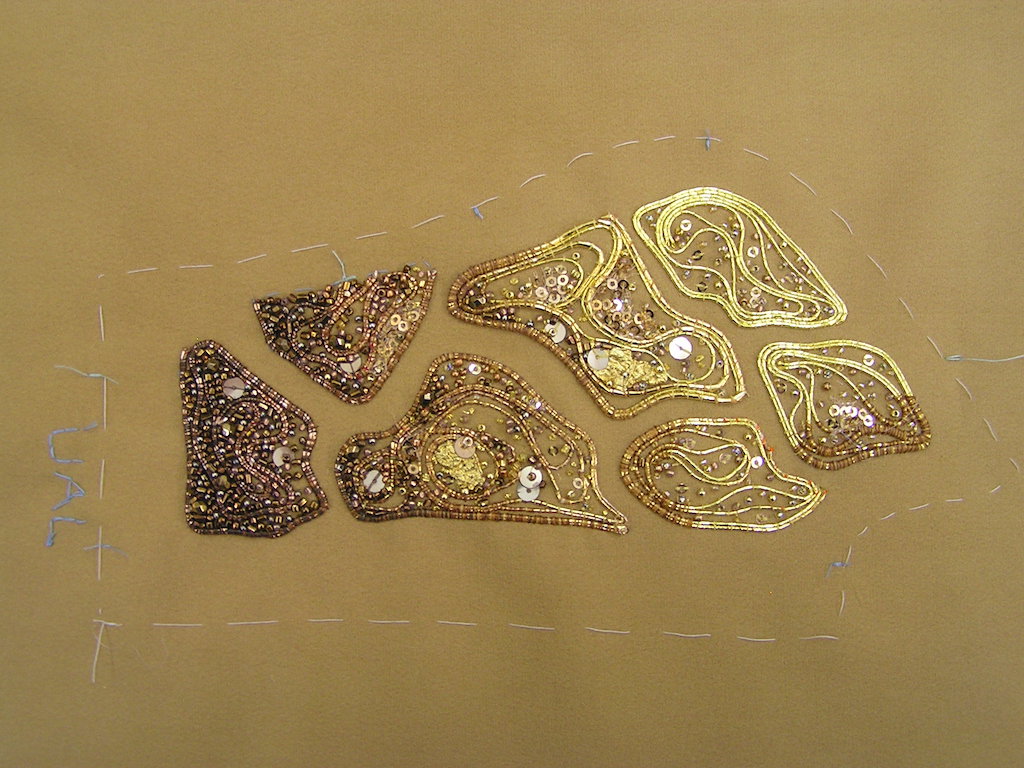
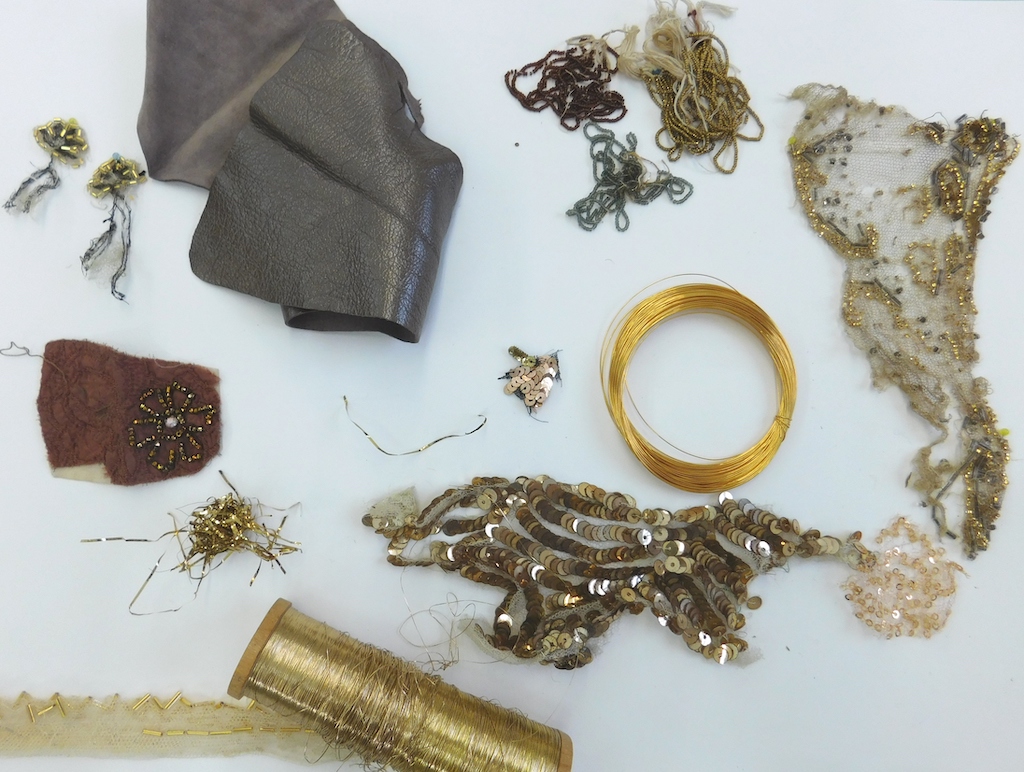
The dress was embroidered with old vintage glass beads from the 1920s through to the 1960s, the antique Japanese metal thread was old stock that had been with the RSN for many years, probably moving with us from Princes’ Gate in 1987. The Japanese thread was couched down with cotton thread using a combination of couching and Italian Shaded couching. This form of couching allowed us to shade through the rich colours giving tonal value to each of the individual elements. Each individual element was fluid in the interpretation but was monitored to ensure that shading on all the elements worked as a whole piece, resulting in the shading drifting through the bodice and upper skirt. This shading was additionally enhanced by the colouring and density of the beads chosen. There were larger nugget type pieces of gold which were in fact sweetie papers, bonded to fabric and cut sheer to the edge of the sweetie paper so that none of the backing fabric showed. Before being attached, they were scrunched to add texture and then applied with tiny discreet stitches.

At the RSN, we train our students in the same way, regardless of which course they attend. This allows us to work in teams of Embroiderers all fitting together in such a way that the piece looks as if it has been worked by one person. With the timeframe we had, and the quantity of embroidery to complete, we worked in a large team of 22 Embroiderers, in shifts, to increase the number of hours we had per day.

It was a beautiful design to embroider and exciting to be able to use threads and fabric from our stock knowing that they were being used to create a piece that will last for many years to come and reducing the need for new threads. Many of the threads would have been seen during searches of stock for previous commissions, and we would have dreamt of ways to use them!

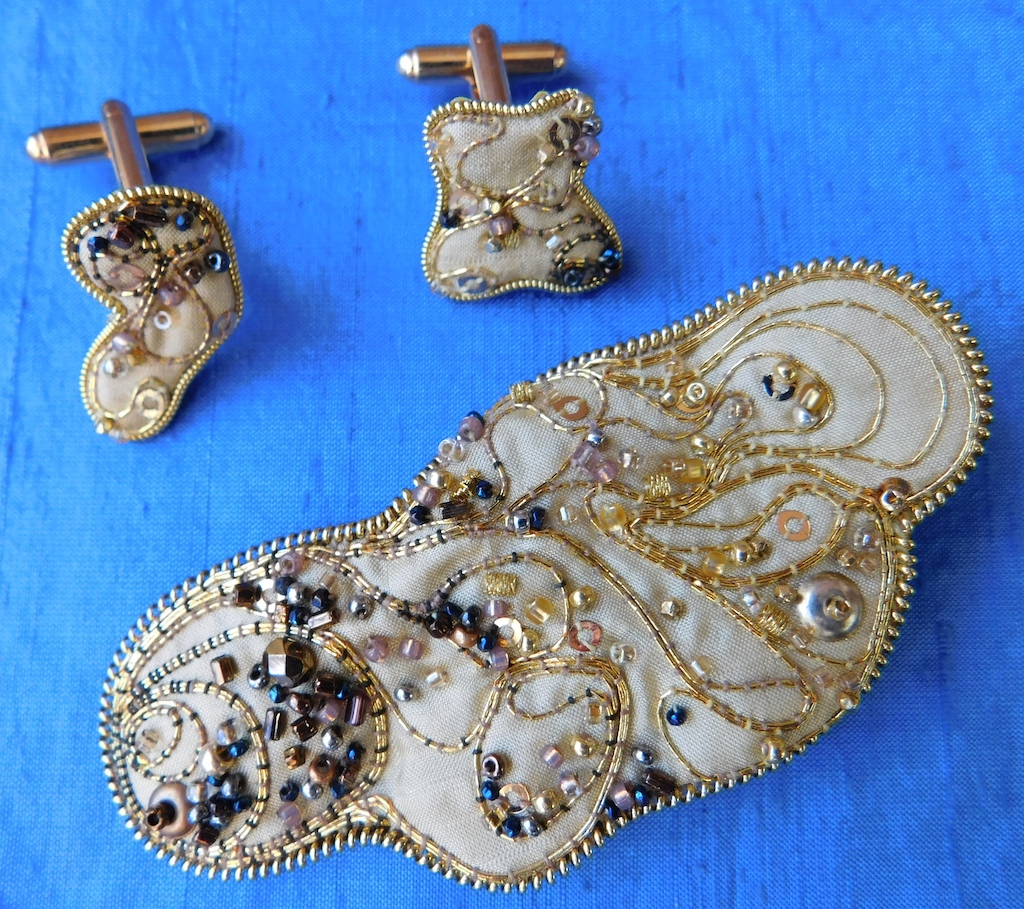
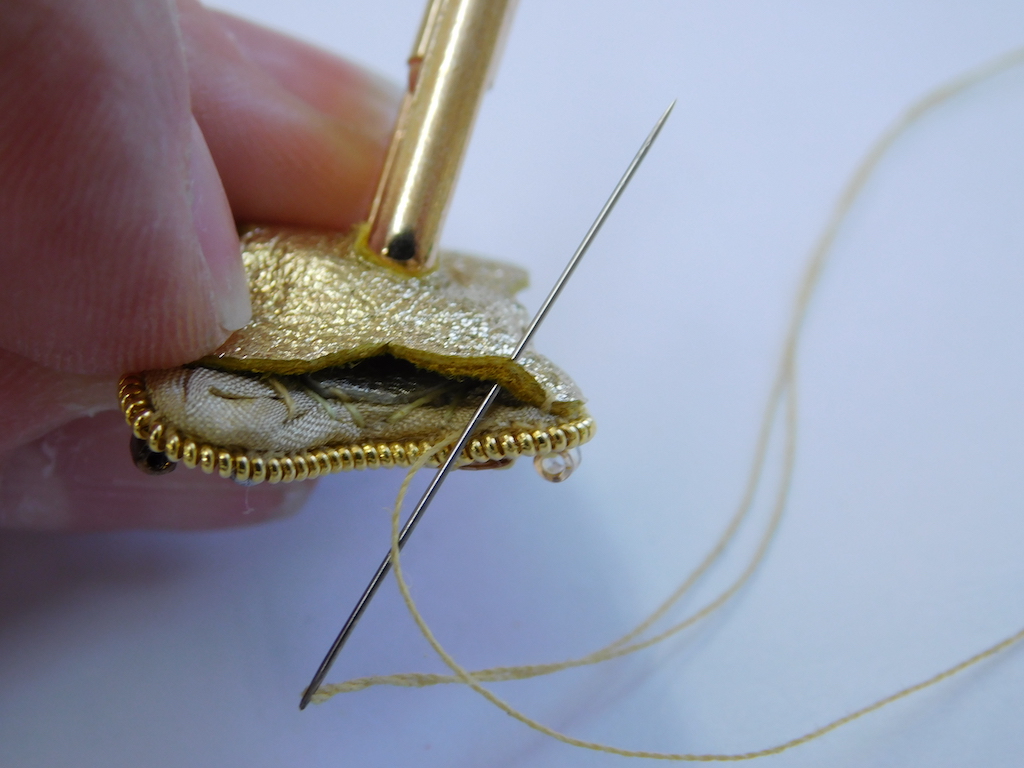
Beautiful embroidery embellishment is not just for pretty dresses but for everyone regardless of budget or gender. We produced in more recent years a version of the ‘Lava Dress’ embroidery as a ‘His and Hers’ gift, a brooch and cufflinks set. The embroidery had to be scaled down and we were limited to the finer vintage gold threads and beads, sadly there was no room for the sweetie papers! We did introduce a stiffer metallic thread, known as Pearl Purl, to act as a wire at the edge to give the items more rigidity against wear and tear. It was a challenge to work the embroidery scaled down , however, we are sure you will agree that the end result was worth it.

The ‘Red Carpet Green Dress Global Design Content 2020’ is open for entry until 30 July.

You never know, maybe next year we will work in conjunction with the future contest winner and see what is in the RSN cupboards to use next time!


ASK THE STUDIO FOR A QUOTE


It has been another busy week for the Education Department as we continue to add to our Online Day and Evening Class offering with very happy students from Europe and North America. Scroll down for ‘hot off the press’ news — you asked for Saturdays! Our Certificate & Diploma and Future Tutors also continue their digital learning at a steady pace.


Day and Evening Classes… even with a bit of RSN history

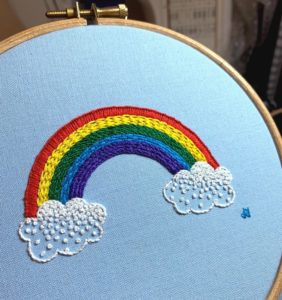
Sarah de Roussett-Hall’s ‘Bright Rainbow’ Day Class running on 11 June for our USA supporters proved so popular, with a waiting list, that we have added a second class a week later, on June 18 — book now as there are only twelve places available! All Day Classes run from 10am-4pm local time, and include the traditional RSN Tea break for you to meet fellow students from the other side of the world. Emma, from Manchester, who attended Bright Rainbow on 14 May, said: “I cannot stress enough what a fabulous course the embroidery class was yesterday. Sarah is an incredible teacher and it was a wonderful way to make the RSN more accessible… I can’t recommend it enough!!!”

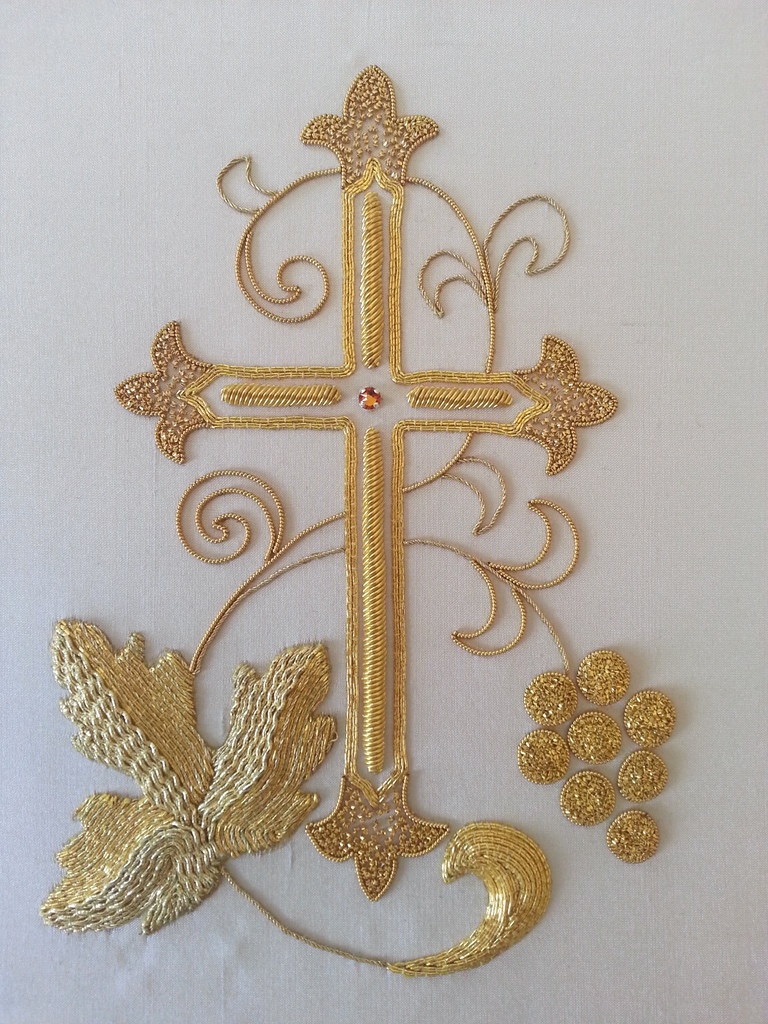
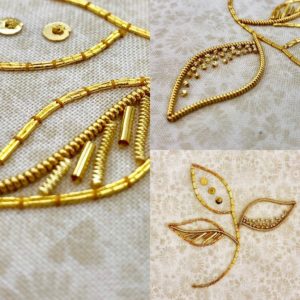
We are thrilled to say that our first Online Evening Class on 3 June sold out within days so watch this space for more to come. If you missed out on a place, please do let us know as we would be very happy to schedule a second outing for the class. We are however now planning our next Evening Class and this time we are tempting you with a trio of Goldwork leaves which will allow the beginner to try some basic Goldwork stitches. The class will be launched in the next few days but here is a sneak preview of the kit!


Did you know… ?  ‘RSN Night School’ history nugget

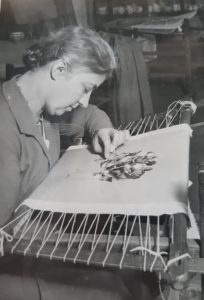
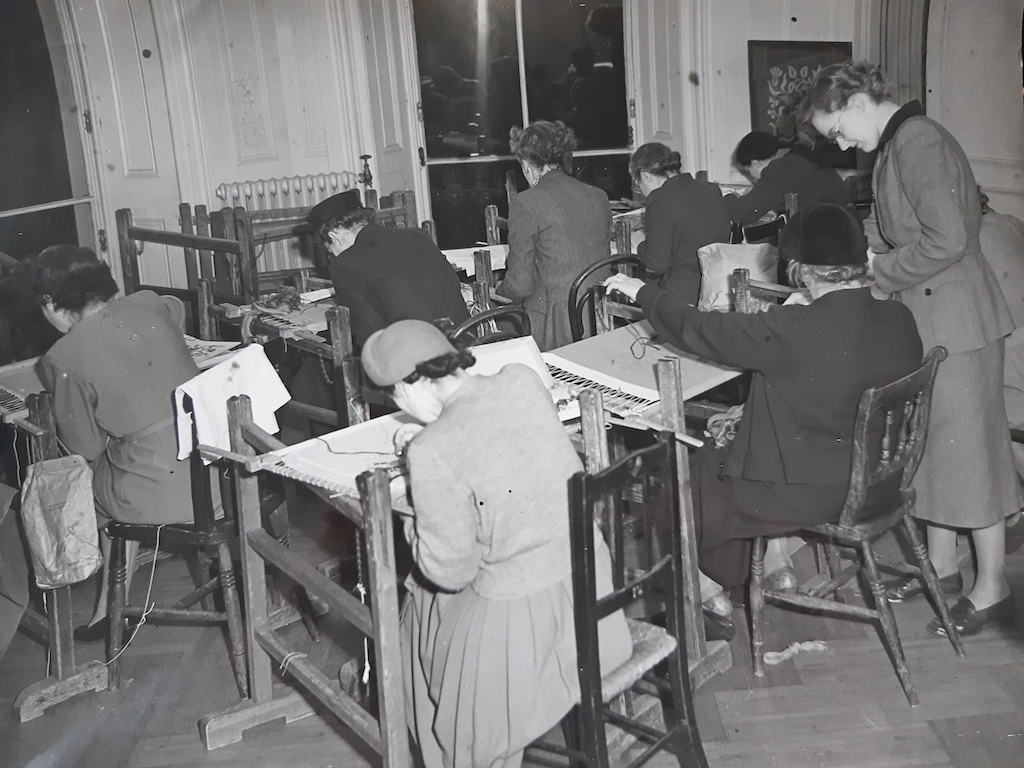
The RSN first introduced Evening Classes way back in 1897, first launched with a lecture about design in embroidery by Walter Crane, the arts and crafts and aestheticism designer who worked with the RSN for over 20 years. This was attended by over 300 people!

The idea of starting Evening Classes was because the RSN realised that many people were beginning to teach embroidery in schools who were themselves self-taught. So ‘Night School’ was offered as a way to upskill the teachers, recognising that they would not be able to give up time during the day. The students learnt hand embroidery for two evenings a week at Exhibition Road, London, where the RSN was based at that time. For another two evenings they learnt design and on the fifth evening the classrooms were open so that students could continue their stitch practice, what we today refer to as ‘work on own’. This recognised that the students might not have room to stitch at home.

We are not exactly sure when Night School stopped — certainly during the War — but the classes were revived after the move to Princes’ Gate. With the move to Hampton Court Palace in the 1980s Evening Classes were stopped again as there is not a large number of people in the vicinity in the evenings and to abide by the Palace’s security rules and regulations. We are thrilled, however, to now be able to re-introduce them as we move to teaching online and look forward to more of you joining us!


***  Hot Off the Press:  New Online Day Class Launched Today  ***

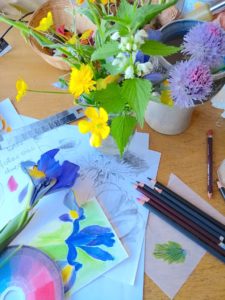
Our first Online Observational Drawing Day Class, led by RSN Tutor Caroline Homfray, is taking place on Saturday 13 June. Spend a relaxing day with Caroline learning how to draw the flowers you have chosen, in your RSN Sketchbook sent to you prior to the class.

There will be the opportunity to practice with drawing exercises and plenty of hints and tips leading to your final drawings. You will focus on how to observe closely and draw what you see, both in colour and black and white, with some fun warm-up drawing exercises.

Many of our Certificate & Diploma students find these classes extremely beneficial before embarking on a technique which is design based.


RSN Certificate & Diploma in Technical Hand Embroidery

Many of our C&D Students have now experienced Online Teaching from our wonderful RSN Tutors and for those who have not yet done so please do not feel anxious about using technology to help you advance in your technique and to continue the momentum from class.

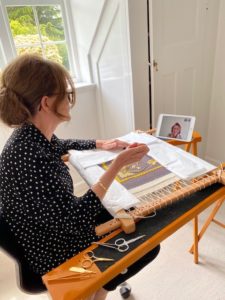
RSN Diploma student, Sue Ghosh who learns at Hampton Court Palace, has taken some classes with RSN Tutor Lisa Bilby: “Once the lockdown started I was really sad that I would not be able to attend classes at Hampton Court Palace, but was very pleased to find that the RSN had set up one-to-one Online Tuition for C&D students with a Tutor. The system uses Skype which I was not familiar with, but it was really easy to set up and the system has been working really well.

I have a 1/2hr lesson in the morning at which the teacher suggests what to do on my piece and then another 1/2hr lesson in the afternoon where the teacher goes over what I have done since the morning and sets me the homework I need to do for the following lesson (the first session was longer). One of the best systems of Online Tuition is that you can adjust the frequency of lessons to suit your availability and personal teaching requirements. Using Skype you can see and talk to the Tutor and they can see you and the piece you are working on quite clearly.

Having the C&D Online Tuition has been very helpful and I have been so pleased that I have been able to progress with my Goldwork piece because of the invaluable guidance I have received from Lisa. It has been very easy to follow the teaching and I have received many useful suggestions, hints and tips on the problem areas that I have had.

I would highly recommend this to all of my fellow C&D students, as the system was easy to set up, even for someone like myself who is not very computer literate. The teaching has been excellent and very easy to follow and I have definitely benefited from the Tutor giving me help and guidance during the online session.”

If you have any questions regarding C&D Online Teaching please contact the Education Team.


LOOK OUT FOR…

The RSN Education Department has more classes up their sleeves so whether you want to draw flowers, try hand embroidery for the first time or improve your skills whilst at home, there will plenty of choice.

If you have something already part-worked and need a little help then our one-to-one Online Lessons are ideal too.

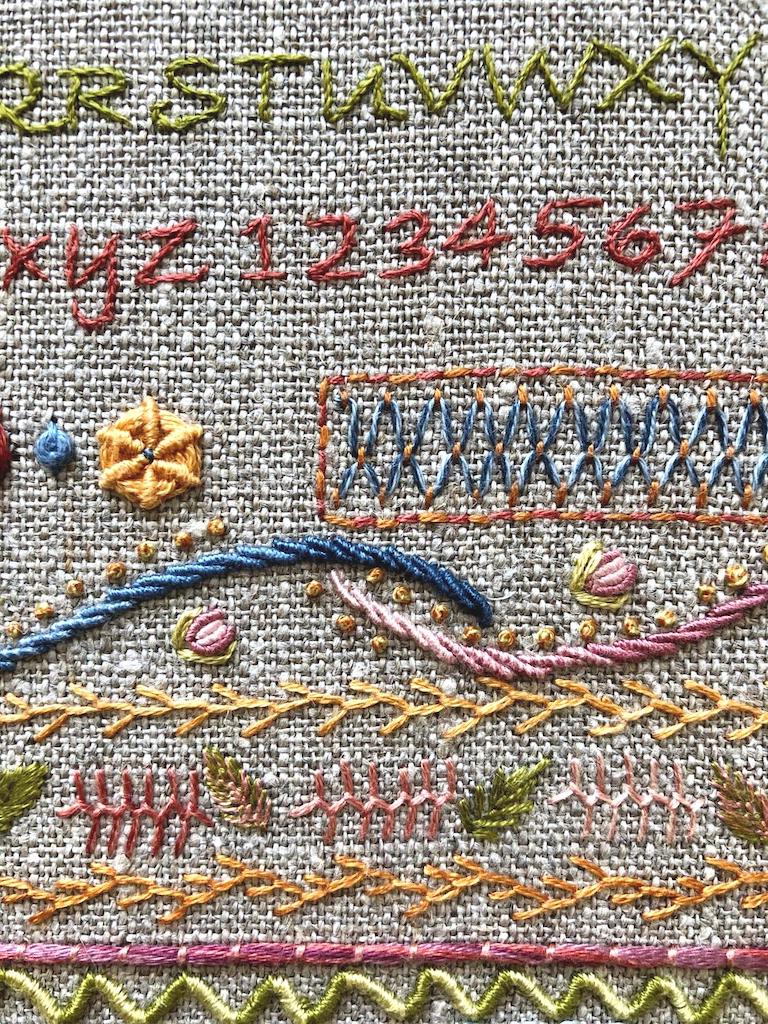
Looking forward to the Autumn term, we are itching to share with you our brand new monthly Online Sampler Club which will be launching in September and promises to deliver a unique ongoing opportunity to explore hand embroidery under the watchful eye of Tutor Kelley Aldridge.

Happy stitching to you all!


BROWSE OUR ONLINE OFFER

As part of our #RSNPostcardFromHome Challenge, this week, we have launched our new dedicated ‘RSN Postcard from Home’ page so that you can see the Postcards created from all over the world, inspired by the stitcher’s town, family history, the current global situation they have found themselves in at home, and hear some of their stories.

The challenge is open to everyone from around the world, and aims to make us feel connected through the precious RSN bond and our universal love of hand embroidery. It can come in the form of a traditional postcard but also perhaps a pin cushion to use in the future or on the side of a cloth bag to show off when you go shopping!

As well as the Postcard Gallery, there is a page for the artists stories which are a lovely read. This week, for example, we heard from Laura-Jane in Cornwall who wrote:

“My Grandpa had just passed away from Coronavirus when I saw the ‘RSN Postcard from Home’ challenge in the weekly eNews and I knew straight away that I wanted to create something in his memory. Something to commemorate and symbolise saying goodbye. Home is Cornwall and I wanted to re-create one of our favourite views of Botallack Mine, a group of mine stacks right on the cliffs.”

Please do share your Postcard story, which we would love to share with everyone, and don’t forget to hashtag #RSNPostcardfromHome when you are sharing your images on Instagram and other social media sites!

Many of the pieces that come into the RSN Embroidery Studio are of sentimental value with amazing stories behind them. We often see samplers that can be traced back via the family tree sometimes opening another world to the family ancestors.

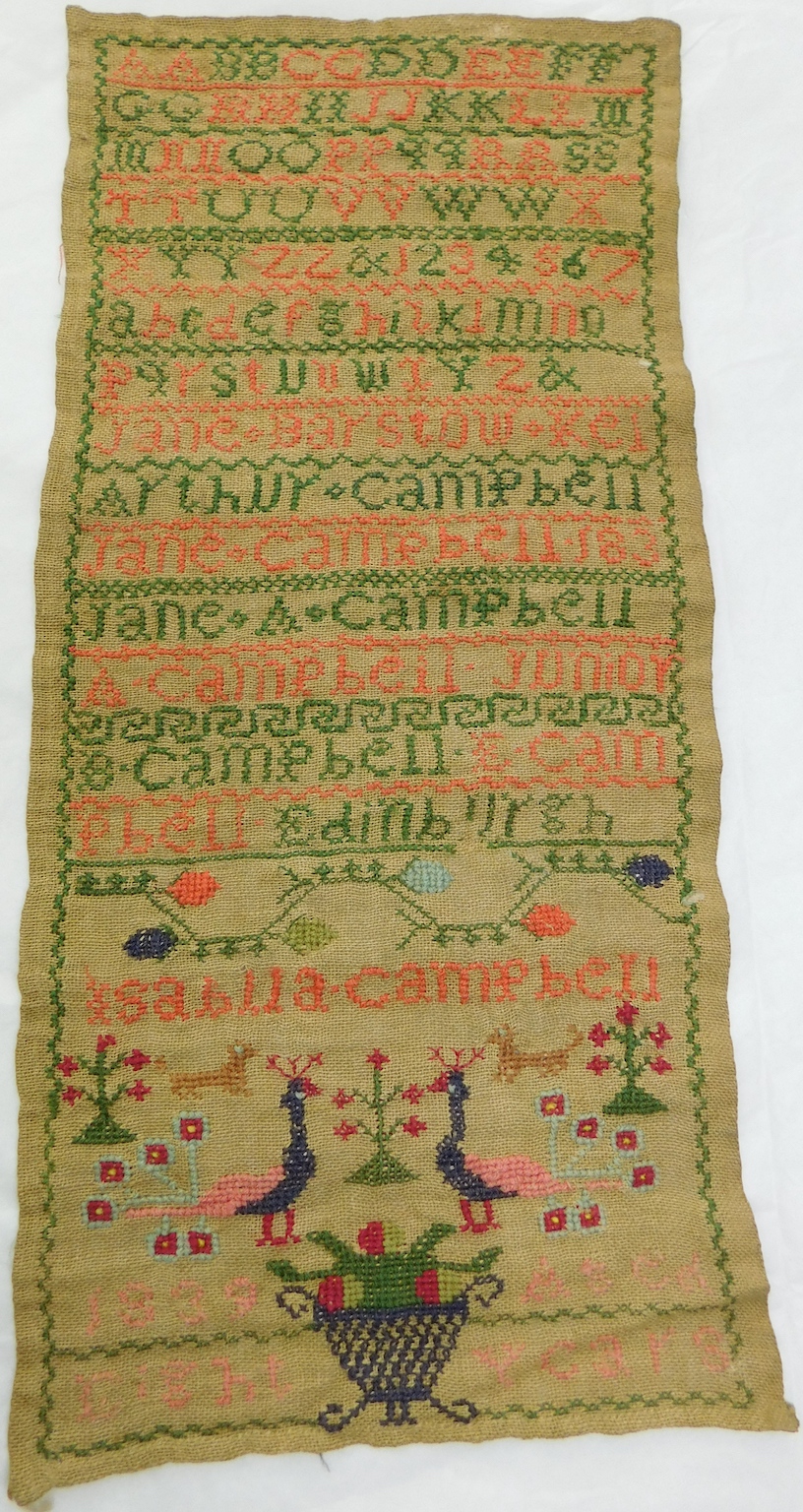
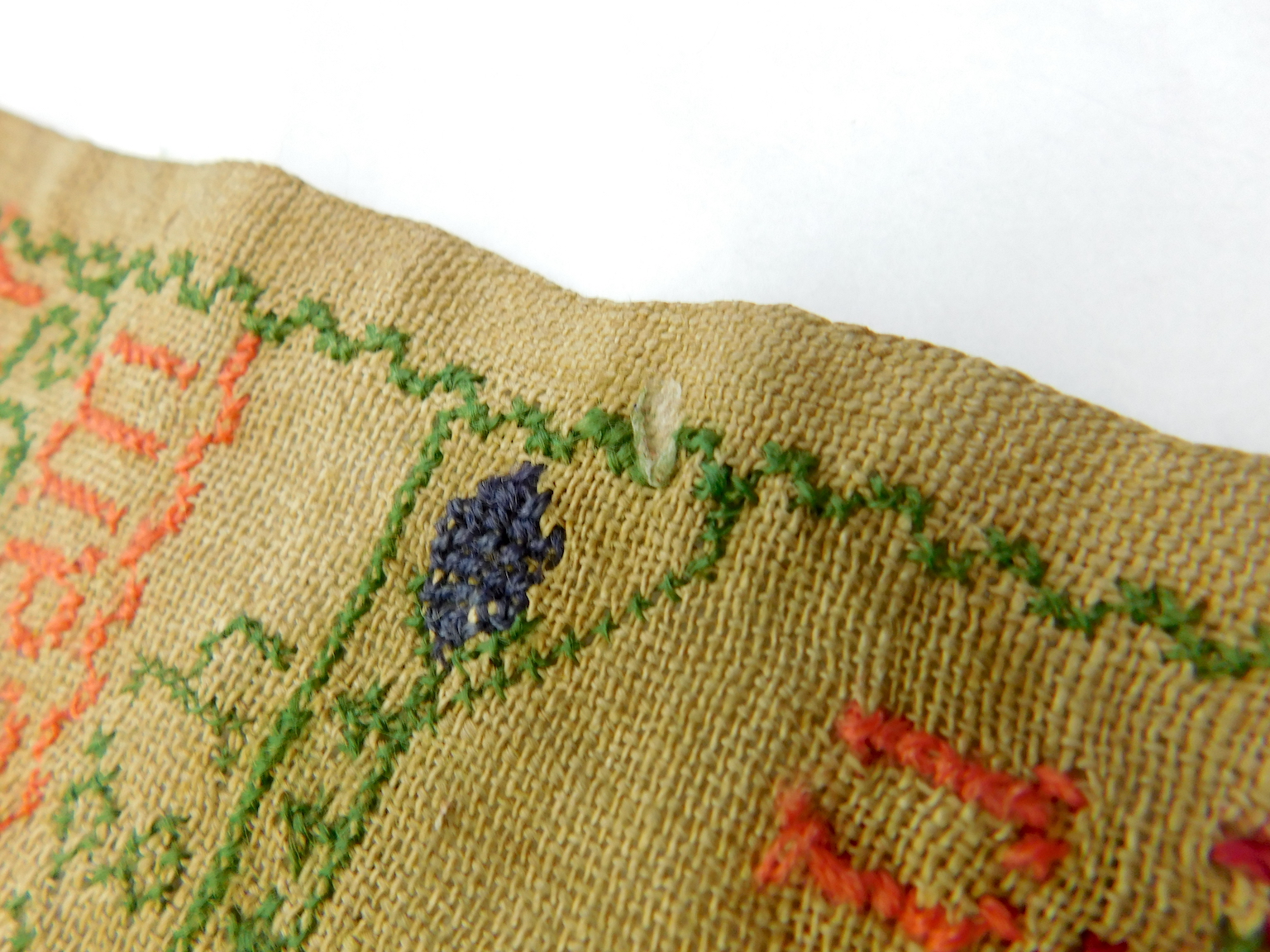
A client brought us a sampler which was amongst her mother’s sewing equipment. One of the names embroidered in to it is of her father’s ancestors. The client assumes that her mother had kept the sampler for this reason and was enthusiastic to research further into her paternal family tree, researching the individual names listed. The date on the sampler is 1839, and is in keeping with the style of that time.

Fortunately, the sampler did not have any holes or broken threads on it, but it did have moth residue. The first process was therefore to lightly surface clean the sampler with a low suction conservation hoover before placing it on to a support fabric of linen.

Once this was complete, we mounted the piece onto conservation grade card ready for framing. When placing any textile behind glass it is very important that the glass does not touch the textile and that air can flow between the two very different materials. The back should be sealed to prevent little insects getting in to make their home and have a feast!

The final sampler after restoration:

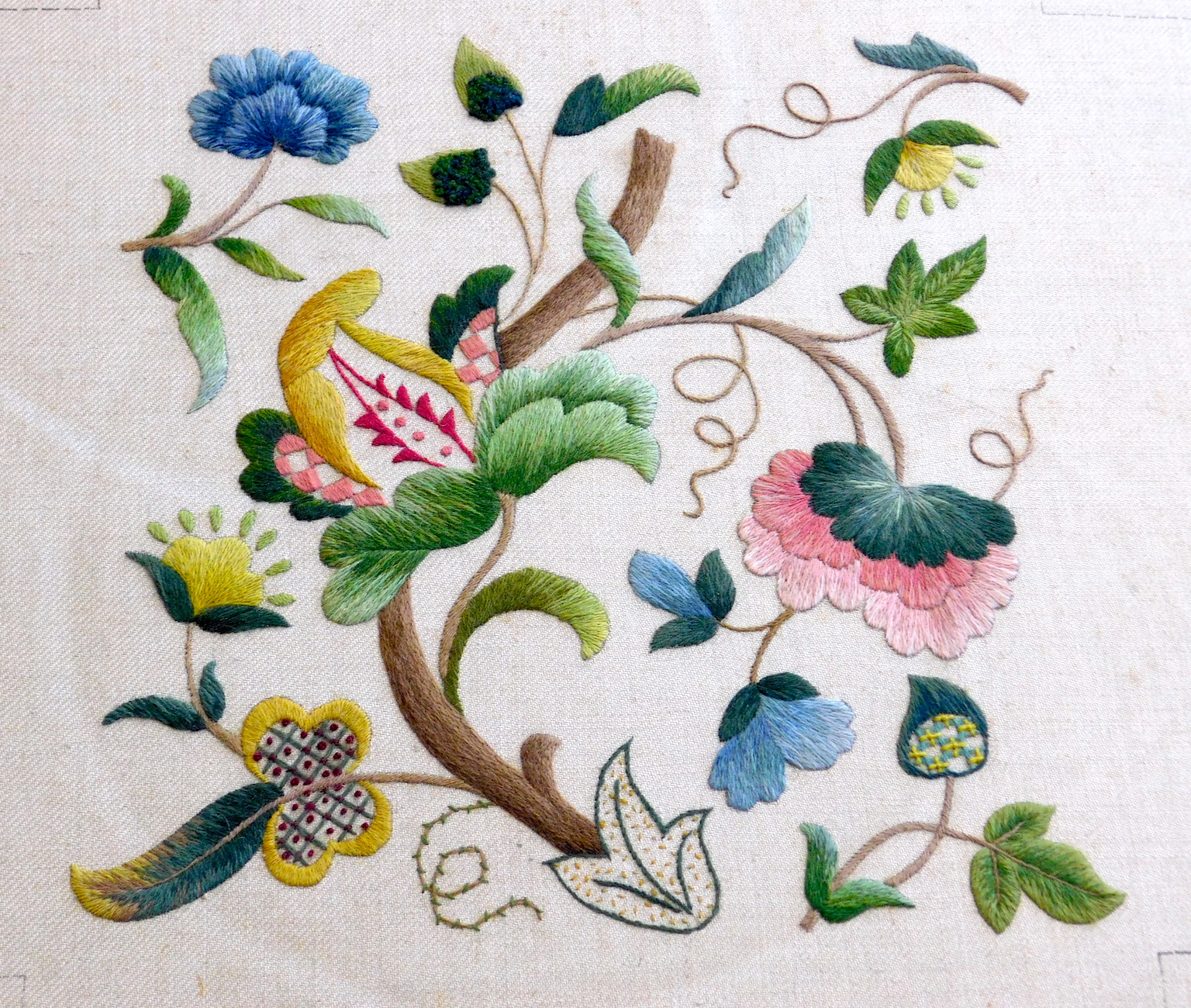
The sampler was not the only piece our client brought to us, she also brought two unfinished Jacobean Crewelwork pieces. These embroideries were originally destined as covers for dining chairs. The client’s mother spent a lot of her childhood stitching as she had a disability which meant running around was not a possibility. She learnt to sew beautifully, not just in ‘Jacobean’ stitches but also in Whitework, and turned her hand to embroidered pictures and making embroidered boxes.

The chair seats were not completed as the client’s grandmother left a set of more grand chairs, and she suspects that her mother started working on a different project instead. The client’s mother was a member of the Broderers of York Minster, which she loved and her work is still on display and in use in the Minster. From what we can see, she was a very accomplished embroiderer.

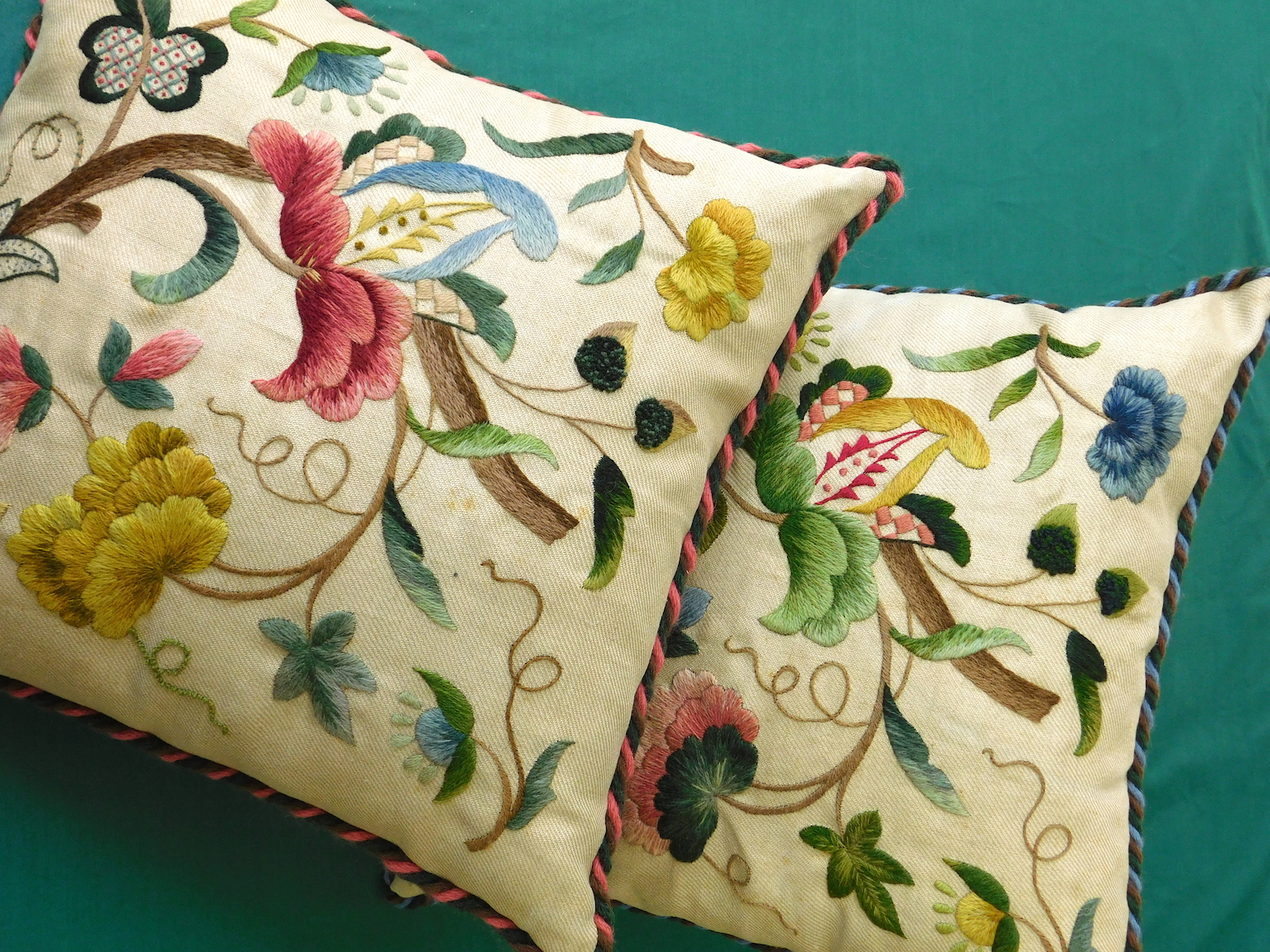
The RSN Embroidery Studio had the satisfying task of finishing the embroidery and making the pieces into cushions – not as straight forward as you might think!

The Studio Embroiderers firstly had to match the thread colours, taking in to consideration how the client’s mother would have continued to work them and where she would have placed the colours and stitches. Each cushion had different areas worked which gave us a clue as to her intentions as well as the decisions she had already made on the areas she had completed. In addition, it is the skill of the RSN Studio Team to adapt their own style and tension to suit that of an original piece of work so that it does not look like the work of two different people. This skill, and the ability to adapt the natural way of working of a highly trained RSN Embroiderer, comes with experience and confidence in the techniques as well as one’s own ability.

The cushions were constructed with a linen fabric back, a similar weight to the twill on the front. Using a spot cleaning method, we needed to remove some design marks in the corners, which were there to show the corner position for the chair pad. We used a feather cushion inner and chose a size larger as this will give more support to the embroidery in the future, keeping it from being crushed, which could happen if the inner was too soft. We finished the cushions with a hand twisted woollen cord taking the colours from the cushion so that each one was different.

We were delighted with the final result and so was our client, who has donated the four remaining chair seats to the RSN. We will use them for training the Future Tutor students during their Studio time. In this particular case, their training will be as if a client has brought them a commission and they will learn how to complete the work, from estimating the time and cost, to the thread quantity and making it up either as a cushion or a chair pad. These are important and, indeed, vital skills required when either working in the RSN Studio or when they are working Freelance.

We thought that we would let our client have the final word: “I do not have my mother’s talent in either stitching or the eye for colour so I am immensely grateful to the ladies who completed the cushions. I cannot tell whose work is whose, but as they sit on my sofa I look at them and feel my mother’s presence.”


RSN EMBROIDERY STUDIO


The Education Department has been actively embracing the concept of Online Tuition, with our Certificate & Diploma. Students now able to successfully continue their learning at home.


Online Day Classes

We ran our first Online Day Class yesterday,Introduction to Embroidery: Bright Rainbow’,  with a second outing for our USA customers on Thursday, June 11, which is booking up briskly with only a few places remaining!

BOOK NOW

A student from yesterday’s class said, “Best day of lockdown by a mile!” which is so lovely to hear! Tutor Sarah was buzzing after the class and said, “I’m really looking forward to doing more Online Day Classes and bringing as much of the RSN experience as possible into people’s homes. I think everyone got along well, and the photos I’ve received of people’s hoops so far look great! Now they have to finish them!”

You can read all about Sarah de Rousset-Hall’s pathway to becoming an RSN Tutor in today’s eNews, where we are sharing with you her beautiful and varied work.

You can read all about Sarah de Rousset-Hall’s pathway to becoming an RSN Tutor in today’s eNews, where we are sharing with you her beautiful and varied work.

There are a number of exciting online projects in the pipeline including an observational drawing class focussing on flowers, a day studying colour theory, and a few classic introduction classes to meet the growing need from people looking for a new hobby…so watch this space and our social platforms for updates!


Evening Classes

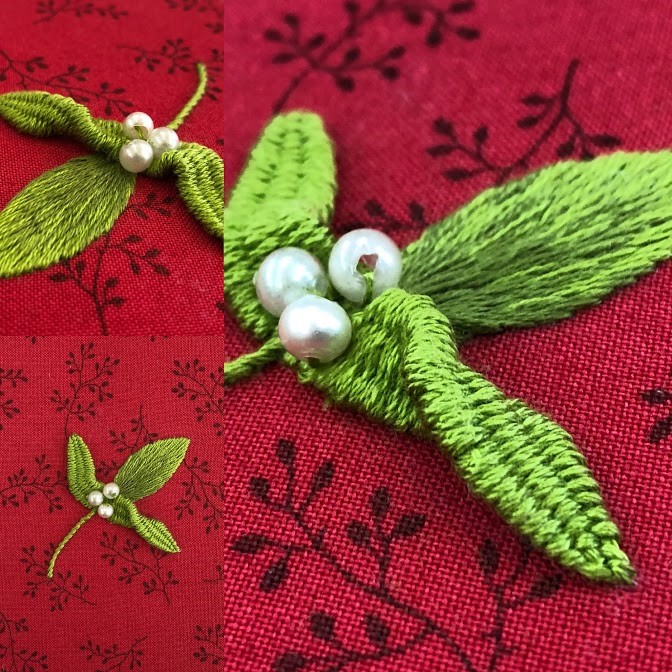
We are also excited to launch today our first Evening Class, ‘Silk Shaded and Needlewoven Picot Spray’, on 4 June which will be taught by 3rd year Future Tutor Anita Harrison.

During the class, Anita will teach you how to create this charming leaf spray using the techniques of Silk Shading and Needlewoven Picots, each giving a different texture and height to the piece. The final touch will be a cluster of beads to represent berries.

These two techniques, although both steeped in history, are combined here to produce a more contemporary approach. Needlewoven Picots, are associated with Raised Embroidery/Stumpwork, but can historically be found in other techniques such as Drawn Thread Embroidery, Reticella Lace and Casalguidi Embroidery.

The delightful leaf spray can be worked in different colourways to represent the seasons and can be added to home interior items such as the corner of a cushion or a napkin. Alternatively, it can be added to a garment such as a pocket or lapel or even onto a handbag or headband.

Book Now


Online Lessons

There has also been a great deal of interest from people wanting help with their UFO’s (UnFinished Objects) and WIP (Work in Progress) and we have been running one-to-one sessions to get people re-engaged with them! Our private Online Lessons are a great way to get you enthused about completing your work, especially that UFO stashed away in your bottom drawer! Or why not start learning a new technique or creating a new design?

BOOK ONLINE LESSONS


Much more to come!

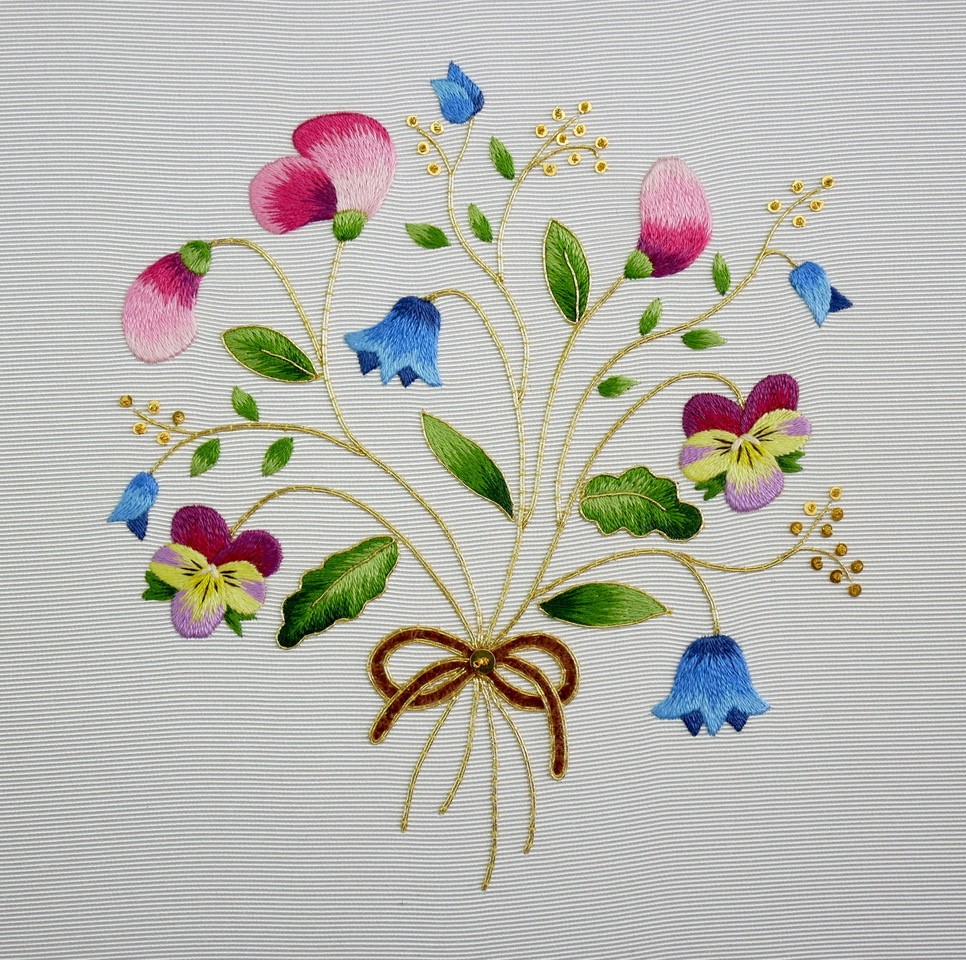
The Education team is forward-planning a mixture of online and classroom based classes and, as a teaser, we are delighted to share with you this beautiful ‘Country Garden Posy’, designed by RSN Tutor Kate Barlow which we plan to run in Spring 2021.


BROWSE OUR NEW ONLINE CLASSES


The RSN offers bespoke embroidery services in our Embroidery Studio, managed by Head of Studio and Teaching, Anne Butcher. In this vital role, Anne manages the Studio Team, from ensuring that quotes and finished pieces are sent to clients within a certain time frame, to guaranteeing that all work carried out by her team is to the highest technical standard.

Anne with TRH Duchesses of Cornwall and Gloucester

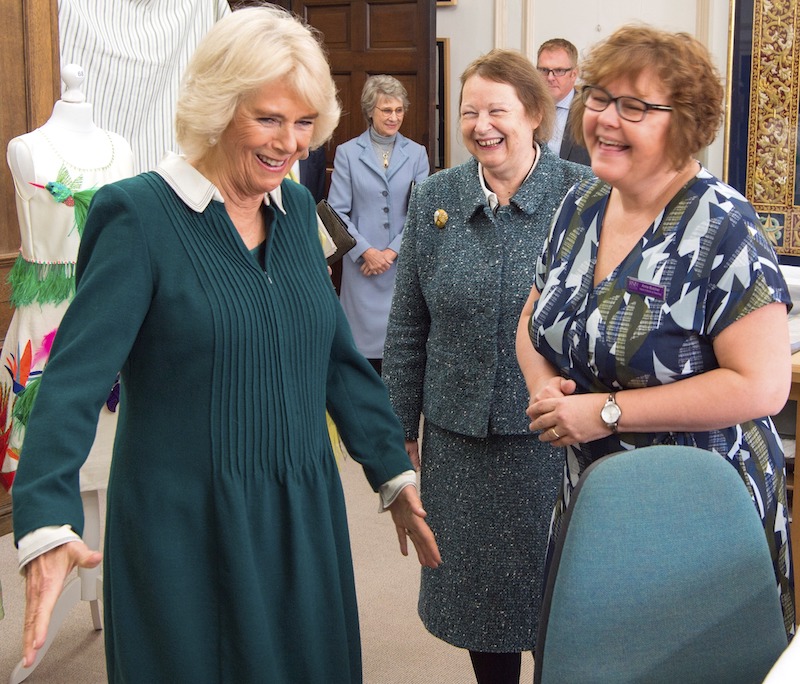
Anne with (L-R) Patron HRH The Duchess of Cornwall, President HRH The Duchess of Gloucester (in blue in the background), and RSN CE Dr. Susan Kay-Williams

Anne joined the RSN as an Apprentice in 1982 and became Assistant Head of Studio when the RSN moved to Hampton Court Palace in 1987. Two years later, Anne became Head of Studio, helping to rebuild the Studio to 20-30 embroiderers depending on the number of Apprentices in the Studio at the time. She worked with Debra Jackson and Liz Elvin to restart the Apprenticeship in the three-year format.

Anne left the Studio in 1997 to have her family, returning to teach Freelance on various courses and classes including the Apprenticeship and the Foundation Degree. 2013 saw Anne return full time to oversee the Education Department including the development of the Future Tutors Programme, taking a sideways step in 2015 to also oversee the Embroidery Studio.

The RSN Embroidery Studio has customers from all over the world, from members of the Royal Family, places of worship and livery companies to leading fashion and interior design houses and private individuals. The team creates beautiful bespoke commissions for the future as well as bring historical textiles back to life by conserving or restoring them.


Let’s start from the beginning Anne. What was your pathway to joining the RSN Apprenticeship and then to move on to becoming Head of Studio and Teaching, your position today?

When I was 13 years old, my parents gave me a Beatrix Potter Kit of Mrs Tittlemouse as a Christmas present – that was it, I was hooked, and my obsession grew from there. I disliked school, not learning, just school, so when my Mum was told about the RSN and received a copy of the Friends Newsletter containing an article by Debra Jackson about her time on the Apprenticeship, I just had to apply. Little did I know how closely I would be working with Debra in the future and that our boys would be born ten days apart!

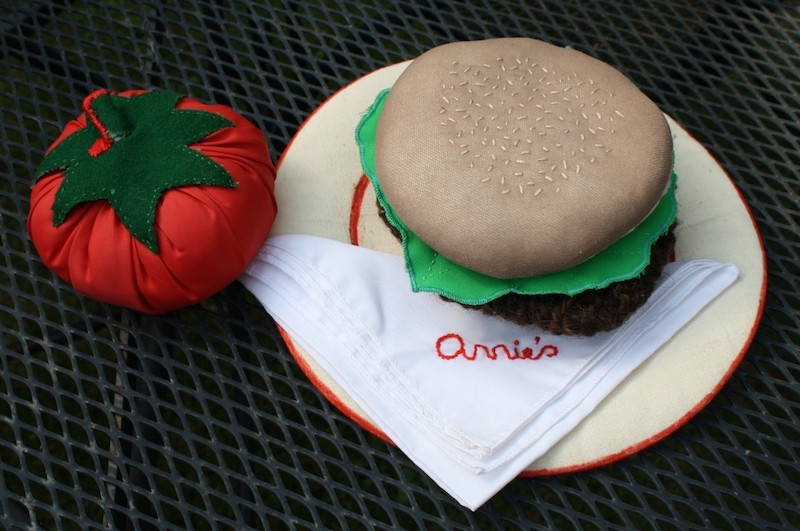
I was invited for an interview but, as I was only 15 years old, my Mum came with me to Princes Gate, London, where the RSN was located at that time. Mrs Field, the Principle, and Miss Bartlett, Head of Workroom, interviewed me. There was only a curtain on the door to the office, so my Mum heard every word of my interview whilst she waited outside. When we left all she could say was, “I have never heard you talk so much.” I took the completed Mrs Tittlemouse as well as a selection of other samples including a three dimensional knitted burger in a bun with fabric lettuce, plate and an embroidered napkin. The day the letter came I saw the Postman put it through the door and I just knew it was from the RSN but I didn’t have time to go back home as I would have been late for school. It was a very long day and when I read that I had been offered a place it was the best feeling ever. It came before I started my exams so I knew that whatever happened I was going to be an Apprentice at the Royal School of Needlework!

Anne's 'Burger' that she brought as part of her Apprentice Interview

Anne’s ‘Burger’ that she brought as part of her Apprenticeship Interview

I started on 13 September 1982, aged 16, and it was the best thing in the world, I didn’t have to go to school, I was doing something that I loved, and I was working in London. I managed the 5 hour coach commute every day for a year then moved into a flat share with a couple of people from the Workroom (today the Embroidery Studio). My biggest highlight of my Apprenticeship was to have our Certificate presented by HRH The Queen Mother, what a way to finish!

HRH The Queen Mother presenting Anne with her Apprentice Certificate

I went into the Workroom at the end of my Apprenticeship working on a huge range of pieces and still learning more about conservation and restoration techniques as well as expanding my embroidery skills. We were encouraged to take up teaching which I was not overly keen on at the start, as far as I was concerned I just wanted to stitch. My first experience was to teach an ILEA class (Inner London Education Authority) with my friend; we had 20-22 students for 2 hours in the evening, each student working a different piece. It was a case of sink or swim, thankfully we swam! I went on to build my teaching experience by being sent out to teach bespoke classes, often being faced with having to prove myself in the first 10 minutes as the students expected a more mature person — sadly I don’t have that problem anymore!


How have you developed your skills and career over the years?

As I said earlier, I like to learn and I was aware there were areas within embroidery or related subjects that I had not attempted so I took day release to take City and Guild Embroidery Part 1 and 2. This was followed by an Art Foundation Course, Millinery Course, Teaching Qualification, Diploma in Machine Embroidery, finally achieving BA (Hons) in Humanities with Art History In 2017. I thought I had stopped learning for now but in the current different times I have been introduced to some very interesting free online courses.

Once the Studio moved to Hampton Court Palace, I became increasingly involved in the administrative side of the Studio, only embroidering when there was a commission with a tight deadline or extra skills in a certain technique were required if we didn’t have enough staff. The first RSN embroidery publication was produced through the Studio and, as one of the Designers, it was an exciting project to be involved in.

When I left the RSN in 1997 to start my family, I continued to teach occasionally on the Apprenticeship and on Day Classes. I also started to teach for Surrey Adult and Community Learning where I became involved in their OFSTED process by observing the Tutors which is what led me back to the RSN in a full time role in the Education department.


What has been your favourite commission?

It is difficult to pick out a particular commission that stands out. I have worked on everything from a fabric packet of KP Pistachios for a TV commercial through to a new Cloth of State for Hampton Court Palace, when the fire damaged apartment was refurbished, as well as being called in to work on a certain wedding dress… !


Tell us more about the well-known RSN Studio expression, “Never a seat shall go cold”.

We say in the Studio, “Never a seat shall go cold” which means that we are all trained to carry out work on a piece which looks like it has been carried out by the same embroiderer. In the past, an example of this would be when three of us worked and completed a cap badge in a day and it then went straight to Heathrow Airport to be flown out to the client — two bottles of champagne as an extra thank you was a nice perk!

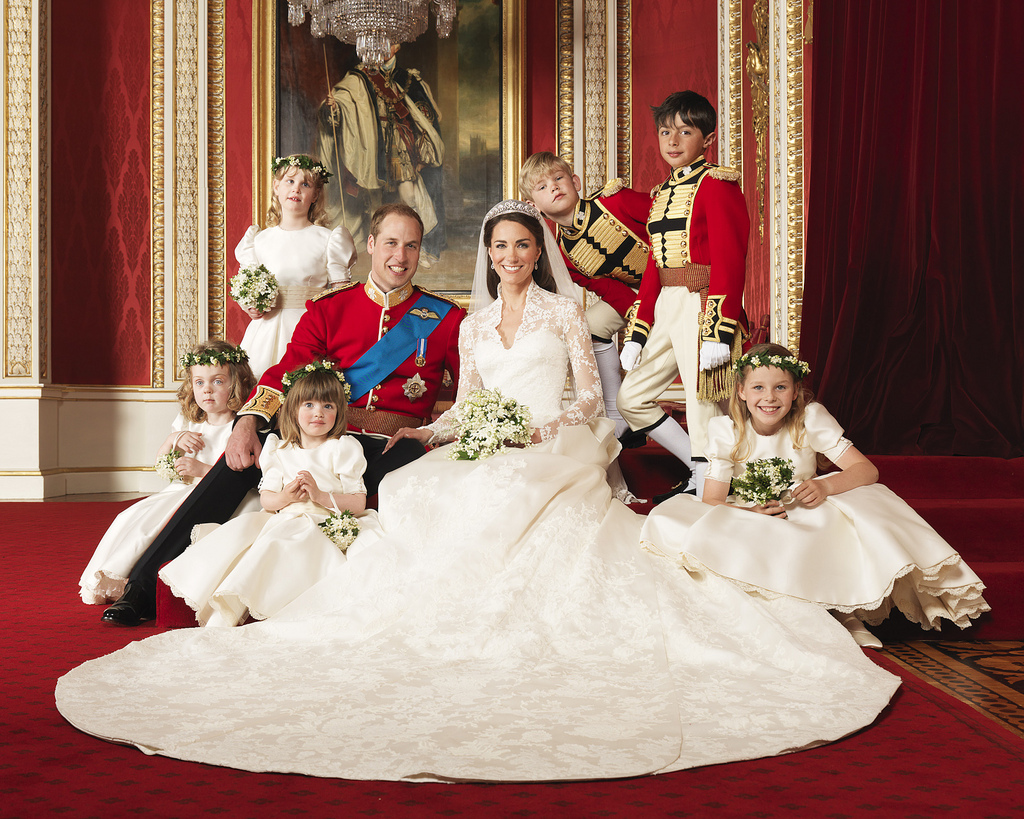
In more recent years, one such example of this was the prestigious commission for Sarah Burton of Alexander McQueen when we worked the embroidery for The Duchess of Cambridge’s iconic wedding dress. It was such an honour to work on this most beautiful dress but, as the RSN respects our clients by signing a contract of confidentiality, then I can’t divulge too much on the work we did. I could not even tell my husband what I was working on until HRH The Duchess stepped out of her wedding car! When I see pictures of The Duchess on her wedding day, I feel such a special sense of pride in the knowledge that some of the work was done by my hands. Recently, on 11 May, Channel 5 broadcast ‘Secrets of the Royal Dressmakers’ and the RSN embroidery team was mentioned yet again!

The Royal Wedding of The Duke and Duchess of Cambridge, 2011.
Picture Credit: Photograph by Hugo Burnand


What is the process when a client brings an item in to the RSN Embroidery Studio to be worked on?

Now I am back as Head of Studio the processes have developed and new techniques have been introduced, so I have had some catching up to do along with bringing back some lost techniques or variations of techniques. As our clients are from the UK and from overseas, technology has allowed us to adjust our processes accordingly.

When a client wants restoration or conservation work undertaken on a piece, they send a selection of pictures of the whole piece and the damaged areas. From these, we put together a proposal of how the piece should be treated along with approximate costs. If they wish to proceed further we request that the piece is brought or sent to the Studio for a formal estimate. There is often more than one way to treat a piece which can relate to how the piece will be used in the future. Once the formal estimate is accepted and a deposit paid we get to work. We stay in touch with the client during the process and sometimes have to revisit the estimate as we do not initially know how the piece will behave until we start working on it.

New commissions work in a similar way, with us giving approximate costs from a copy of the design. Whatever work we are undertaking we will stay in contact with the client as much as possible as it is important to keep the lines of communication open. There is always the option for the client to come and have a look while the piece is being worked.

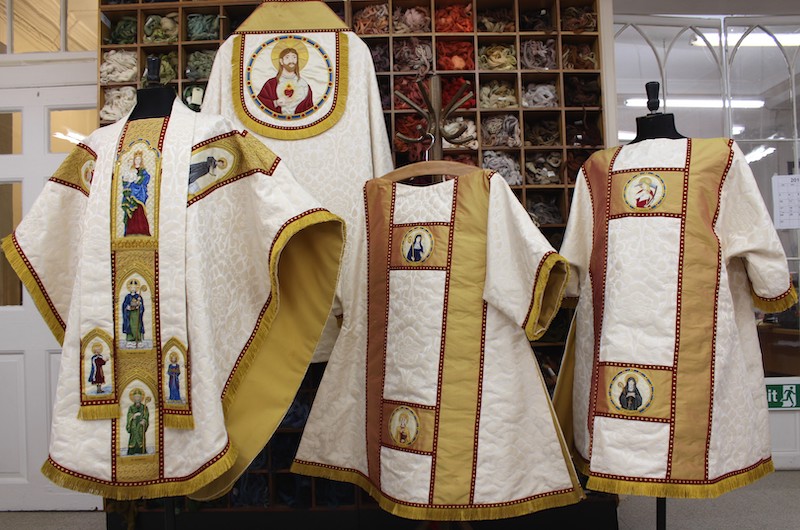
Our clients can be a Designer, a Cathedral or Abbey, or yourself reading this interview today! Most of the pieces are significant whether as a celebration or a commemorative piece to treasure for many years to come. For example, the Studio was commissioned by Buckfast Abbey to produce a full Pontifical Set of vestments to celebrate their Millennium in 2018. It was an amazing project to be involved in and the quantity allowed for all the Embroidery Studio staff to be involved. The design involved many faces and figures with several of us revisiting Tapestry Shading.

Buckfast Abbey Pontifical Set of vestments to celebrate their Millennium in 2018

RSN Embroidery Studio team working on Buckfast Abbey Pontifical Set of vestments to celebrate their Millennium in 2018


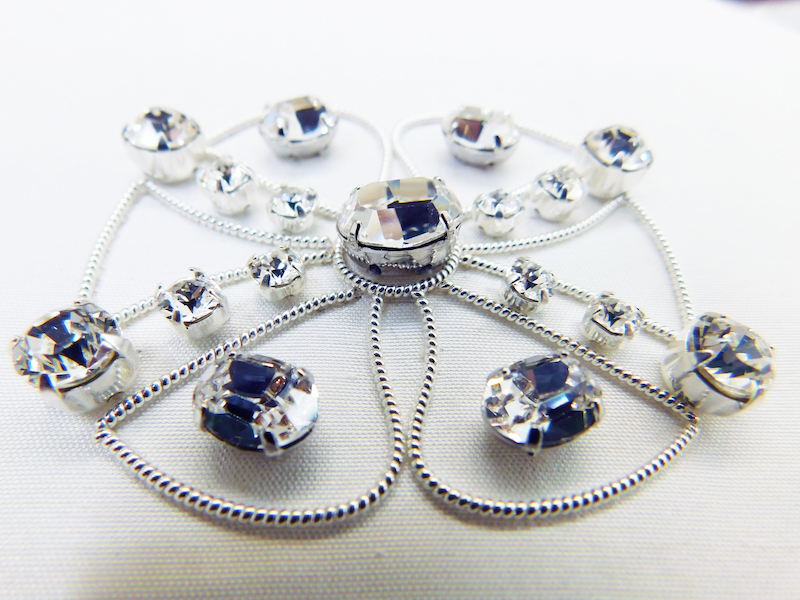
In contrast, we received a commission with an urgent deadline from Haute Couturier Malan Breton to produce two embroidered brooches/buckles for what we thought was to be a 1920s dress for a film. They were stunning, covered in Swarovski Crystals, neat and delicate. It turned out that they were for the wedding dress of American television personality Camille Grammer-Meyer in October 2018 and were seen on TV, both here and in the States, on The Real Housewives of Beverley Hills!

Camille Grammer-Meyer on her wedding day

Wedding buckle for Camille Grammer-Meyer.

Wedding buckle for Camille Grammer-Meyer.

Recently, we have seen an increase in pieces dating back to the 16th and 17th Centuries, including book covers, caskets and church embroidery. These pieces really do give you goose bumps when you think about how they have lasted and what they have been through — we always wish that these pieces could talk! Each piece requires its own unique approach and we adapt our expert skills where necessary to suit the needs of the embroidery.


As hand embroidery is such a specialist skill to have, one would imagine that you receive quite a bit of media attention, particularly after working The Duchess of Cambridge’s wedding dress which was seen live by 2 billion people worldwide?

The RSN Embroidery Studio has, over the years, featured in the Press including Country Living magazine where I appeared as a ‘National Living Treasure’ – it took a long time to live that one down! Recently, we were in the April issue of Period Living magazine showing how we approach the repair of Victorian Berlin Wool Work, from support through to reweaving the canvas threads and replacing missing stitches and beads. Many TV crews from around the world have filmed in the RSN Embroidery Studio including from Japan and the USA.

We are sometimes contacted by production companies to give advice for the TV and big screen, to teach the actor how to hand embroider in a convincing way for their character’s role. The most recent example of this was for the 2018 film ‘Dead in a Week (Or Your Money Back)’ where the leading lady, played by actress Marion Bailey, was a prolific embroiderer. We taught her how to embroider in character as well as lending the production company a number of pieces to position on set around the house including cushions and pictures.

Actress Marion Bailey embroidering in bed in ‘Dead in a Week (Or Your Money Back)’.

Again, I can’t spill out any secrets but it’s always exciting to see how natural the actors are when the programme or film is released… a long time after teaching the actor… by which time the Studio has long ago moved on to the next projects!


What has been your highlight as Head of the RSN Embroidery Studio?

This is a difficult question to answer, every single commission is so very important to each of our customers and the RSN Embroiderers are honoured to be part of the history of each and every piece! There is no standard day which makes every day extremely exciting as I can never predict what the next phone call or email is going to bring to the team.

I am extremely proud to have been involved with the RSN for so many years. This special organisation has developed substantially over that time and, with the staff team it has now, it will continue to do so as they all believe in what the RSN represents, its mission and what it stands for, how it is part of UK heritage now and will be for many more years to come.