We did not anticipate a few months ago, that our 3rd year Degree Students would be completing their final Major Projects at home with online learning from the RSN Staff, and we are so very proud of how they have adapted their work space and continued to work so hard.

As some of you will know who visit us every summer, the RSN Degree hosts a week long Graduate Degree Show at Hampton Court Palace at the beginning of June, and exhibits at New Designers in July; sometimes Graduate Fashion Week London and, in 2019, we were invited to attend the Port Elliot Festival in Cornwall.

During these events you do not always have the time to speak with each and every Graduate, so this year we are bringing our Class of 2020 to you with our ‘RSN Degree Student Spotlight’ feature. You will ‘meet’ each student who will explain the inspiration behind their work and will share with you pictures of their final Major Project. We hope that you will follow them on Instagram and give them your support in the future when we are able to exhibit their work.

For our first group of graduates, meet: Chelsea Burton and her Project, ‘What the Ocean Doesn’t Want I’ll Have’; Emilie Mason and  ‘The Abominable Wasteman’; Molly Asbury, who is ‘Beyond the Sea’; and Isabella Thorpe and her Project ‘Forever Friends’.

We will leave the final words to Angie Wyman, Degree Course Leader. “We have found ourselves in unprecedented times and are now learning to embrace the new ‘normal’. Our students and staff have shown strength, resilience, adaptability and creativity in how they have responded so quickly to the recent global circumstances which affect us all.

Our Graduates of 2020 will not be the ‘forgotten graduate generation’, they will be the trailblazers of the new decade.”

Look out for more Spotlights on our Degree Graduates over the coming weeks!

SPOTLIGHT ON the Graduates

RSN DEGREE WEBSITE


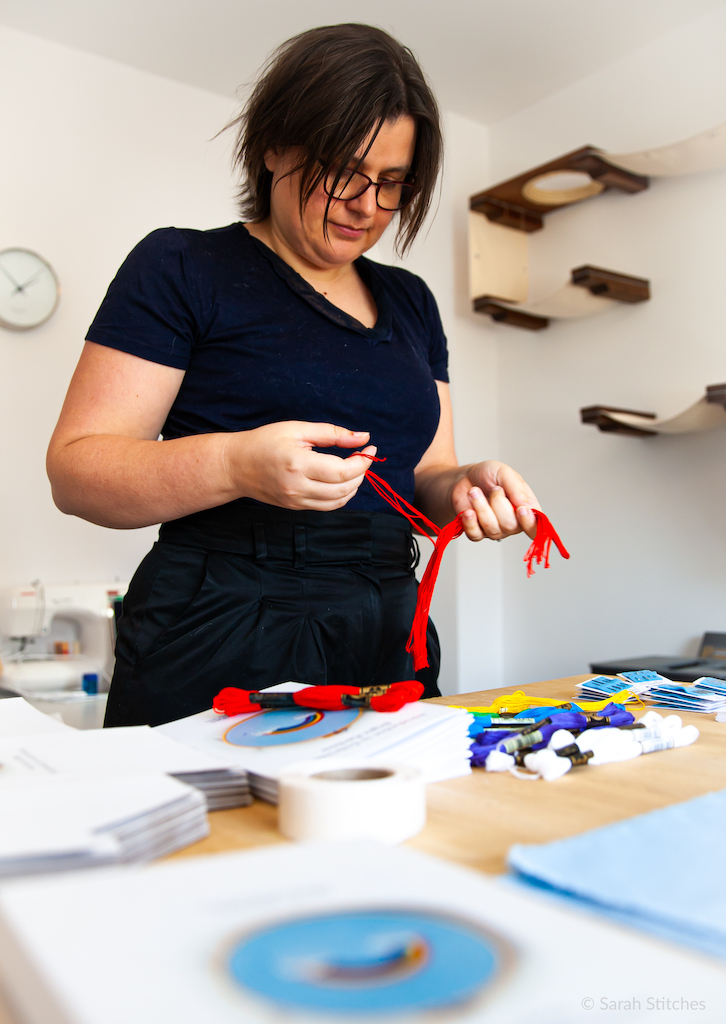
Today, the day before the 75th VE Day anniversary celebrations (‘Victory in Europe Day’), we would like to share with you some insights in to the commissions received around this period in the RSN Workroom, today the ‘Embroidery Studio’.

To mark this important day there had been many events planned across the country which have now unfortunately been cancelled, but this does not stop the RSN from sharing some wonderful history and stories of our activities during the war period when our work did not stop due to working with the military.

We will also be sharing more stories over the course of the weekend on our Facebook  and Instagram social media pages so make sure you catch us there for more wonderful insights and pictures from our history!


What did you do in the War, RSN?

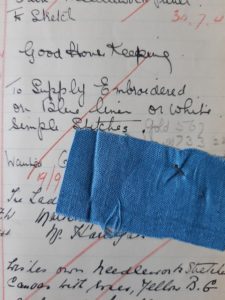
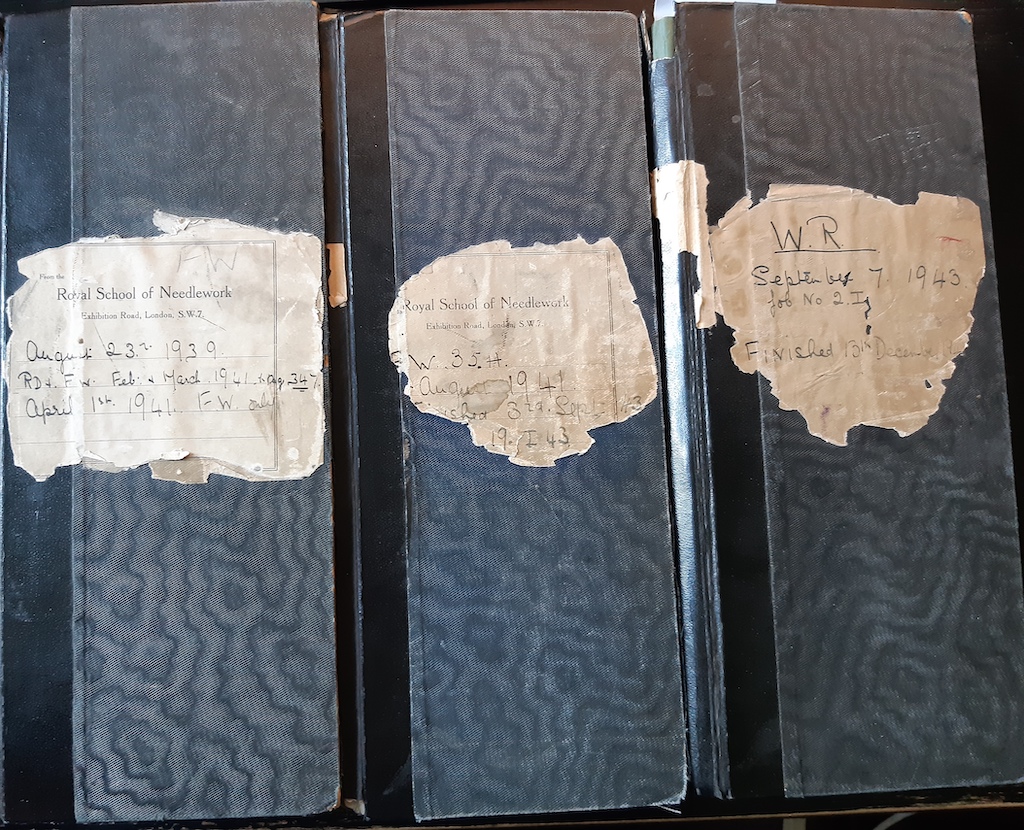
RSN Workbook entries from the 1940sLooking back through the Workroom’s order books gives us a fascinating insight into the RSN’s range of jobs, and just how busy it was, during the Second World War.

Work was commissioned by or for individuals, the armed forces and allied forces, for companies such as J&P Coats (now Coats Group, largest supplier of threads), Wm. Briggs Ltd. (the main creators of transfers for embroidery) and Good Housekeeping magazine, as well as for the War Office.


Regimental badges

In conjunction with the War Office, the RSN produced the badge of each regiment, which was then sent to Wm. Briggs Ltd. who translated this into an iron-on transfer which could be used on any piece of material. When we launched the badges we suggested the design could be used for the Radio Times cover. The idea behind this was that those with someone fighting in the war could make the relevant badge, but we also know that some of those fighting chose to work the badges themselves. When originally launched at the beginning of the war they included just the main British Regiments, but by the end of the war they included almost all the allied regiments plus the new corps which were established during the war.

RSN Workbooks from the 1940sWe can see in the Work books, orders for groups of these badges for Wm. Briggs, ‘Order 54.K.39 To supply 20 badges or crests for the various regiments Emb in Clarks stranded’ (now known as Anchor) which were requested in December 1939, another 20 in early January 1940 and a dozen more in February 1940. By 1942, the orders in the Work book were now for US Army Signals Badge, the Physical Training Corps, the Reconnaissance Corps and the Royal Armoured Corps.

The Clarks thread that was used for the regimental badges was produced by J&P Coats who were another regular customer of the RSN during the war, as we made the original samples for their kits. The Work book entries include the J&P Coats code number, the item, and often its technique plus the request for the methodology, such as ‘GS2844 Tea cloth cross stitch and all instructions’ or ‘GV3883 Luncheon set and all instructions’.


Serving the armed forces

The war period began with the repairing of flags and standards and continued with the making of new flags, e.g. for the Grenadier Guards after their Henry VII and James I standards were badly damaged in a fire, and a banner for the Land Army. Our customers, however, were not just from this country. We also made flags and banners for an international clientele including the Dutch Ministry of Defence; the Dutch Indian Regiment, a banner for Mysore State and flags for the Royal Norwegian Air Force, the Free French force and the Queen of Tonga.

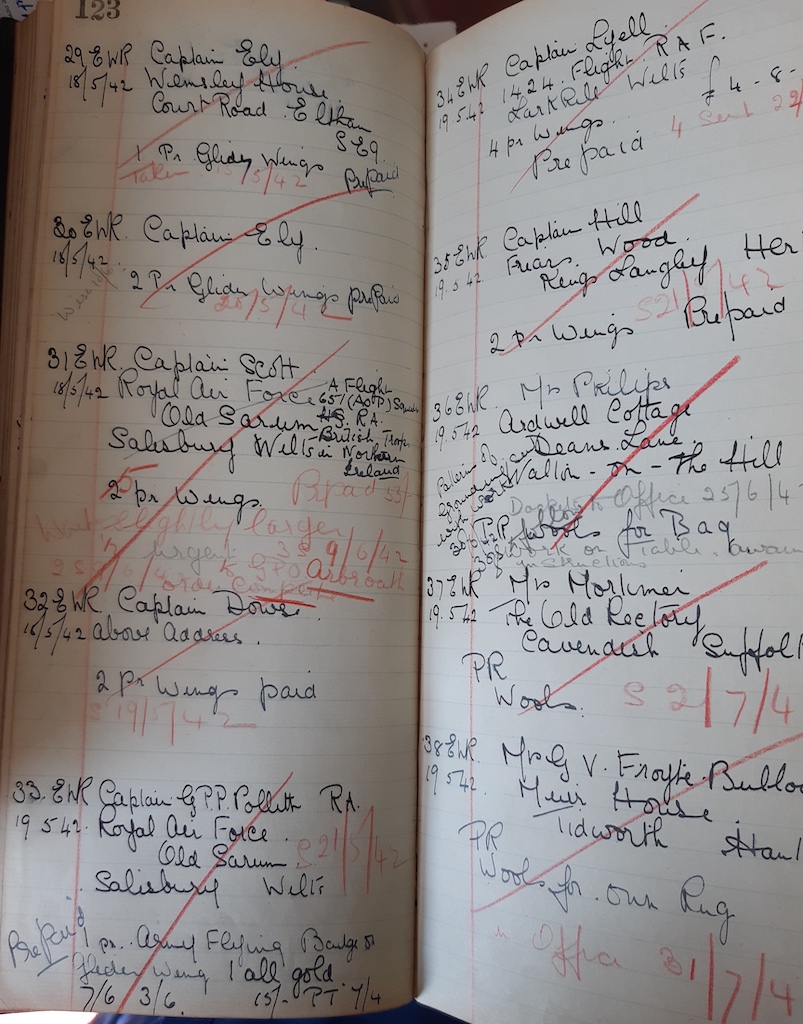
As the war progressed, new units were established and some of those turned to the RSN for help with their insignia. During 1942, we were heavily involved with creating wings for the newly established Army Observation Post Squadrons (later Army Air Corps). What is particularly significant is that it is clear from the Work books that individual AOP officers often purchased their own wings so we have the names of many of the first participants in this corps.

RSN Workbook entries for miltary wings, 1940sBefore our current lockdown, here in 2020, we were working with the Army Flying Museum to track the details of some of these people and we hope to be able to give more details to you in the future, including Captain Tetley Jones 651 AOP Squadron who, by his second order of wings, was Major Tetley Jones, then with 653 AOP Squadron. The AOP Squadrons recruited people who already had flying experience to fly slow, low level aircraft on behalf of the artillery to help them fix on the position of the enemy. As they were so comparatively slow and low flying, by the time faster fighter aircraft had seen them, they had already overflown them. Altogether, the RSN made nearly 200 pairs of wings for the AOP in 1942-43.

We were later asked to work badges and shoulder sashes for the ATS, the Red Cross, the Queen Alexandra nurses, and even the Psychological Warfare Division, as well as pennants for staff cars including Colonel Goldman of the USA, the car of the Free French and even a tank flag for the 2nd Armoured Battalion of the Grenadier Guards.

Please do follow us on on our Facebook  and Instagram social media pages tomorrow and over the weekend for some uplifting stories including: our most regular customer of the 20th Century; collecting lace for the war effort; and an actress ‘embroiderers’ on the big screen!

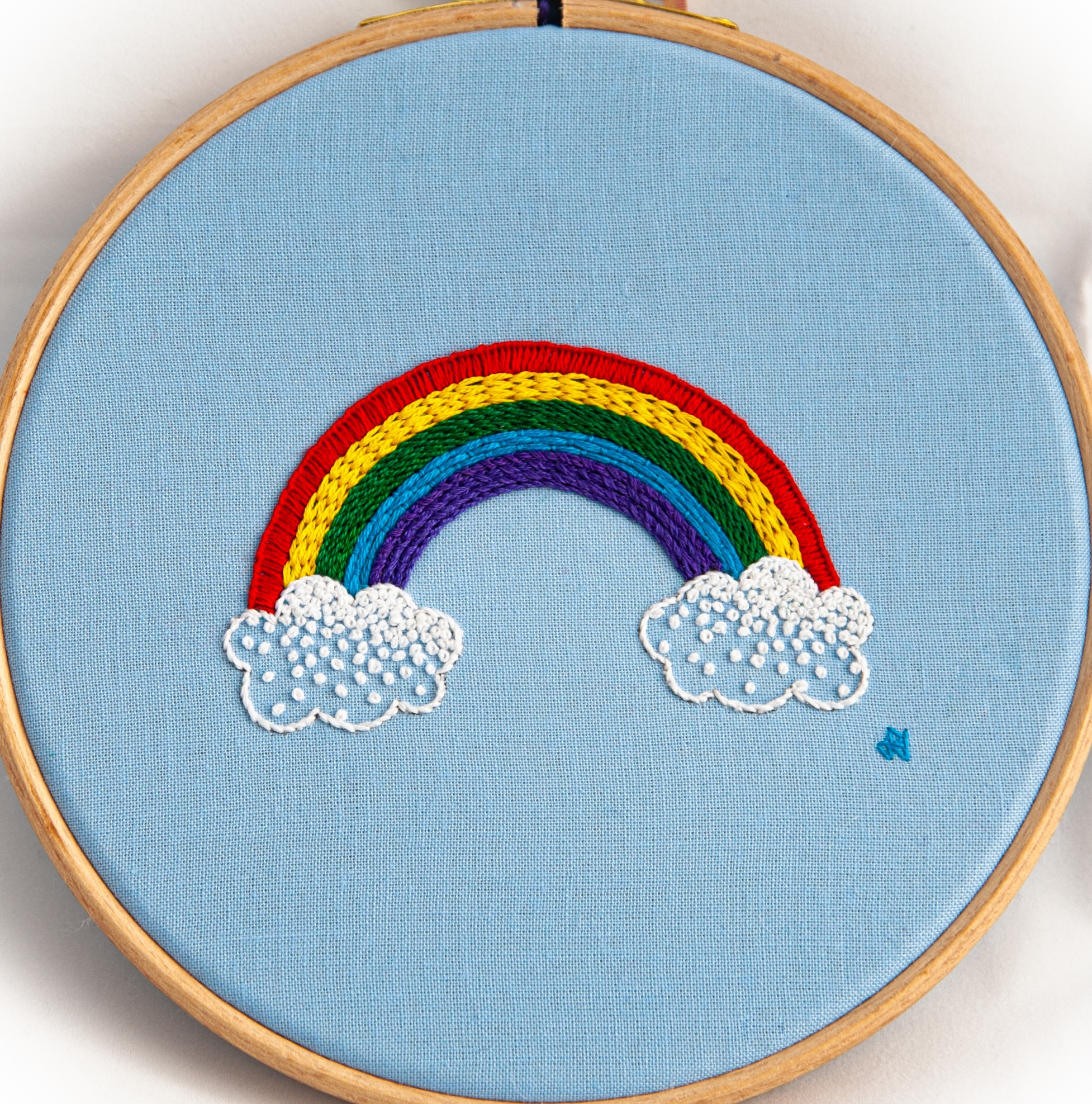
In response to demand from the other side of the pond, we can announce to our American supporters that we will be teaching our Online Day Class, ‘Introduction to Embroidery: Bright Rainbow’, on Thursday 11 June from 10:00am-4:00pm Eastern time (3:00pm-9:00pm UK BST).

The rainbow has become a global symbol of hope, especially during these challenging times and, on completion, the rainbow can be kept in its hoop to display in your window to show your support for our wonderful key workers.

The class, taught by RSN Tutor Sarah de Rousset Hall,  will cover how to start and finish threads neatly as well as several commonly used embroidery stitches and there will be plenty of opportunity during the class to ask the Tutor questions.

The class kit will be posted to you and includes all of the materials you require, including a 6” hand held hoop. In advance of the class all preparation information will be emailed to you along with an invitation to join the class on the day.

Please note that the class is limited to 12 students and bookings will CLOSE on Thursday 21 May to allow time for the kit to be posted and received prior to the class.

BOOK YOUR CLASS PLACE TODAY


Anne Butcher, Head of Studio and Teaching, joined the RSN as an Apprentice in 1982 and has seen the School expand, move locations and develop hugely over the years.  As Head of Teaching at the RSN, Anne oversees the Future Tutors Programme, Certificate & Diploma in Technical Hand Embroidery, Tours & Bespoke Classes and Day Class departments.

Here, Anne tells us about how the RSN Education Team have had to adapt quickly to our current global situation, to maintain the standard of teaching that our students require.


How has the RSN Education team adapted to the current global Coronavirus outbreak, working and teaching from home?

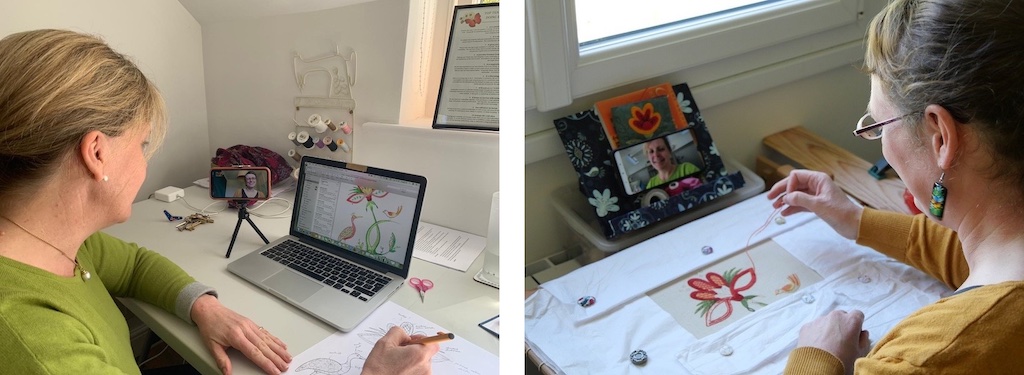
As you can imagine, the Education team has had to quickly adjust to the current situation, both with our students and with our Tutors. Fortunately, helped hugely in today’s digital age, we have had a fluid dialogue in order to discuss how we can continue teaching in our Certificate & Diploma (C&D) students’ homes.  Work started on this a few weeks ago, working closely with our IT Manager and Tutors to see how we could best offer the same high standards of teaching excellence.

The first students to receive online tuition were our Future Tutors and, from the outcomes, we reviewed and evaluated putting together a process for our C&D Students.  Firstly, we trialled the C&D students online tuition with a few national and international students learning from Tutors.  We then listened to their feedback, which will be an ongoing process, making appropriate adaptations to the experience from both sides of the screen as it were!

We are still feeling our way and it will depend on the student and the technique that they are doing, as it may not suit everyone and there are techniques and stitches that might not work effectively being taught remotely.  As more students and Tutors take these sessions we will be able to evaluate from the feedback we receive in order develop the virtual teaching process further.

I am of course extremely grateful to our students, Tutors and my colleagues for their enthusiasm and understanding at this unprecedented time and hope that we can continue to deliver the C&D programme successfully until we can reopen the ‘School Gates’!

How does the booking system work?

The students contact us with a request for online tuition.  I look at their availability, the Tutors they have learnt from in the past and the technique they are currently working on.  I then match the most appropriate Tutor to the student and, in some cases, they have worked together before.  Finally, we introduce the student to their Tutor, giving them their date and time allocation, and leave it to them to link up from their homes.

What format are these one-to-one tuition session taking?

The initial online session is for 90 minutes, which is split into one hour in the morning with a follow up in the afternoon, to check what the student has learnt and how they have advanced with their work since the morning.  Then the student is taught another stitch/technique and their homework is set for their next session.

In advance of each learning session, the Tutor will request images of the piece, particularly of any areas that the student is finding tricky.  The images sent to the Tutor will also assist the Assessors during the marking stage so that they can differentiate between the ‘on-site classroom’ and the ‘virtual classroom’.  Each Tutor will complete an individual learning plan and we are aiming to keep the same students and Tutors together, in order to have continuity throughout the online learning process.

For our international students, we are working around the time differences.  They are having their online session at different times, for instance, an afternoon followed by an early evening session, or, in some cases, we have to arrange that the second session is on a consecutive day.

Once a student has completed the first session of C&D virtual tuition, it is possible to book follow-on sessions of one hour in order for them to progress with their piece, which are booked through the Education department.

Do they count as the equivalent of one C&D class?

These sessions will count towards the eight days however this is a new process for us and, although we have successfully trialled them, it may not work for all of our students.  If we had to put a comparative time frame then a one-to-one session could be seen to equate to half a day in the on-site classroom.

It is important to remember that these are very different times and the online tuition is to enable C&D students to keep the momentum on their pieces not necessarily replace them in full.  It might not be for you and it will never replace being in the classroom environment with support and encouragement from your peers.

Do you have plans for Online Teaching and Online Day Classes?

I am delighted to announce to you today that the RSN is launching Online Lessons as well as a colourful Online Day Class, which we have brought forward as the class had originally been timetabled for the autumn term.  We are also in the process of planning and developing more Day Classes with our Tutors which we will share with you through our social media platforms.

To take a positive from these uncertain times, it is very exciting to be able to concentrate on an area that we had hardly broken into and we hope that it will allow the RSN to reach even further across the world!

BOOK ONLINE LESSONS

BOOK ONLINE DAY CLASSES


Feedback from Amanda, in Greater London, who has already experienced Online C&D tuition:

“I can imagine there was much debate about whether C&D digital sessions could run at the RSN, especially when I know you rigorously protect the quality of your teaching and with embroidery being such a tactile skill and art. I couldn’t let the opportunity pass without letting you all know how invaluable I have found the session to be.

Of course we all can’t wait to return to HCP, to share such a creative space, to see the work of others, to touch the fabrics and yarns of a new project and have that physical tuition and demonstration that cannot be replicated elsewhere. I also miss the never ending supply of tea and biscuits! However, I think you would do yourselves a disservice if you didn’t also credit how much can be imparted digitally in these challenging times.

Becky has given the same high quality RSN teaching of process, technique and design that she has always brilliantly given. However, she has also been able to fully share her experience, ideas and solutions to the questions I needed to raise with only a very little shuffling of camera angles and the use of a zoom lens. In doing so, I cannot tell you how incredible the reassurance has been in these isolating times for my project and the immense motivation and focus it has given me today and I’m sure over the coming week.

Anyway, I just wanted to share my thoughts on the experience as the feedback might be useful on these newly offered sessions. I hope you all continue to keep safe.”


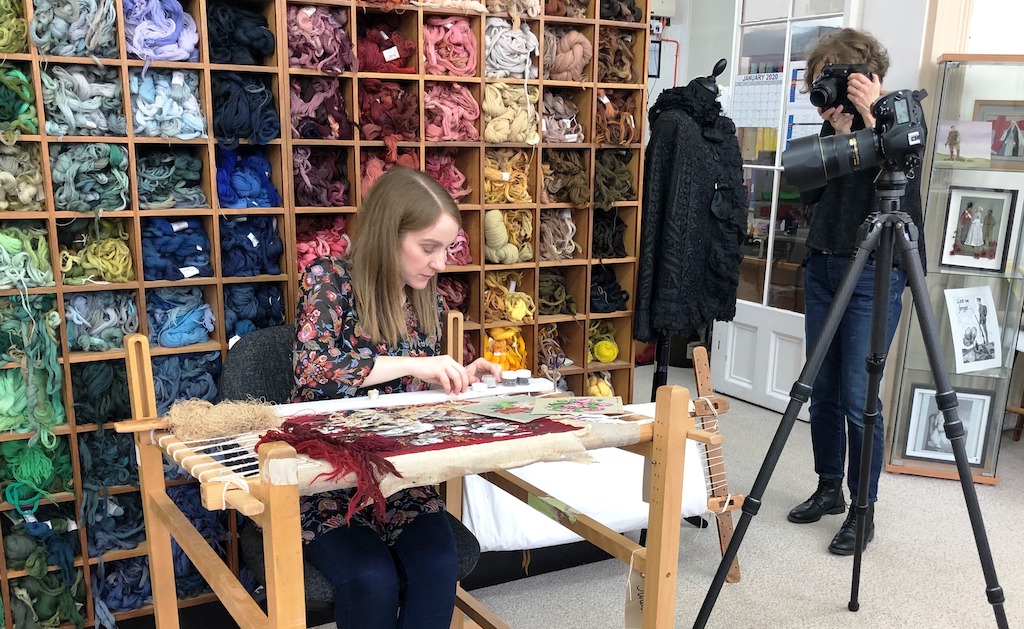
The RSN Embroidery Studio regularly appears in the Press and on TV, so our Studio Embroiderers are very relaxed and confident when explaining our projects… although we can’t divulge everything, as this depends on our clients wishes, and the RSN is highly respected for our code of conduct when it comes to private commissions.

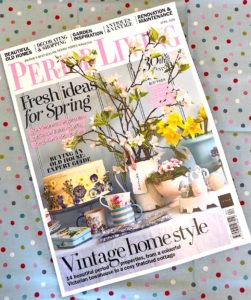
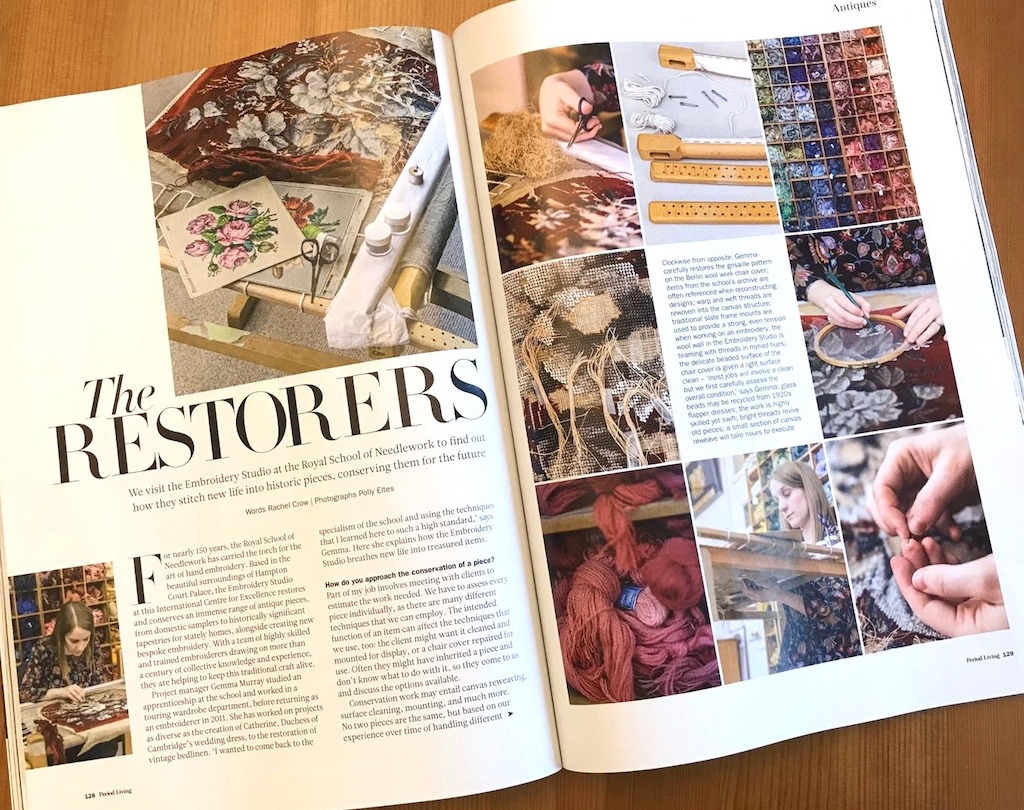
The monthly magazine ‘Period Living’ recently approached us to share with their readers the stunning work we undertake in the RSN Embroidery Studio. In this time of renewal, regeneration and sustainability there are many processes that can be used to give new life to a once beautiful piece of embroidery.

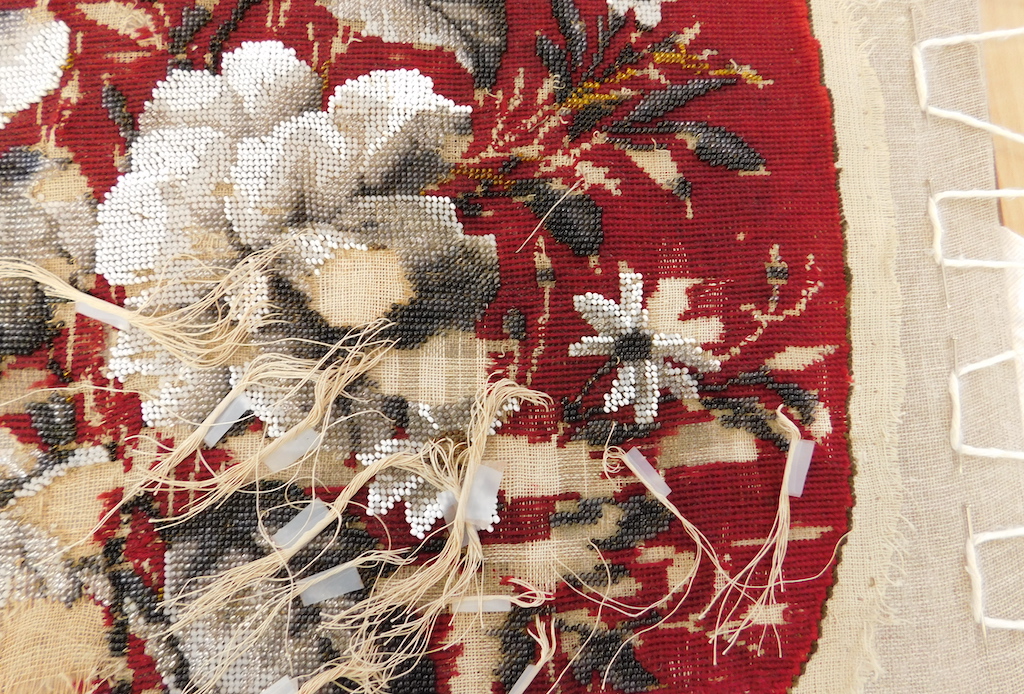
The article, which appears in the April 2020 issue, focuses on how we restored a piece of Berlin Wool Work from a Victorian Nursing Chair that had lost some of its beads and background, as well as having many broken canvas threads. Pieces in this condition are supported onto a suitable base fabric before the restoration work takes place.

The first task was to replace all of the broken canvas threads which then enabled us to replace the missing beads and stitches. We matched these as closely as possible to the original using a combination of new and reclaimed beads, and new and old threads, still in excellent condition.

The support fabric was left in place so that the upholsterer had a more stable piece to work with when putting it back onto the chair. The chair was reupholstered using traditional and new methods, depending on which was most suitable for the embroidery, fabric and chair.

A recent throwback was of course on Wednesday 29 April, on the ninth wedding anniversary of the Duke and Duchess of Cambridge, when we had happy memories of working the bespoke lace of the Duchess’ wedding dress, veil and shoes in 2011; the Royal School of Needlework was written and spoken about across the Media both at home and abroad!

Follow the RSN Embroidery Studio on Instagram

Dr Susan Kay-Williams is not only the Chief Executive of the RSN but also Curator of our exhibitions which take place throughout the year in our Embroidery Studios at Hampton Court Palace. Susan had been looking forward to opening our next exhibition, Stitch is International, at the end of April (now postponed) so we decided to interview her instead!


Please give our readers an overview of Stitch is International and what they can expect to see when the RSN reopens its doors.

The idea behind Stitch is International is to celebrate beautiful embroidery from around the world and to highlight that embroidery is an art form which is practised in many countries and cultures and, as such, is something we have in common.

Most of the pieces on show will come from the RSN’s Textile Collection where we have many pieces that started life in other countries, both those originally made for local use and those for the export trade. As all the pieces in the RSN Collection have been donated, we do not always know the story of each piece so we accept items generally on the quality of their embroidery. Amongst the countries and cultures featured will be Imperial China, India, Japan, Turkey, Greece and Italy. I am thrilled to be able to give you a flavour of the exhibition, and this week we are showing you some pieces of Chinese origin.

We will have pieces on very different scales, from a Chinese robe and Japanese kimono to small fragments and pieces which had different purposes, from daily clothes of Guatemala to celebration pieces from India.

We were also hoping that this exhibition would tie in with the launch of the RSN Stitch Bank which is to feature and celebrate every stitch in the world, highlighting both those which are used universally, like Chain Stitch, and those which are only used in a few countries. Due to the lockdown, RSN Stitch Bank has temporarily had to go on hold but we will be continuing to work on this as soon as we can and will launch when we have the first 500 stitches.

Without giving too many secrets away, please share a few of your favourite pieces which our visitors can look forward to viewing?

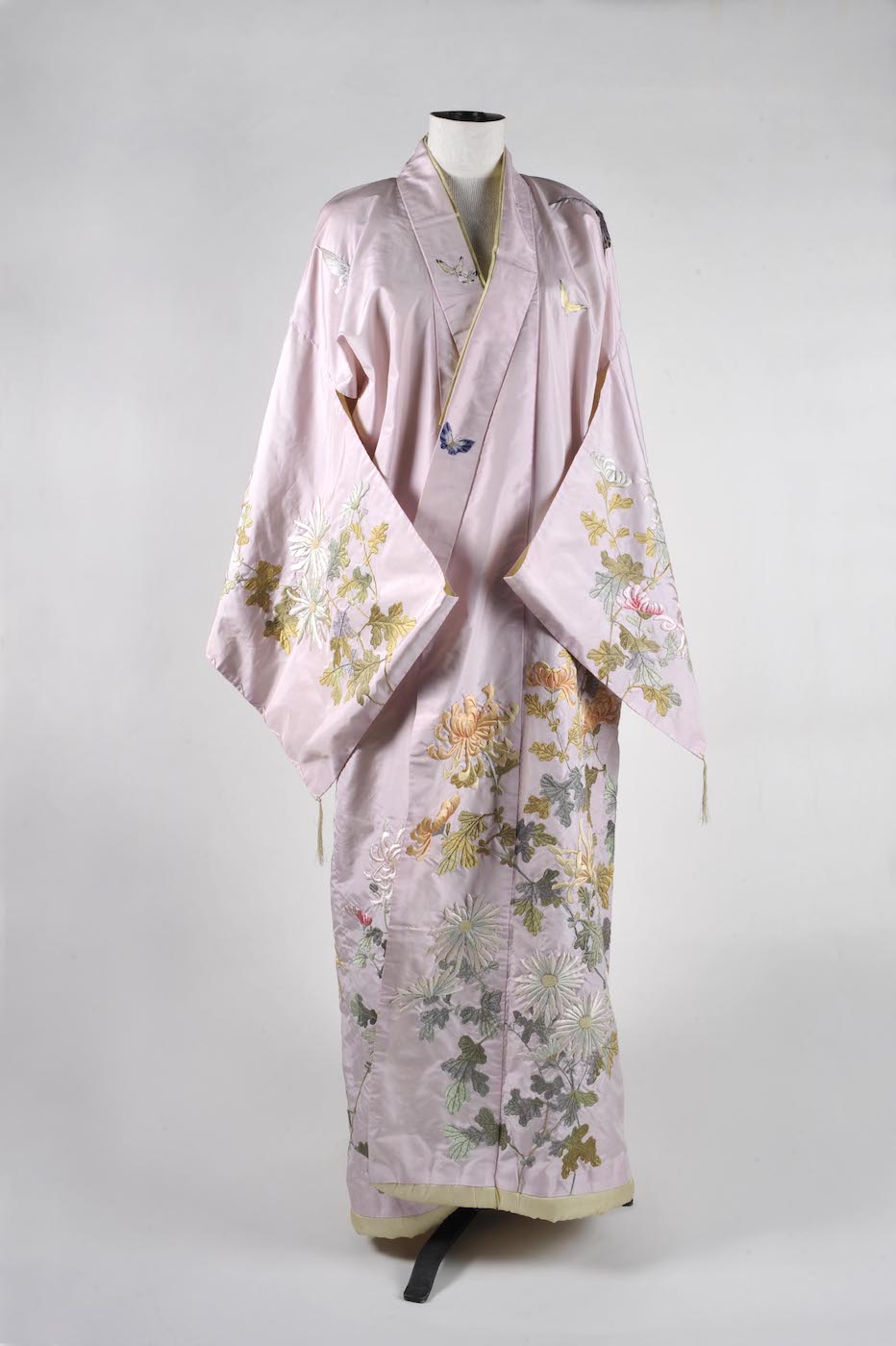
This kimono (above) dates to 1900 and features chrysanthemum flowers and leaves for autumn. Those people who know the Kyoto panel at the RSN (which will really come into its own in this exhibition), will see similarities in the way the flowers are worked. It is a very lovely piece in traditional Japanese style.

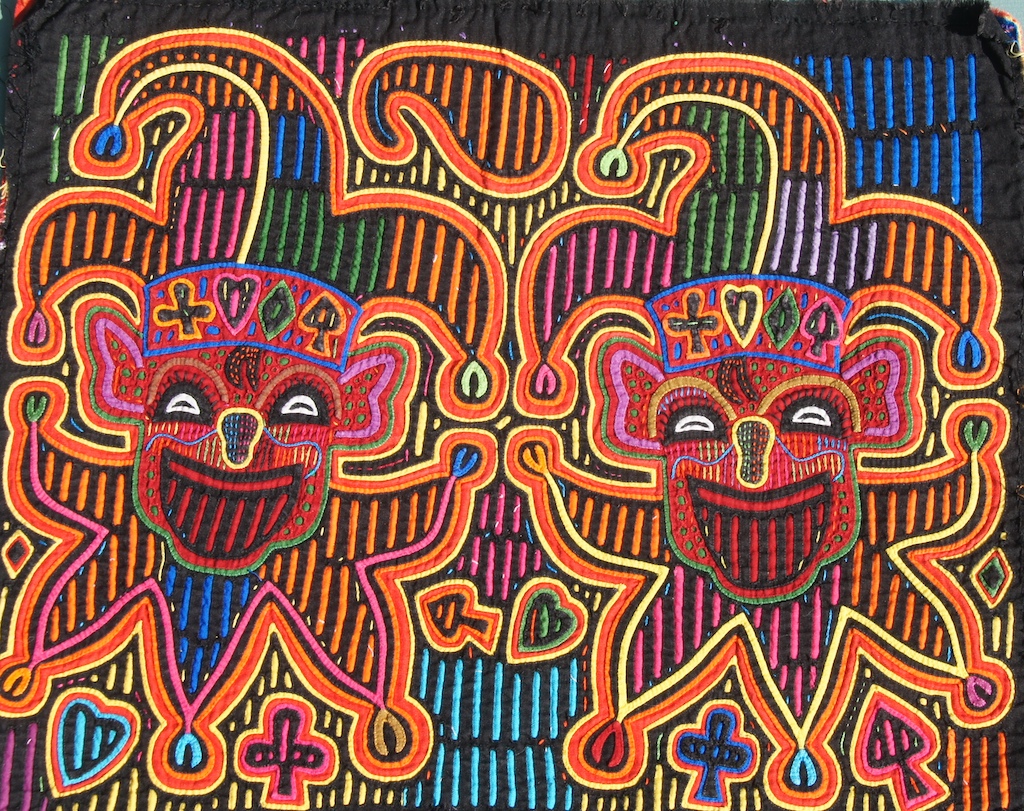
In complete contrast, we have some Molas. The Mola, or Molas, is a hand-made textile that forms part of the traditional women’s clothing of the Kuna people from Panamá and parts of Colombia. The full costume includes a patterned wrapped skirt, a red and yellow headscarf, arm and leg beads, a gold nose ring and earrings in addition to the mola blouse. The traditional ones are worked in reverse Appliqué, using a number of layers of material, and those for the tourist market are more standard Appliqué. We have both types in the Collection.

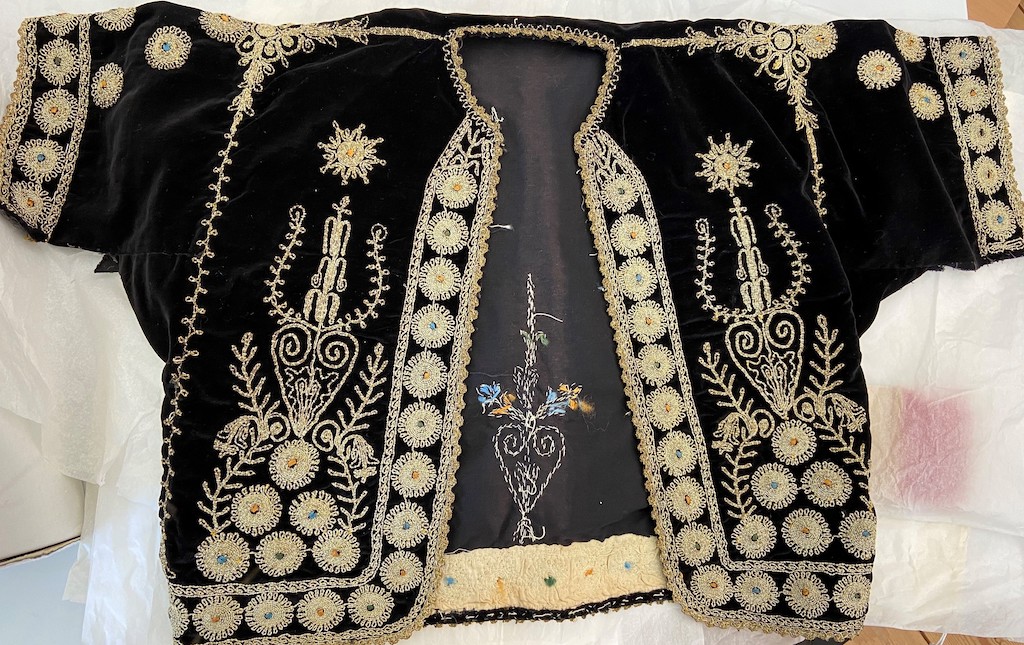
We will also have a jacket which one of our Degree students, Jasmine Hollowday, has identified as coming from Palestine because of the embroidery on it. This was a piece that had got ‘buried’ within the RSN Collection and did not even have a Collection number (alas it is not the only piece in this position) but, thanks to Jasmine’s research, the piece will now feature in this exhibition.

As RSN Exhibition Curator, how do you come up with ideas for each exhibition and how long do they take to plan?

As being the RSN’s Curator and Archivist is only part of my job, I took the decision some years ago to alternate the exhibitions: an exhibition which predominantly features pieces from the RSN Collection is then followed by one which predominantly features work by current and former students and Tutors. So, for example, the exhibition which is just about to come down, Faces & Figures in Stitch, featured mostly work by students, former students and Tutors, with only around ten pieces from the Collection.

The pieces on display in Stitch is International, however, will be mostly from the RSN Collection. Collection exhibitions take a lot longer to plan, not least because, as yet, we do not have all of the Collection online so it means physically going through the boxes to see what we have. While this is a delight to do, it takes a lot longer than putting an exhibition together based on images, which is what we can do for the student shows.

I also alternate the exhibitions so that we can really feature the work of our students and Tutors to show more people what they achieve. And, for the Collection exhibitions, this is part of our public benefit, giving people the opportunity to see what is in the cupboards.

The RSN relies on donations to add to its Collection and I never fail to be surprised how often we are given objects linked to a coming exhibition. We accept pieces depending on their links to the RSN and, if there are no links, the quality of the embroidery and whether we have other pieces like it already in the Collection. Due to space constraints, we cannot unfortunately accept everything we are offered, but we are always open to interesting pieces of high quality embroidery in good condition.

What is the format of an Exhibition Tour?

The session opens with an introductory talk, presented by a member of RSN staff, which is part of the RSN’s educational role and contextualises the exhibition for our visitors. Then, you will be shown around the exhibition by one of our Volunteer Tour Guides who will tell you more about the pieces on display. If this sounds inspiring, on some occasions we also combine the Tour in the morning with a ‘Taster’ embroidery class in the afternoon, the theme of which will be linked to something in the exhibition. We also hold Family Stitch Workshops every half term (Feb, May and October) which we run for school children where young people can learn to stitch. As the exhibition is located within the working RSN Embroidery Studio we cannot welcome people at any time, so we usually offer scheduled Tours one week of every month, open to both groups and to individuals.

It is a great pleasure for me to lead the Curator’s Tours, usually held on a Saturday. They are open to groups and individuals alike. For Curators’ Tours I not only lead the session but I also bring out some extra pieces from the cupboards, for which there is not enough space in the main exhibition space or which cannot be out for a length of time. For Stitch is International, I thought I would bring out some pieces from a different cupboard – my own! This means there will be a range of both historical and contemporary pieces from a number of countries including China, Japan, Chile, Thailand and India.

You are Curator and also Archivist of the RSN Archive Collection.  Tell us a little about the Archive Collection and future plans you have for it?

The Archive is a fantastic resource but most of it has to stay hidden because I just do not have the time to answer every query, the most common being, “Did my grandmother/maiden aunt study at, or work for, the RSN?” This is an impossible question to answer in most cases as our Archive is not digitised so it would be an enormous job to search for every person, and certainly not easy if the seeker only has the married name, as most people came to the RSN before they were married.

However, it is my big dream to have the Collection and key parts of the Archive digitised so that people can see what we have and search it for themselves. For example, Walter Crane worked with the RSN for over a quarter of a century and we have many designs by him which are referred to as ‘lost’. If we could digitise the designs we have, they could be found by scholars and researchers.

We are also looking ahead. In 2022, it is the RSN’s 150th anniversary and I hope to publish a book about the story of the RSN to begin to shed light on more of its story. Sue Lown, one of our Volunteer Tour Guides is helping me to delve in to our wider history and she is finding some very interesting stories. For more you will have to wait for 2022!

STITCH IS INTERNATIONAL EXHIBITION
Our BA (Hons) in Hand Embroidery students continue their studies from home, with virtual learning and Tutorials with their RSN Tutors. We are extremely proud of how they have adapted to their ‘new’ surroundings, whether this has meant returning to their family home or remaining in the Hampton Court area with Zoom chats for support.

The RSN Degree is a three year BA (Hons) validated by the University for the Creative Arts (UCA) with national and international students using contemporary approaches to traditional hand embroidery techniques giving them a springboard to a creative career in haute-couture fashion, theatre and film costume, interiors and textile art, with some continuing their studies to Post Graduate level. The Degree team encourage students to submit applications for a number of competitions and sponsorship opportunities throughout the course.

One such competition is the annual Bradford Textiles Design Competition run by The Bradford Textile Society, which attracts almost 1,000 entries. Our 2nd year Degree students enter every year and this year five of them were awarded. ‘The LAPA Charitable Trust Award’ category is an award for an embroidered textile design for fashion/accessories or interiors products, created using hand embroidery techniques.

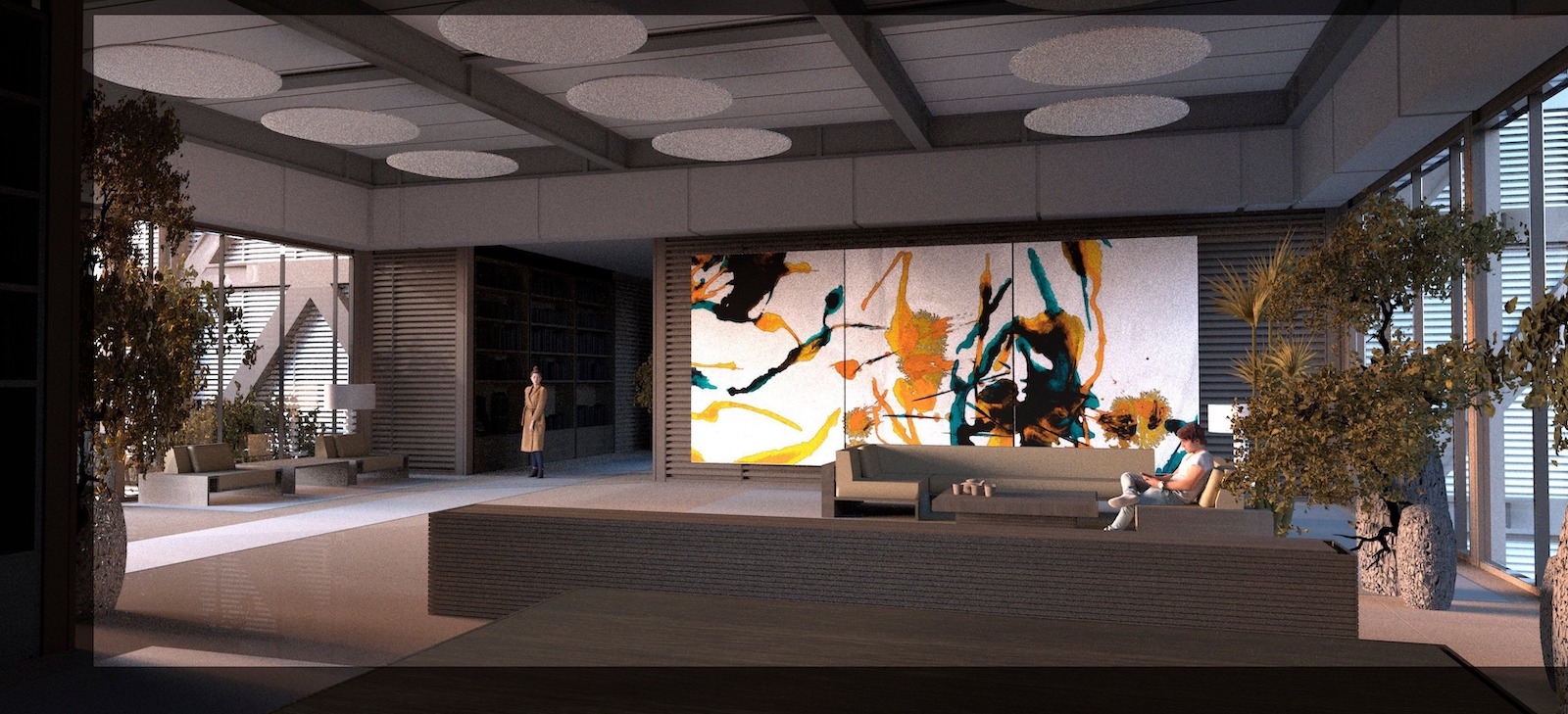
Sabina Lima - Design for an acoustic embroidered panel for LeadenhallSabina Lima – Design for an acoustic embroidered panel for Leadenhall
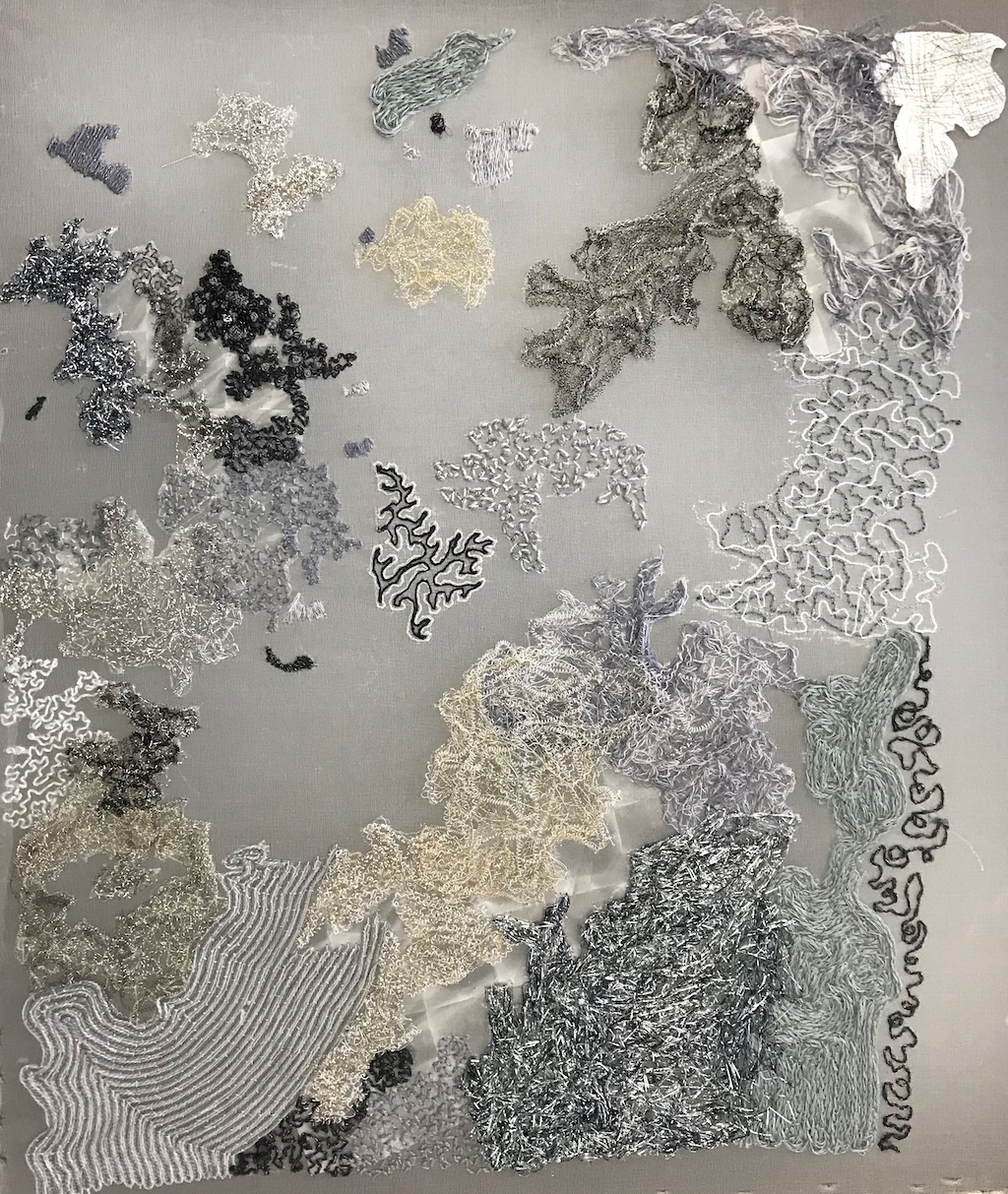
Congratulations goes to Sabina Lima who was awarded 2nd prize in this category for her entry ‘Morphogenesis’, as well as receiving a Commendation in ‘The Company of Merchants of the Staple of England Wool Award’ for the best design using wool (minimum 60%) chosen across all categories of the Bradford Design Competition. Sabina said: “For this competition, I created an acoustic embroidered panel for the office interior of the Leadenhall Building in the City of London. Inspired by nature, poetry and storytelling, this project came out from a poem ‘Ah! Sun-Flower’, found in the Book of Sons of Innocence and of Experience, written by William Blake. In a biological sense, ‘Morphogenesis’ means the ‘beginning of a shape’ but it is also a metaphor: it is the start of a process or development of a new product, and the idea of creating embroidered acoustic panels embraces this concept.”

Hollie Philips - Specimen

Congratulations also goes to the four Commended students by LAPA: Felicity Billing, Hollie Philips, Daisy White and Millie Whitehead. Hollie’s piece, entitled ‘Specimen’ (pictured right), was inspired by medical jars and containers: “I started by creating a photo shoot in a glass cabinet that was highly inspired by Damien Hirst. I also took a trip to the Grant Museum of Zoology, University College London, to view their collection of specimens. From my initial samples, I created a photo shopped room layout as wall paper, changing a lot of the levels and added filters. This was completely different to the initial sample and informed the pattern and stitch design for my final piece.”

In January, Sabina Lima was awarded 2nd prize in the ‘Stitchsmith Prize for Design’, which saw almost 300 entries, and her design will be produced in to a Stitchsmith London clutch! Sabina named her design ‘Concrete Jungle’: “Inspiration came from aerial views of big cities with a high density of buildings. It’s about time to start planting forests.” 3rd years Breeshee Williams was Shortlisted for her floral design and Hisae Abe received a Special Mention.

Jess Vale Raised Work submitted for Madeira Threads Sponsorship

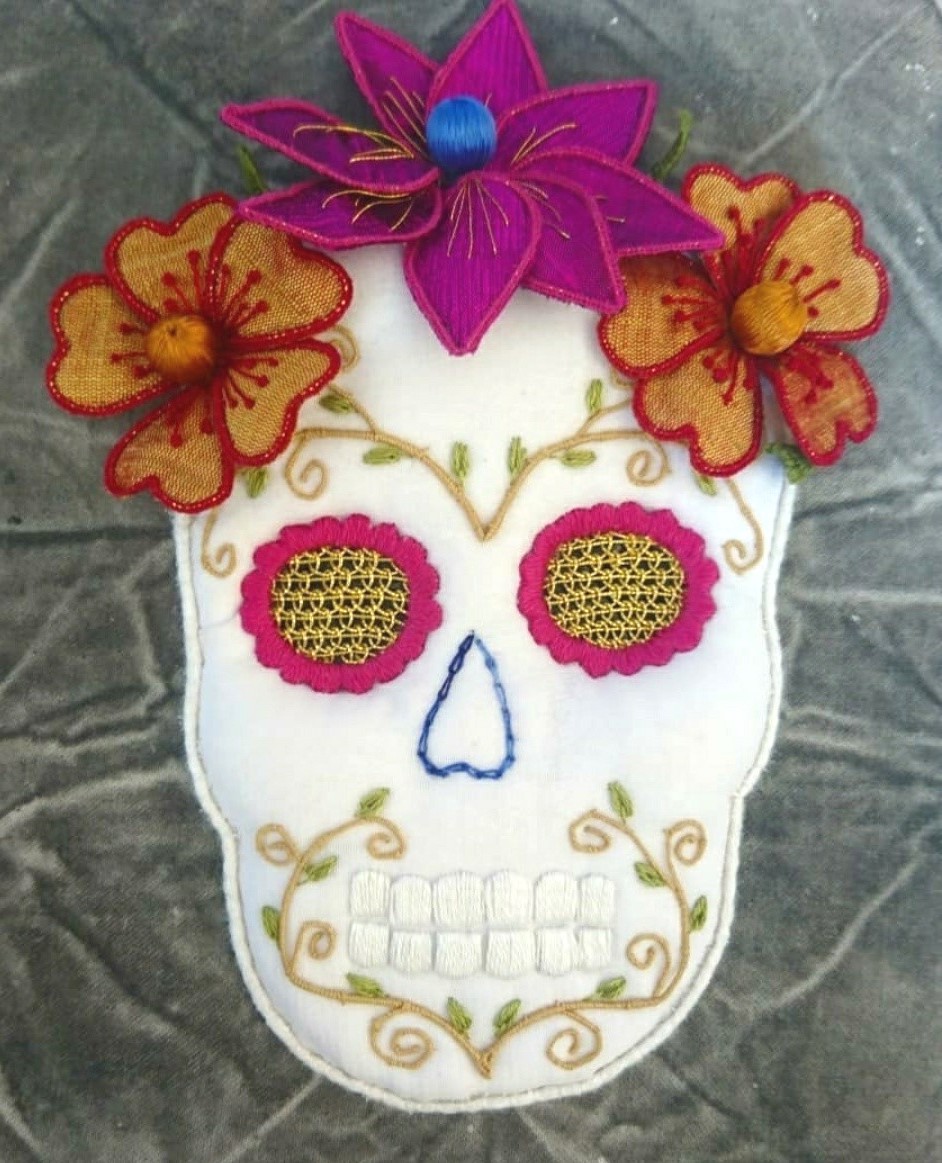
Meanwhile, our 3rd year Degree students apply annually for Madeira Student Sponsorship. For this, they must submit two pieces of work and a portfolio with information explaining their effective use of threads in their work. In March, five students received the fantastic news that they had been awarded money to buy threads and materials they will need to complete their Final Major Projects and to use in the future: Chelsea Burton, Emilie Donielaite, Rosie Millar, Isabella Thorpe and Jess Vale (‘Raised Work Skull’, pictured left).

Ultimately, a congratulations to every single student who is working so hard during their final term, in a very different situation to what we had envisaged back in September, and we wish you all the best of luck over the coming weeks!

Look out for our ‘Spotlight on RSN Degree 3rd year Students’ over the coming months!

Learn more about the RSN Degree

Learning to teach hand embroidery has always been at the heart of the RSN, albeit there have been a variety of formats for the course. This is the backbone of the RSN, training people to work in our Embroidery Studio and to teach for the RSN.

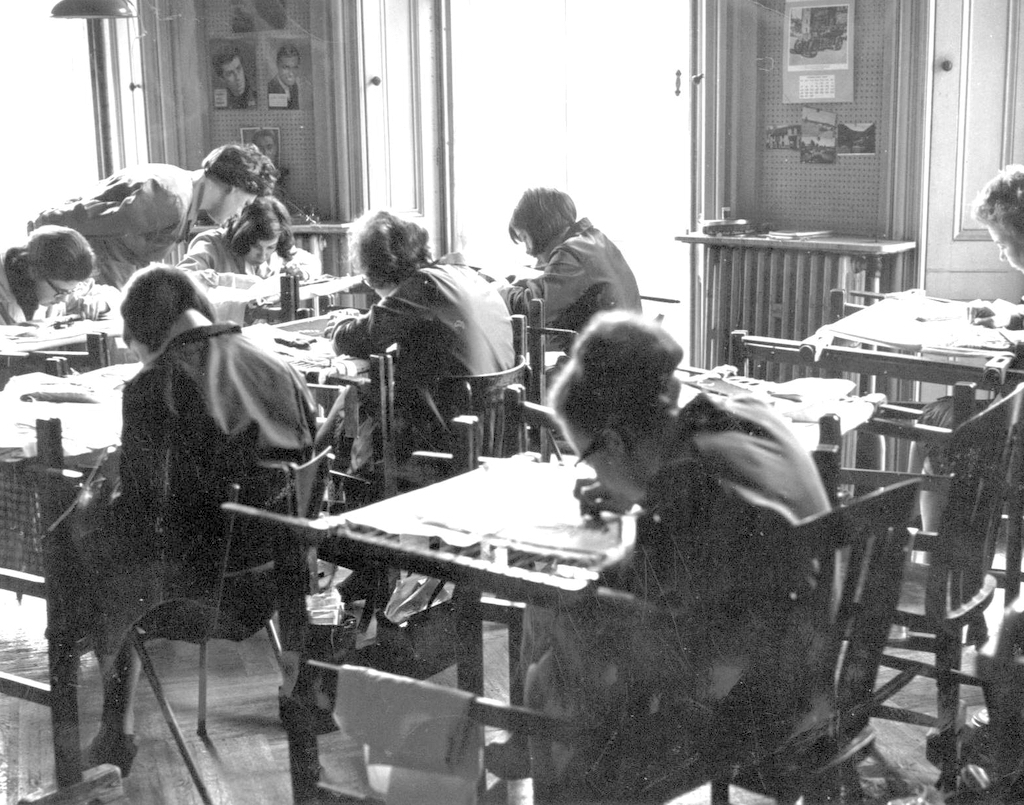
The RSN Workroom at Princes Gate in the 1960s
Back in 1872, when the RSN was founded, the training was just nine days, with a test on the tenth day. Only if a student passed were they admitted in to the ‘Workroom’ (which has been known as the ‘RSN Embroidery Studio’ since the early 2000s). But it did not take long for the RSN to realise that a more extensive training would be required.

In the 1890s, we started evening classes for those who had the temerity to be teaching hand embroidery but who were self-taught. These classes were launched with a lecture by Walter Crane. The classes ran four evenings a week, two on hand embroidery and two on design but students could come in on Friday evenings too for what we still refer to as ‘work on own’. This was offered to recognise that women might not have the space to practice their embroidery at home, so the classrooms were open.

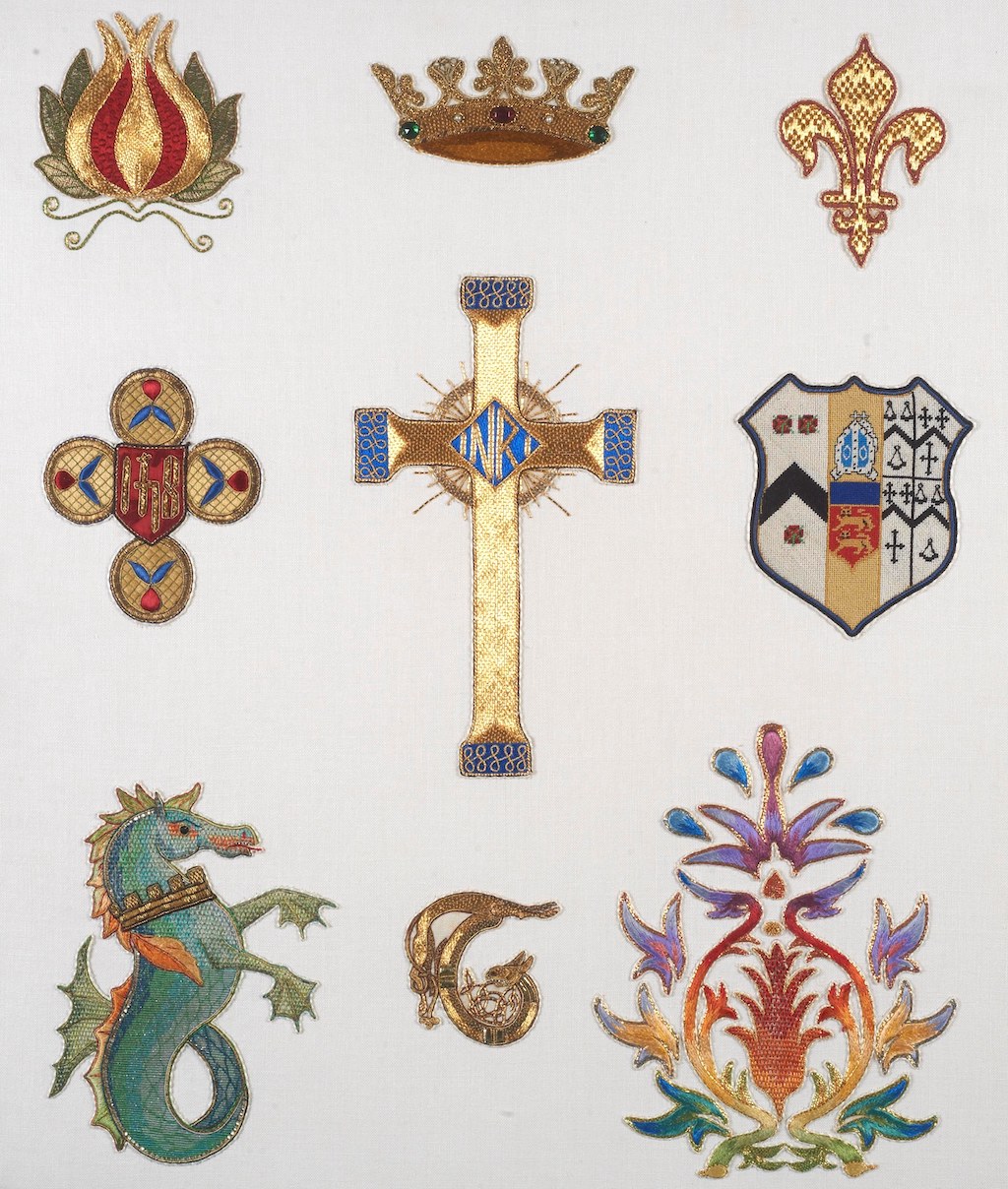
At the end of the 19th century, the RSN developed a three-year Diploma as its main training course for those who would go on to be needlework teachers and not just for the RSN. This course continued until the end of the 1950s. For much of this period the syllabus was the same and, as a result, it is possible to recognise pieces from former Diploma students, particularly their final examination piece. This piece began with three symbols which were used to introduce students to the core basic techniques of metal thread embroidery: pomegranate, crown and fleur-de-lys. Below these they embroidered a cross, although students were free to design and work their cross in any way as long as it incorporated metal thread embroidery. The remaining items were of the student’s choice and might include figures, badges, animals or other insignia.

Margaret Bartlett

We know that this piece (pictured above) was by Margaret Bartlett in the early 1950s, who went on to become Head of Workroom, working on the Queen’s Coronation Robe in 1953.

In the latter part of the 1950s, however, it was pointed out that the syllabus had become rather old fashioned and one can see that a number of changes were instigated in some areas of the syllabus. We can track these through recent donations from former students to the RSN Collection.

The Apprenticeship was launched in 1961, a time that was a bit touch-and-go for the RSN. Initially, it was not seen as a route to teaching, from the response to the many letters they received asking for details of courses at the RSN. At first, the Apprenticeship was a two year programme and, over its life, it changed between two and three years more than once. In the latter stages, while the first two years were spent learning all the hand embroidery techniques, the third year was spent in the Studio on embroidery conservation and working collectively on new pieces.

Although called an Apprenticeship, the RSN programme had never qualified for external funding and so we had to raise all the money for the course, which included paying a small salary to those on the course. By the early 2000s this had become unsustainable and the last year of Apprentices graduated in 2009 with their Certificates presented by English fashion and textile designer Zandra Rhodes.

In 2009, the first course that was introduced to replace the Apprenticeship was the BA (Hons) Hand Embroidery Degree, but it became clear that Degree Graduates wanted to take their skills in different directions from teaching. As such, it was decided that we needed a new course which would train people to the highest standard across the full range of techniques, so they could teach for the RSN.

The RSN Future Tutors programme (FTP) was launched in 2012 as a three-year programme with the aim of providing the RSN with more, qualified Tutors to enable us to teach more people in more places. It is, as a result of this programme, that we have been able to offer the US Summer School in Lexington KY, teaching in Williamsburg VA, Dublin, Lancaster, and other pop up locations with our Museum Partners. The content of the FTP is broader than the Apprenticeship and there is a bigger emphasis on Art and Design, as well as on business skills which is necessary in our global virtual world.

What has stayed the same throughout our teaching history is the amazing tuition, the camaraderie, the unbelievable level of homework, and the dedication of the students and, over the last 33 years, Hampton Court Palace of course! We look forward to introducing you to our 3rd year Future Tutors during the coming months, when they will share with us the fantastic work they have achieved over the last three years, projects they have worked on and their Signature Projects.

Learn More about the RSN Future Tutors Programme

We are excited to launch the global ‘RSN Postcard from Home’ hand embroidery challenge!

The challenge is open to everyone from around the world, and will make us feel connected through the precious RSN bond and our universal love of hand embroidery and while we know the RSN is recognised for technical excellence this project is not about that, but rather about everyone sharing in the project regardless of their technical level of stitch.
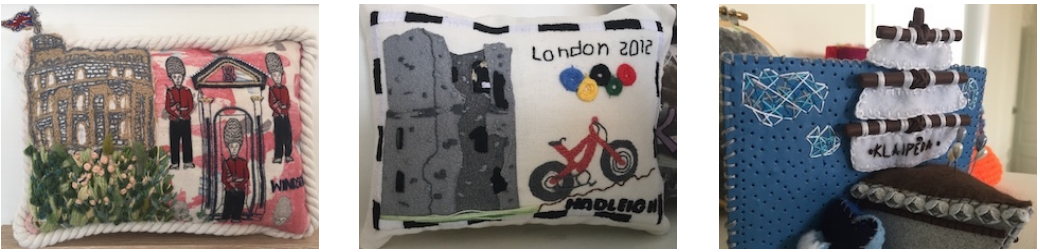
Home Sweet Home

The RSN is encouraging you to create a piece of hand embroidered art in the form of a ‘Postcard’ to mark this globally impactful event affecting all of us.  We want the ‘RSN Postcard from Home’ project to go viral worldwide, so please share with everyone you know, and let’s get trending and keep connected with the hashtag #rsnpostcardfromhome.

The best part of the project is that everyone can take part, whether you are an experienced hand embroiderer, have never picked up a needle and thread in your life, an adult or a child.  It is the perfect project to get your creativity flowing and to allow your mind to focus whilst stitching a piece of historical art.

Many of us are now based at home where we have had time to reflect on what is the true meaning of ‘home’ and the energy it gives us, and you will have happy memories of fun and crazy times with family and friends at home.

Your ‘Postcard from Home’ can be inspired by your own home or garden, by your town or city where you live now or lived in the past – somewhere you have always ‘felt at home’.  There are no rights and wrongs, just create something which fires your imagination.

When you stitch your Postcard, you might decide that this will be your ‘happy hour’ away from daily life or you might want to develop it as a fun project with children, stitching alongside each other.  If you are a teacher you may suggest it as a fun project for children to work on at home, as time away from their screens, and encourage them to bring their Postcards to school when they return.  And, if you make several, you might send them through the Post to your loved ones who you have not seen for some time or organise an exchange of ‘Postcards’ amongst your craft group and friends.

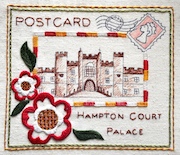
To inspire you, we are offering you some ideas of how to get started on your Postcard as well as showing some of the ‘Postcards from Home’ embroidered by our Degree students before they join us in the September of their first year.  The students present their Postcards to the rest of their year group, by way of introducing themselves to their peers on their first day, where they are from, famous landmarks in their area, an historical connection to their town, where they first met their soul mate, and so on.

We can’t wait to see the Postcards you create as well as receive stories of what the project has ignited in your creative hearts and minds. 

Don’t forget to start using the hashtag #rsnpostcardfromhome, and to share the development of your Postcards with us and the rest of the RSN community and world!

#rsnpostcardfromhome

Further information:  RSN Postcard from Home – Ideas to get you started [PDF]

Many parents across the world are looking for activities for their children.  From exercising the body to exercising their creative minds, it all helps provide a focus and much needed time away from their screens.  To help, we have added some of our most popular Family and Exhibition Workshop kits to our RSN Shop Online (limited numbers per design).  The Kits are a fun, creative outlet for young minds, teaching a variety of techniques and stitches.

View and purchase children’s Kits here.

Please do tag us on social media and share your projects, @royalneedlework.

Meet Penelope Ng Pui-ian who studied the Summer Intensive Certificate course with us at Hampton Court Palace last year.  Penelope completed her Certificate in Technical Excellence and is now studying her Diploma.

My name is Penelope Ng Pui-ian and I come from Macau.  I have a Fashion Design Degree from Fu Jen Catholic University in Taiwan and, following my Graduation, I joined a Taiwanese Textile Factory as a Designer working in both China and Vietnam.  While studying at Fu Jen University, I read the news about the wedding dress of The Duchess of Cambridge which was worked by the RSN Embroidery Studio Team.  I was very impressed and fascinated by the beauty of the gown that I set my heart on attending the Certificate & Diploma (C&D) in Technical Hand Embroidery and I started the Certificate Summer Intensive Course at the end of June 2019.

I have benefited greatly from the teaching of a variety of traditional embroidery techniques.  The professionalism of the RSN Tutors is very impressive and many of them are authors of their own embroidery technique books.  The C&D course is designed to encourage students to create their designs using the skills acquired during the classes and to turn their design into a vivid and lively piece of art work.

I completed the RSN Certificate in August 2019 and started the Diploma course in November during the normal term time.  Unlike the Summer Intensive Course, which required me to follow the course timetable, I can now manage my own class schedule, picking and choosing my class days which allows me to work at my own pace.

My favourite technique is Silk Shading.  I love to see the shading of colours that makes the piece of work come alive and look so real.  I would also like to mention that sitting in class with others working on their own creations gives me such inspiration to do my own design.

After graduating from the RSN C&D course, I will have learnt at least 10 hand embroidery techniques which will allow me to create artwork using embroidery in the fashion design world.  My aim is to set up a Studio in Asia, to pass on these wonderful techniques that I have learnt from RSN.”

Penelope’s Top Tip:  Don’t forget the enthusiasm of your first time when you do the embroidery, just enjoy the stitching , everything will be alright !

Information on our Summer Intensive Courses at Hampton Court Palace. Please note that this is subject to final confirmation due to COVID 19 restrictions.